Have you ever tried paying for a cup of coffee with Bitcoin? If you did, you might have noticed a slight problem. By the time the barista handed you your latte, the price of your crypto asset might have jumped or crashed by 5%, or more. That intense volatility is exactly why crypto is thrilling for traders, but terrifying for everyday shopping.
Enter Stablecoins. These digital assets were designed to solve cryptocurrency’s wildest price swings, acting as a reliable bridge between traditional finance and the blockchain. Whether you are a web3 native or just starting to explore digital assets, understanding how a stablecoin works is essential to navigating the future of global money.
What Exactly Are Stablecoins?
A stablecoin is a cryptocurrency whose value is pegged to another asset. Most commonly, they track fiat currencies like the US Dollar or the Euro at a 1:1 ratio.
Unlike Bitcoin or Ethereum, which fluctuate based on market demand, the core goal here is price predictability. When you hold one, you expect the stablecoin price to remain exactly equivalent to one unit of the underlying currency.
To maintain this balance, issuers back their tokens with real-world reserves. For every digital token issued, a dollar (or equivalent asset) is held in a bank or secure reserve. This setup gives users the speed and security of blockchain tech without the stomach-churning price fluctuations.
The Core Types: How Do They Stay Stable?
Not all digital dollars are built the same way. The industry divides these assets into three primary categories based on how they maintain their peg:
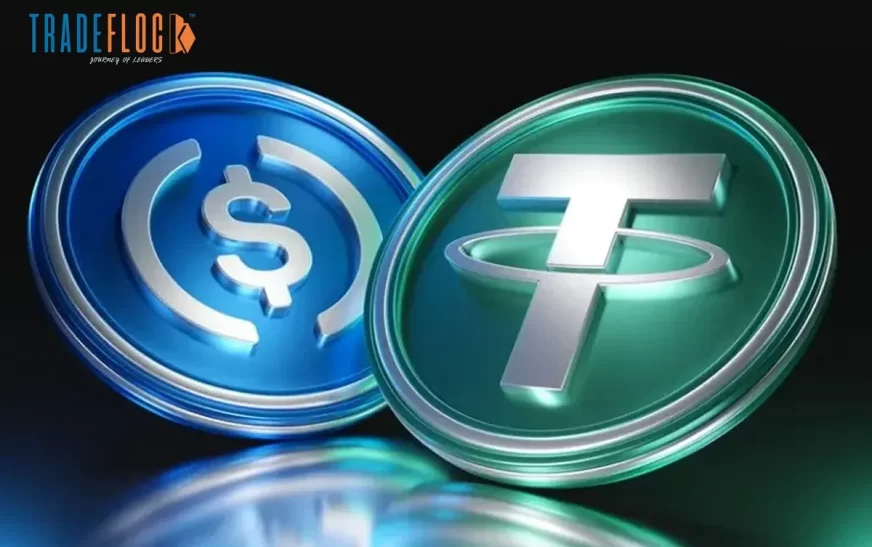
- Fiat-collateralised: These are backed 1:1 by traditional cash and government bonds. Brands like USDT (Tether) and USDC (USD Coin) dominate this space.
- Crypto-Collateralised: These use other cryptocurrencies as backup. Because crypto is volatile, these coins are “over-collateralised” to absorb market shocks.
- Algorithmic: These rely on smart contracts and supply management algorithms to keep the price steady, though they carry much higher structural risks.
Exploring the Best Stablecoin Options in the Market
If you are looking to hedge against inflation or keep funds ready on a crypto exchange, finding the best stablecoin depends entirely on your specific needs for liquidity, safety, and transparency.
1. USD Coin (USDC)
Regarded by many institutional investors as a top-tier option, USDC is managed by Circle. It stands out for its high transparency, offering monthly audited reports of its cash and short-term US Treasury reserves.
2. Tether (USDT)
Tether is the undisputed heavyweight champion of trading volume. It is highly liquid and available on almost every blockchain platform globally. While it faced historical criticism regarding its reserve breakdowns, it remains the most widely accepted ecosystem asset.
3. Dai (DAI)
For those who value absolute decentralisation, DAI is a premier choice. Managed by MakerDAO, it keeps its peg using smart contracts and crypto collateral rather than a central corporate bank account.
Real-World Utility: FCA Stablecoins and Global Use Cases
Why are these assets growing rapidly? It all comes down to practical utility. They are no longer just tools for crypto traders; they are rewriting the rules of global remittances and digital commerce.
- Instant Cross-Border Payment: Sending money internationally via traditional banks can take days and incur massive wire fees. A tokenised dollar moves across borders in seconds for fractions of a penny.
- A Safe Haven From Inflation: In economies experiencing hyperinflation, citizens use digital dollars to protect their hard-earned savings from losing value.
- DeFi Ecosystems: They serve as the foundational liquidity pools for borrowing, lending, and earning yield in decentralised finance applications.
Because of this massive economic footprint, major financial hubs are stepping in to build formal
frameworks. For instance, the UK Financial Conduct Authority’s approach to Financial Conduct Authority (FCA) stablecoins focuses heavily on ensuring issuers have robust, transparent backing. Regulators globally want to ensure consumers are fully protected if an issuer faces financial distress.
The Crucial Shift Toward Stablecoin Regulation
As these tokens transition from niche crypto experiments into systemic financial infrastructure, governments are no longer watching from the sidelines. The era of the unregulated wild west is quickly drawing to a close.
The primary focus of modern stablecoin regulation revolves around consumer safety, financial systemic risk, and financial crime prevention. Regulators want ironclad guarantees that if a user wishes to redeem their digital tokens for paper cash, the funds are instantly available.
New frameworks, such as Europe’s MiCA (Markets in Crypto-Assets) and ongoing legislative pushes in the United States and the UK, are forcing transparency. Issuers must now legalise their banking relationships, hold high-quality liquid assets, and undergo rigorous third-party audits. While some crypto purists dislike the oversight, this compliance is exactly what institutional funds need to pour billions into the space securely. Moreover, this makes Stablecoins live up to their USP as trust directly translates to acceptance by the global financial, business, and retail ecosystems.
Are Digital Dollars Here to Stay?
The financial world is evolving, and the line between traditional banking and web3 is blurring by the day. By marrying the stability of fiat currencies with the borderless efficiency of blockchain networks, these tokens have proven they are far more than a passing trend.
As stablecoin regulation matures and clarifies, expect these digital assets to integrate directly into your favourite fintech apps, retail checkouts, and everyday banking structures. They aren’t just changing crypto trading; they are reshaping the future of global money.