Leading the Leaders Who Shape the Next Generation
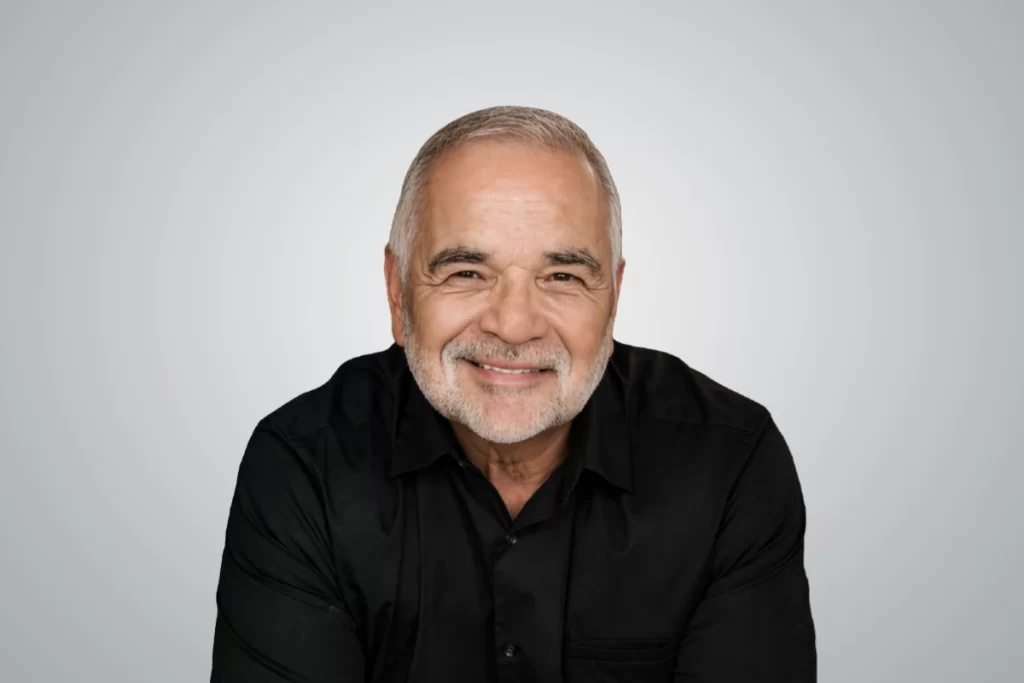
Richard R. Ramos
Founder & CEO
Parents on a Mission
Leading the Leaders Who Shape the Next Generation
Richard R. Ramos
Founder & CEO
Parents on a Mission
Richard R. Ramos-Global Entrepreneurs to Watch in 2026
Every generation produces entrepreneurs who build businesses, and every once in a while, someone comes along who challenges how society has solved a problem for decades. Richard R. Ramos belongs to the latter. His work has never been driven by the ambition to create another organisation or expand a program into new communities. Curiosity led him down a different path, one that questioned whether lasting change was being pursued from the right starting point in the first place. More than two decades after founding Parents on a Mission, that question continues to shape conversations about leadership, family and community transformation, and how to reach schools, correctional institutions, nonprofits, and leaders across countries. Richard’s journey is a reminder that meaningful entrepreneurship is not always about creating something the world has never seen. Sometimes it begins by seeing what everyone else has overlooked. In this conversation with TradeFlock Magazine, he shares the experiences, convictions and defining moments behind a mission that continues to challenge conventional thinking while creating lasting impact.
What inspired you to build Parents on a Mission?
My career began in classrooms, juvenile halls, and correctional facilities, where I worked with some of the highest-risk youth in our communities. Like many professionals, I believed that if we could change the child, we could change the outcome. Spending years alongside those young people gradually challenged that assumption. Their behaviours were often symptoms rather than the real problem. Behind many struggling children was a family that was disconnected, overwhelmed or hurting. That realisation entirely changed the direction of my life. Instead of asking, “How do we fix children?” I began asking, “How do we equip parents to become the greatest protective factor in their children’s lives?” That question became the foundation of Parents on a Mission. I wasn’t interested in creating another parenting program. I wanted to build a leadership framework that equips parents to become the primary architects of a healthy family culture, addressing root causes rather than simply responding to symptoms. Communities spend enormous energy dealing with the problems rebellious youth create. My belief has always been that we should invest far more in preventing the problems that create rebellious youth in the first place.
Which success story continues to remind you why this work matters?
Adrianna’s story has stayed with me because it captures everything Parents on a Mission stands for. She entered our program as a young single mother convinced that her daughters were the problem. Their home was filled with constant arguments, screaming and sometimes even physical confrontations. As she worked through the program, she experienced a powerful shift. She realised the greatest change needed to happen within herself. She developed greater emotional awareness, improved her communication and learned to respond rather than react. As she changed, the atmosphere inside her home changed. Her daughters hadn’t suddenly become different children. They were responding to a different leader. At the end of the program, she wrote me a letter that ended with the words, “You may not realise it, but you saved my family.” Experiences like that continue to reinforce what I’ve witnessed for decades. When parents grow in emotional maturity and leadership capacity, children often follow.
What's the next chapter for Parents on a Mission?
The vision has always been much bigger than creating a successful organisation. My goal is to see Parents on a Mission become a nationally and internationally recognised framework for family stabilisation, equipping schools, nonprofits, faith communities, correctional institutions and community violence intervention initiatives to develop parents as transformational leaders within their own homes. Changing mindsets remains our greatest challenge. Developing curriculum isn’t the difficult part. Helping people understand the value of strengthening families before problems arise requires far more persistence, as prevention rarely receives the attention it deserves. Developing people has never simply been my career. It’s been my calling. Entrepreneurship, in my view, has never been about building an organisation. It’s about building people. Programs serve communities, but people transform them. Over the years, I’ve come to realise that my work has never been only about parenting. It’s been about leadership. Parents are simply the first leaders children come to know. When we strengthen those leaders, we strengthen families. Healthy families become the foundation of healthier schools, organisations, neighbourhoods, and communities. That’s why I’ve devoted my life to developing people. Programs can serve communities, but only transformed people can truly transform them.
What has shaped your leadership journey the most?
Working with vulnerable young people taught me lessons that extend far beyond education or family support. One principle has remained constant through every stage of my journey. Influence requires connection before correction. I’ve come to believe that healthy leadership creates healthy culture, whether in a family, a nonprofit, a school, or a community. Leadership isn’t simply about directing people; it’s about cultivating environments where people can flourish. Real change begins when people feel understood rather than judged. That philosophy shaped the way I built Parents on a Mission and continues to influence how we work with schools, nonprofits, faith communities and community leaders. Entrepreneurship has also reinforced another important lesson. Lasting impact doesn’t come from solving isolated problems. It comes from creating systems that help people solve problems long after you’ve stepped away. Healthy parents build healthier families, healthier families strengthen communities and stronger communities create opportunities for the next generation. That’s the kind of impact I believe is worth building.
"Entrepreneurship has never been about building an organisation. It's about building people, because people are the only force that can truly transform communities."
What kept you moving through your toughest entrepreneurial moments?
Building something that challenges conventional thinking comes with its share of uncertainty. Funding wasn’t always secure, opportunities became limited at times and there were moments when I questioned whether the sacrifices were worth making. Families whose lives had been transformed always brought me back to the mission. They reminded me that success can’t always be measured by organisational growth, recognition or financial resources. Sometimes success is a restored relationship between a parent and child. Sometimes it’s a family discovering peace after years of conflict. Those moments reminded me that success and flourishing are not the same thing. Restored relationships, renewed hope, and healthier families may never appear on a balance sheet, but they represent the kind of flourishing that outlives every generation. Healthy leadership creates healthy culture, and healthy culture is where people flourish.
All Magazines -
Success Insights
Roisin Wadding-Best HR Leaders from Asia 2026
Stella Gurgova-Most Empowering Women Leaders to Watch in 2026