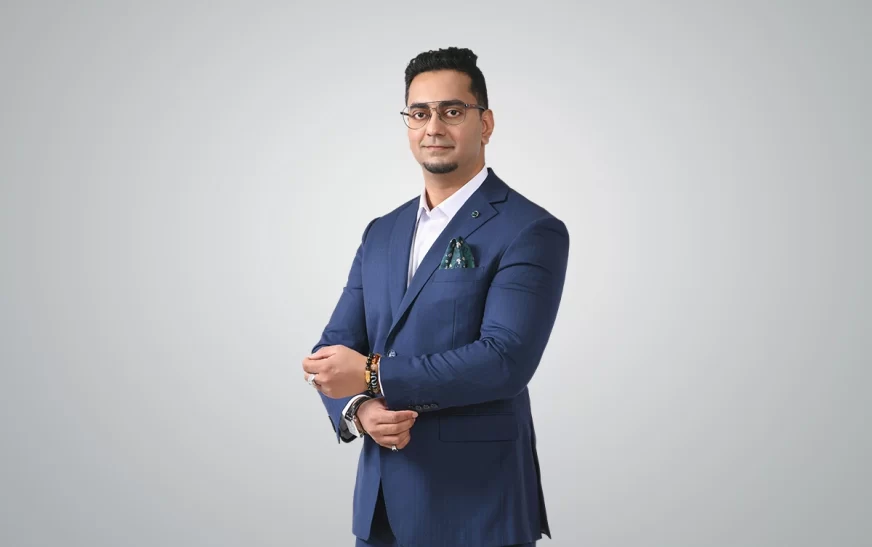
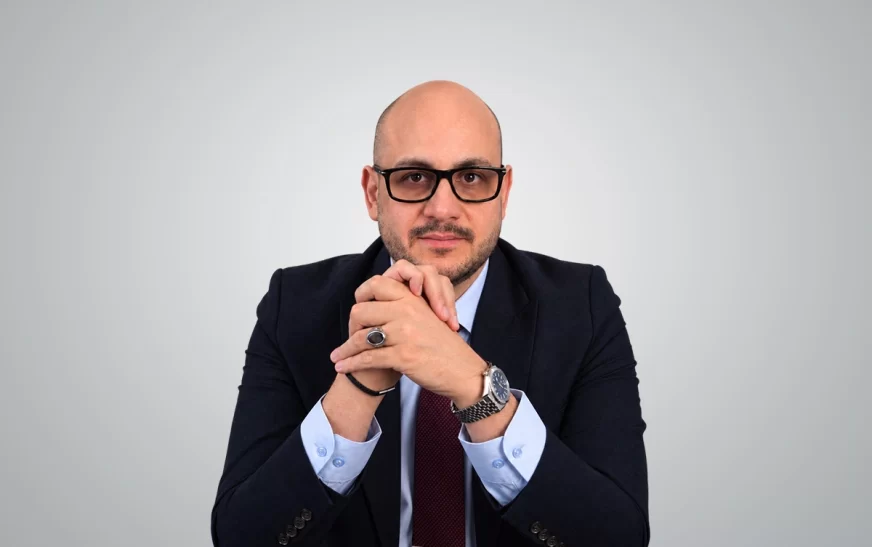
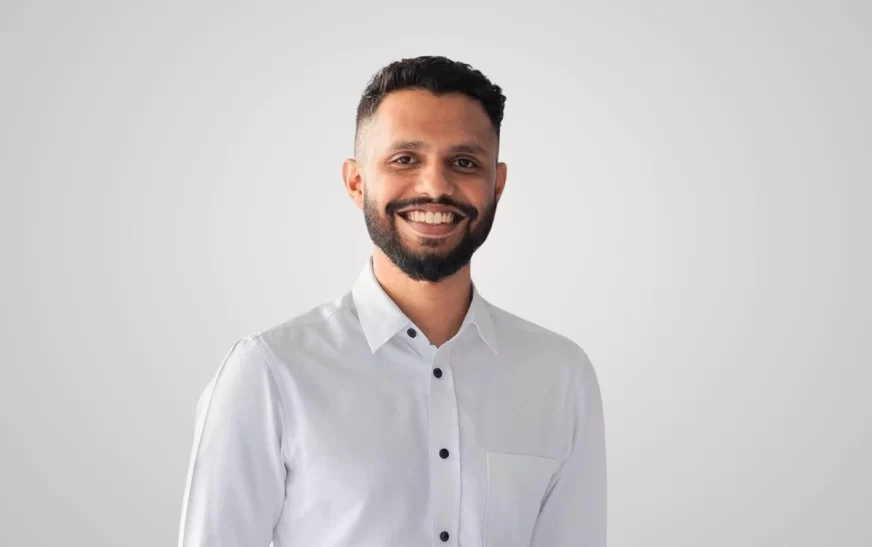
What happens when the desire to help is widespread, yet those who need it most receive little of that goodwill? For Manuel Kreitmeir, founder and CEO of Gem Trail Lab, this question emerged from a life-changing experience. He survived the 2004 tsunami in Sri Lanka by sheer luck and witnessed its destruction firsthand. While volunteering with a local NGO, Manuel saw the immense suffering of affected communities alongside an overwhelming outpouring of international aid. Yet the two rarely came together in a meaningful way.
The experience taught him a lasting lesson: well-meant and well-done are not the same thing. Manuel began questioning why so much goodwill failed to reach those who needed it most. When talking to TradeFlock, Manuel shared how Muhammad Yunus’s 2006 Nobel Peace Prize for his pioneering work with Grameen Bank helped shape his ambitions. Yunus’s approach to solving social problems through entrepreneurship and innovation resonated deeply with Manuel. After moving to Germany to continue his studies amid Sri Lanka’s renewed civil war, Manuel was still in college when he found his calling in social entrepreneurship.
Read the interview excerpts here.
How do you decide which sustainability and innovation ideas to test in the real world?
I always taught my students at Mannheim Business School not to fall in love with their solution but with the problem they are trying to solve.
The biggest trap in innovation is jumping into the solution space too quickly. Innovation should be an iterative process: see what works and what doesn’t and learn along the way. Another belief I hold is that done is better than perfect. I learned Design Thinking at SAP in Germany, and perhaps that’s why my thinking is influenced by software innovation: build, make mistakes, learn, iterate and improve.
Applying this to social innovation comes with its own challenges. While working with the Institute for Cacao and Chocolate Research and Harvard University on a peer-learning platform for cacao farmers during COVID-19, we often had to balance the drive to innovate with the principles of responsible research and innovation, particularly given the power imbalances between us and the farmer communities we wanted to support.
Sometimes, responsible innovation also means knowing when not to innovate.
What has been your toughest leadership decision, and what did it teach you?
I think one of the most difficult things is finding the right balance between ambition and realism. When you are building something new, particularly in an established industry, there is always pressure to move faster, promise more and demonstrate immediate results.
But credibility is incredibly important, especially when you are dealing with sustainability, scientific verification and people’s livelihoods. So, counterintuitively for a startup, we took over a year to better understand gemstone supply chains and facilitated research with universities in Germany and Sri Lanka.
Looking back, this was one of our most important decisions. The most rewarding part has been to inspire a debate about the future of the gemstone industry. We are now in direct discussions with the government of Sri Lanka about how to improve the industry.
These experiences have taught me that leadership is not about having all the answers. It’s about knowing where to focus and creating an environment where people with different backgrounds and expertise can challenge each other, experiment and contribute to a common goal.
What has building Gem Trail Lab taught you about commercialising innovation in an established industry?
We have faced quite a bit of pushback from certain actors in the gemstone industry for introducing new approaches to transparency and sustainability. But we have also received overwhelming support from within the mining community itself. And although we started in Sri Lanka, we already have potential collaborations in South America, the Middle East and Africa.
Ultimately, we are trying to address a global problem in the artisanal and small-scale gemstone mining (ASM) and jewellery industry that employs over 300 million people worldwide: the lack of transparency and, with it, sustainability.
One of the biggest lessons has been that introducing innovation into an established industry is not just about technology. It is about challenging existing practices, building trust and demonstrating that sustainability can create value for everyone involved.
What has your work in social impact taught you that you wish you had known earlier?
That good intentions are not enough. And that you don’t have to be perfect to start building something.
Social entrepreneurship was quite popular among the millennials of my generation, but it has lost some of its momentum in recent years. I want to inspire the next generation to believe that the world can be changed. The world we live in was created by people, and it can be changed by people. I am working to transform an industry that many told me was intrinsically unsustainable. And today, we are collaborating with leading universities and talking to governments about changing the industry.
A better future is possible. Don’t let anyone convince you otherwise.
TradeFlock • Asia's 40 Under 40
Power Profile Card
Age39
Leadership11yrs
Industry / SectorGemstone Sustainability/Artisanal and small-scale mining (ASM)
CountrySri Lanka
HonorAsia's 40 Under 40
Leadership Philosophy“Leadership is about inspiring others, and enabling people to become agents of change.
”
MotivationChallenging unfair systems and building opportunities.