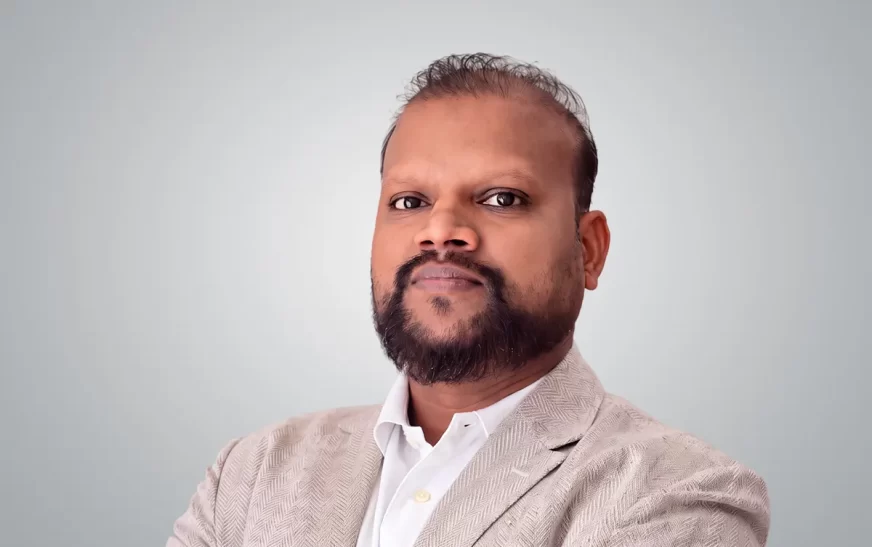
Expanding the Frontiers of Maldivian Technology
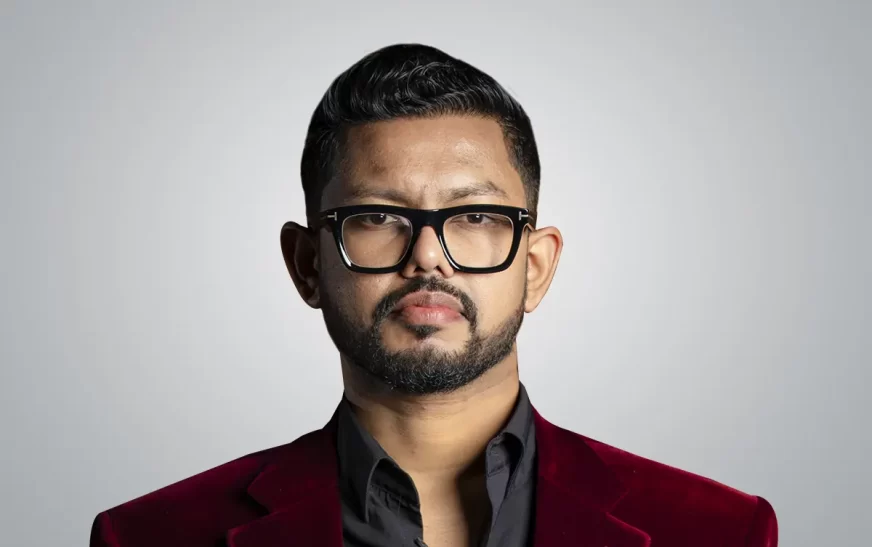
Abdullah Miuvan Shareef
CEO, CFO and Director of the Board
eeezap
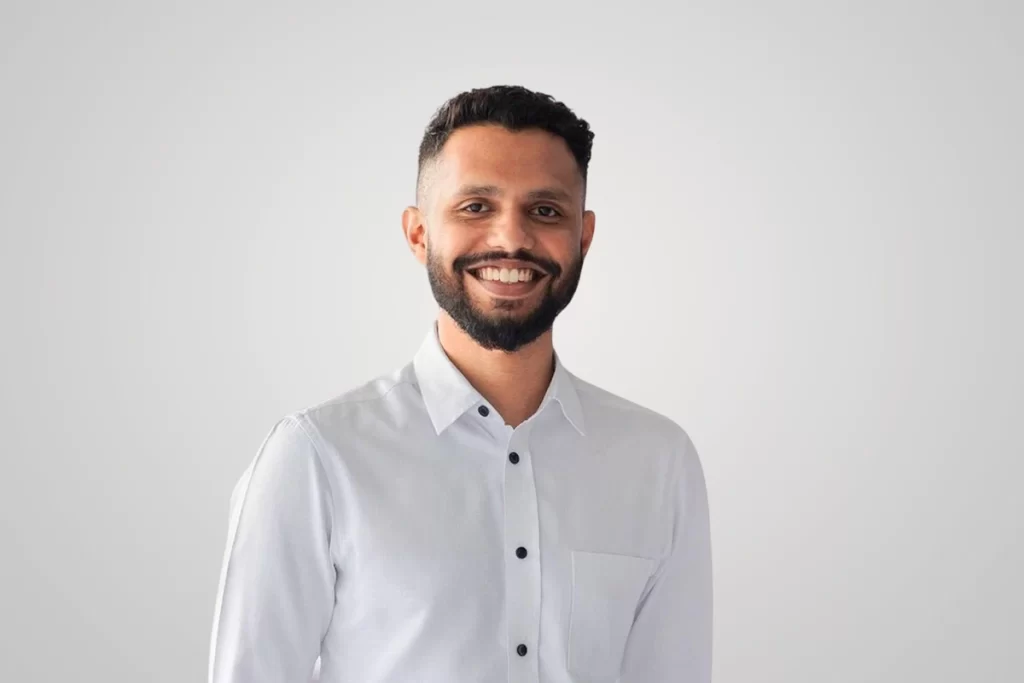

Expanding the Frontiers of Maldivian Technology
Abdullah Miuvan Shareef
CEO, CFO and Director of the Board
eeezap
Abdullah Miuvan Shareef-Best CXOs in Asia 2026
Building a technology business in an archipelago economy requires entrepreneurial conviction, strategic discipline and an ability to recognise opportunities beyond established industries. Abdullah Miuvan Shareef, CEO, CFO and Director of the Board at eeezap, is pursuing this vision by developing a digital ecosystem for the Maldives. Through its super-app, eeezap connects businesses, customers and drivers, helping micro, small and medium enterprises reach customers, manage operations and access delivery services while creating income opportunities through the gig economy.
Abdullah’s leadership has been shaped by enduring failures, navigating resource constraints and taking calculated risks, which has influenced his approach to business growth and long-term sustainability. He believes technology enterprises can diversify the Maldivian economy and compete internationally with the right financial and institutional support. Abdullah’s vision for eeezap extends beyond commercial growth to strengthening business connectivity and expanding technology’s role in economic development whilst paving the way for entrepreneurs to come.
Discussing with TradeFlock, Abdullah shared the experiences, decisions and leadership principles guiding his entrepreneurial journey and ambitions for the Maldives.
What experiences shaped your ambitions and leadership journey?
My failures and the difficulties I experienced played a critical role in shaping my ambitions and leadership approach. I now view these setbacks as rizq, or blessings, because they gave me lessons I could leverage to move forward. Each difficult experience strengthened my resilience and changed how I approach challenges.
These experiences have also shaped my desire to guide aspiring entrepreneurs through their own periods of uncertainty. Having faced setbacks myself, I can offer them a practical perspective and reassurance that difficulties are part of the entrepreneurial journey, not the end of it.
How do you balance financial discipline, growth and sustainability at eeezap?
In eeezap’s early stages, I chose to take significant risks and expend myself completely to accelerate growth. Those decisions became catalysts for our expansion, and today, we have grown beyond comparable applications backed by multinational companies and even banks in terms of users, usage, active verticals and income distribution. I am particularly proud that we have achieved this as a startup that began with extremely limited resources.
Balancing financial discipline, growth and long-term sustainability requires clarity of purpose, a sound strategy that accounts for risk, and a capable team that can execute it. Luck also plays a part in entrepreneurship. For me, the key is to take calculated risks while remaining focused on the objective, ensuring that growth is supported by strategic decisions and the ability to execute & pivot effectively.
What helps you navigate unfamiliar fields and solve difficult problems?
The quickest, and perhaps the best way to learn something is to start doing it. You need patience, a willingness to fail forward and an iterative mindset. There is also real value in asking simple questions; there is no embarrassment in admitting what you do not know. Once you understand the fundamentals, you can begin challenging conventional wisdom and exploring possibilities others might dismiss as impossible, which is a formal policy position I have integrated into eeezap; we explore areas conventional wisdom has deemed “impossible”.
At eeezap, this approach has helped us compete with apps backed by much larger organisations. We periodically reach the No. 1 position in the App Store’s Lifestyle category because we keep learning, relearning and unlearning. We test different hypotheses, assess what works and adapt quickly to achieve our objectives.
My personal and professional failures, too numerous to count, have been an important part of this process. Rather than viewing them as weaknesses, I see them as experiences that have strengthened me over time. They have taught me to approach challenges with greater resilience and remain open to new ways of thinking. I am grateful for these experiences because they continue to shape how I learn, make decisions and lead. For me, progress comes from taking action, asking questions, learning from mistakes and having the courage to challenge what others consider impossible.
What unexpected outcome changed how you approach professional decisions?
While formulating eeezap, I was convinced that some of our unconventional features and commercial models would face rejection from the market and regulators. I strongly opposed them and was unwilling to reconsider my position. However, my team persuaded me to at least allow them to test these ideas. To my surprise, not only did they work, but they became some of our biggest differentiators and competitive advantages. This experience taught me that conviction should not turn into inflexibility.
I realised I needed to remain open to possibilities, especially when they challenged my assumptions. Since then, I have become more willing to experiment with unconventional ideas, helping eeezap move faster, innovate and strengthen its competitive position. For instance, we formed a company called The Boring Crew after Elon Musk’s The Boring Company with the same objective – to raise cash for eeezap through novel carnival games (as opposed to selling flame throwers) – and, to our surprise, it worked. It challenged the status quo, and it made us believe that internationally bold moves can be adjusted and replicated in the Maldives too.
What common assumption about building businesses in the Maldives do you challenge, and why?
A common assumption is that sustainable businesses in the Maldives are limited to tourism, construction, real estate and fisheries. Building eeezap, a phygital business combining digital services with real-world operations, has challenged this view. I believe the Maldivian technology sector can contribute significantly to the local economy and develop businesses capable of competing globally.
Realising this potential requires stronger support from banks, capital markets, the government and policymakers to foster technology entrepreneurship and economic diversification.
What problem is eeezap solving, and what inspired you to build it?
My goal is to position eeezap as a digital marketplace serving the Maldivian economy, connecting businesses of different sizes, not limited to but particularly micro, small and medium enterprises, with customers and drivers. We want to go beyond delivery by offering enterprise management capabilities that help businesses manage their operations & finances through one platform.
Equally important is our role in pioneering the gig-economy & creating income opportunities for drivers and people seeking part-time work. The strongest validation of eeezap’s purpose has been seeing entrepreneurs and drivers begin earning through our platform. As our super-app becomes increasingly connected to their livelihoods, we see its tangible impact on the people who depend on it. This reinforces our commitment to expanding eeezap into an ecosystem that supports businesses, enables income generation and strengthens digital commerce across the Maldives.
What has each of your professional experiences taught you, and how have you applied those lessons?
Banking and government taught me discipline, structure and the value of following a systematic approach. Entrepreneurship taught me something more personal: setbacks are inevitable, but what matters is how quickly you find the strength to get back up and try again. I have learned to carry both lessons into my work. The embedded discipline helps me think through decisions and exercise forebearance, while resilience reminds me not to lose heart when things go wrong (which it almost always does). Looking back, I realise that my experiences across these environments have complemented one another, shaping how I approach challenges and keep moving forward as an entrepreneur.
How have risk management and strategic communications shaped your decision-making?
My experience has taught me to relentlessly simplify concepts that often sound complex or jargon-heavy. I use a straightforward framework: the objective defines what I want to achieve, strategy is my hypothesis for how to get there, risk management accounts for possible deviations, and strategic communications is a tool to help achieve the objective. This framework helps me explain decisions clearly, connect actions to intended outcomes and anticipate challenges before they arise.
At eeezap, this approach supports faster experimentation and decision-making. By defining the goal, testing our assumptions and accounting for potential risks, we can adapt quickly when circumstances change and make better-informed decisions without losing sight of the outcome we want.
What do international companies often misunderstand about doing business in the Maldives?
International companies often underestimate the Maldives because of its relatively small resident population. However, population size alone does not reflect its economic potential. The country has high GDP per capita in the region and strong consumer spending, creating opportunities that businesses may overlook. Both local & cross-border orders and payment transactions demonstrate the scale of consumption, which can compare favourably with larger neighbouring markets.
My experience has taught me to look beyond the resident population when assessing the market; the Maldives welcomes tourists throughout the year, creating what I see as a rolling population of millions and expanding its potential customer base. The performance of telecommunications companies and local and international banks further illustrates the market’s commercial opportunities. Businesses that understand these dynamics can identify demand and build sustainable operations instead of judging the Maldives solely by its population size.
What key leadership lessons would you share with young Maldivian professionals?
My leadership rests on three principles: limited resources can sharpen priorities and strengthen execution; failure is a bridge to success, not a barrier; and decisive action creates the information needed to move forward. I encourage young Maldivian professionals to embrace constraints, learn from setbacks and act without waiting for perfect information. Progress comes from setting clear goals, adapting quickly and executing with determination.
“Failure is a bridge to success, not a barrier.”
All Magazines -




Success Insights

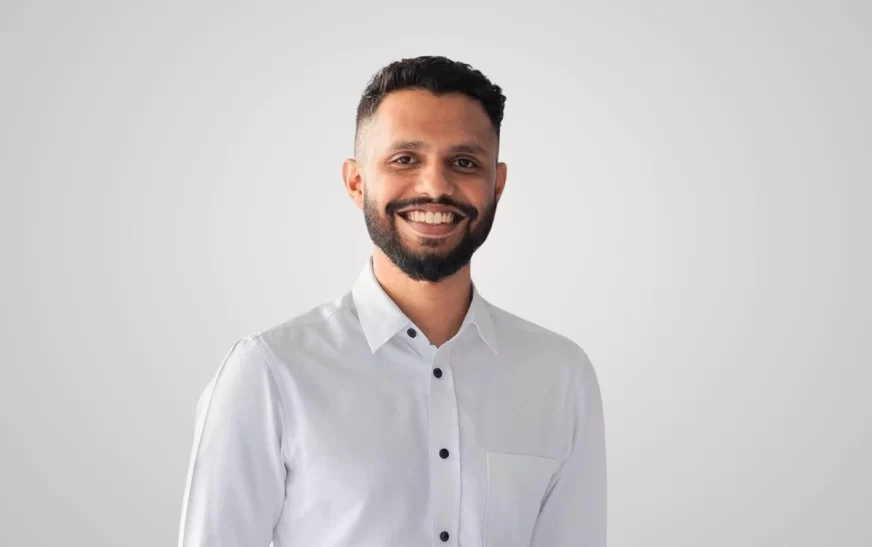
Abdullah Miuvan Shareef-Best CXOs in Asia 2026
Ajay Kapoor-Best CXOs in Asia 2026
Muhammad Tayyab Popalzai-10 Best CFOs from Asia 2026
Ravindranath Garaga-Best CXOs in Asia 2026
Dr Tharindu Samarajeewa-Asia’s 40 Under 40 2026