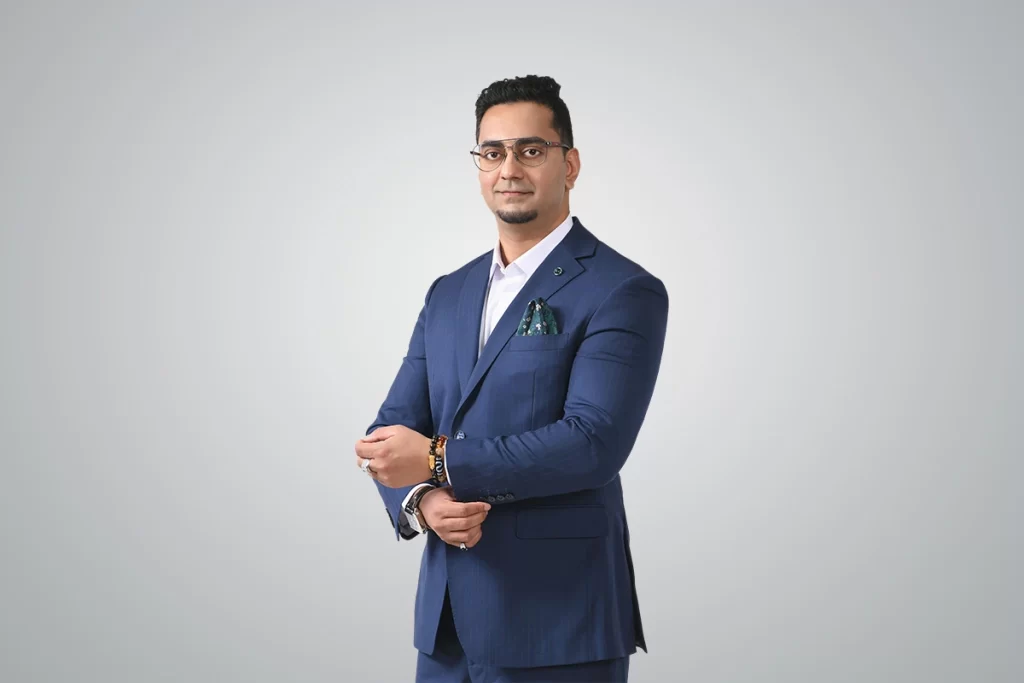
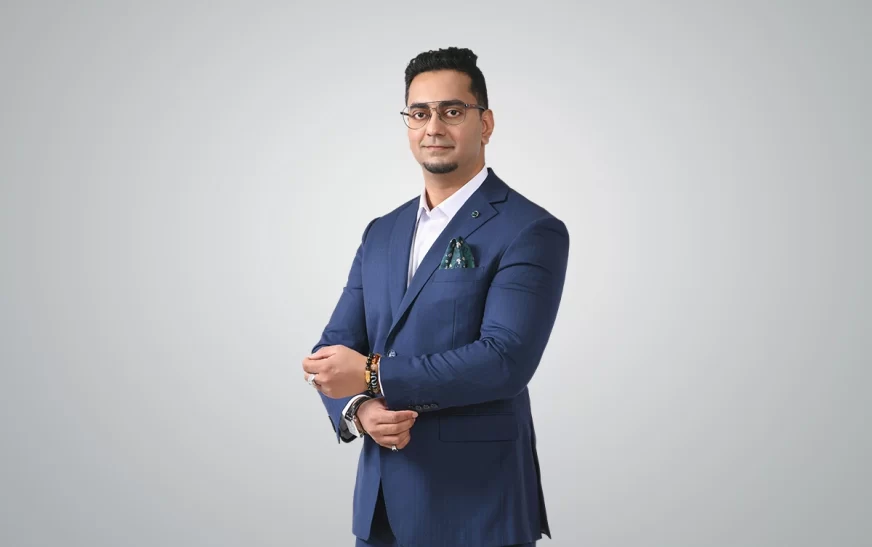
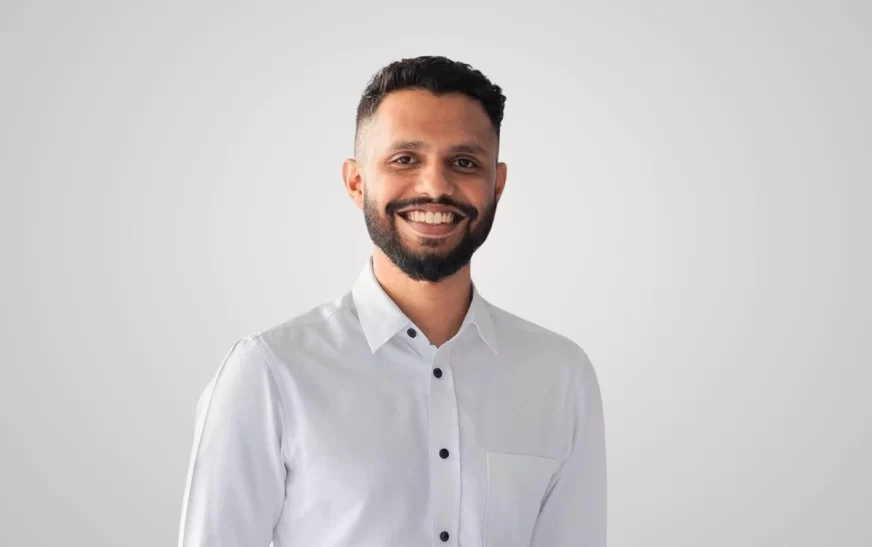
Marketing can tell a business what its customers want. The bigger opportunity comes when those insights influence what the business does next. Dr Aajay Girit, Chief Marketing & Experience Officer at Thawani Pay, approaches his work with this wider perspective, connecting customer intelligence with commercial decisions, technology, and organisational priorities. Across 20 years of professional experience, his ambitions have increasingly centred on creating lasting value for customers, shareholders, and partners.
At Thawani Pay, he brings marketing and customer experience into a broader view of business growth. Analytics helps identify opportunities, technology supports better decisions, and service delivery determines how those decisions translate into customer experiences. He is also focused on developing the capabilities needed to make AI and automation useful to the organisation.
Talking exclusively with TradeFlock, Dr Aajay shares the experiences that have shaped his leadership and explains why he thinks beyond individual functions or immediate results. His priority is to build systems that improve with time, enabling the business to learn faster, execute more effectively, and make a stronger connection between customer value and business performance.
How do you identify customer behaviours that drive growth, and when has an unexpected insight changed your strategy?
I approach growth as a discipline of decision science. The starting point is a reliable measurement framework: clearly defined behavioural events, consistent metrics and trusted data that connect customer activity to commercial outcomes.
I structure my analysis around customer cohorts, activation patterns, transaction frequency, retention and product adoption. These help distinguish initial interest from sustained value. Customer lifetime value and acquisition economics then provide a framework for deciding where investment can generate meaningful returns.
AI adds another layer of analytical capability. Predictive models can help estimate customer propensity and identify emerging patterns, while controlled experiments help test whether a proposed intervention produces incremental value.
The principle that guides me is straightforward: every insight should improve a decision, and every significant decision should have a measurable hypothesis behind it.
How do you approach fintech leadership, and how are AI, data, and innovation shaping the sector’s future?
My distinctive contribution is the ability to connect strategic ambition with the data, technology and operating capabilities required to deliver it.
I bring an integrated perspective across marketing, customer experience, analytics and commercial growth. This allows me to examine an opportunity from several directions: the customer need, the business case, the information required, the experience to be designed and the capability needed to scale.
At Thawani Pay, my focus includes building the foundations for a more intelligent financial ecosystem: connecting customer journeys, analytics architecture, automation and business performance. I see significant potential in AI agents, predictive intelligence and coordinated workflows that help teams analyse information, evaluate opportunities and act more effectively.
The opportunity extends to executive decision-making: clearer investment priorities, stronger scenario planning and faster access to useful customer and market intelligence.
What sets my approach apart is the emphasis on institutional capability. I want innovation to become part of how the organisation learns, decides and creates value, with benefits that continue well beyond any individual initiative.
How do you balance growth with customer trust, and what experience shaped your approach?
I regard customer trust as an asset that contributes directly to the long-term value of a financial institution. It influences adoption, retention, advocacy and the depth of the customer relationship.
My approach connects commercial performance with experience quality. Alongside acquisition and revenue indicators, I consider onboarding completion, repeat usage, service resolution and the consistency between what we communicate and what customers experience.
Leading both marketing and customer experience has shaped this perspective. It gives me visibility into the full relationship—from the promise that attracts a customer to the operational experience that sustains their confidence.
As we develop greater AI and automation capabilities, I place importance on data quality, appropriate access controls, explainable decisions and clear accountability. These foundations support reliable personalisation and help ensure that efficiency improvements also serve the customer.
For shareholders and the board, this translates into a more durable growth model: stronger relationships, better investment decisions and an organisation that can scale while maintaining confidence in its services.
What philosophy has guided your success, and why does it remain relevant today?
My philosophy is to expand our capacity to learn, think, and create, then turn it into meaningful progress. Nick Bostrom’s work on superintelligence inspires me to consider how AI can advance scientific discovery, business strategy, and human potential. My father remains my deepest personal inspiration, reminding me that ambition must be grounded in integrity, discipline, and responsibility.
I want my leadership and contributions to make him proud. This philosophy remains relevant as technology advances rapidly. The real challenge is building trusted systems, sound judgement, and purposeful leadership to ensure greater technological capabilities translate into meaningful outcomes for businesses and society.
TradeFlock • Asia's 40 Under 40
Power Profile Card
Age38
Leadership20yrs
Industry / Sector Fintech and Digital Financial Services
CountryOman
HonorAsia's 40 Under 40
Leadership Philosophy“Advancing human potential through technology.
”
Motivation Empowering progress through smart finance.