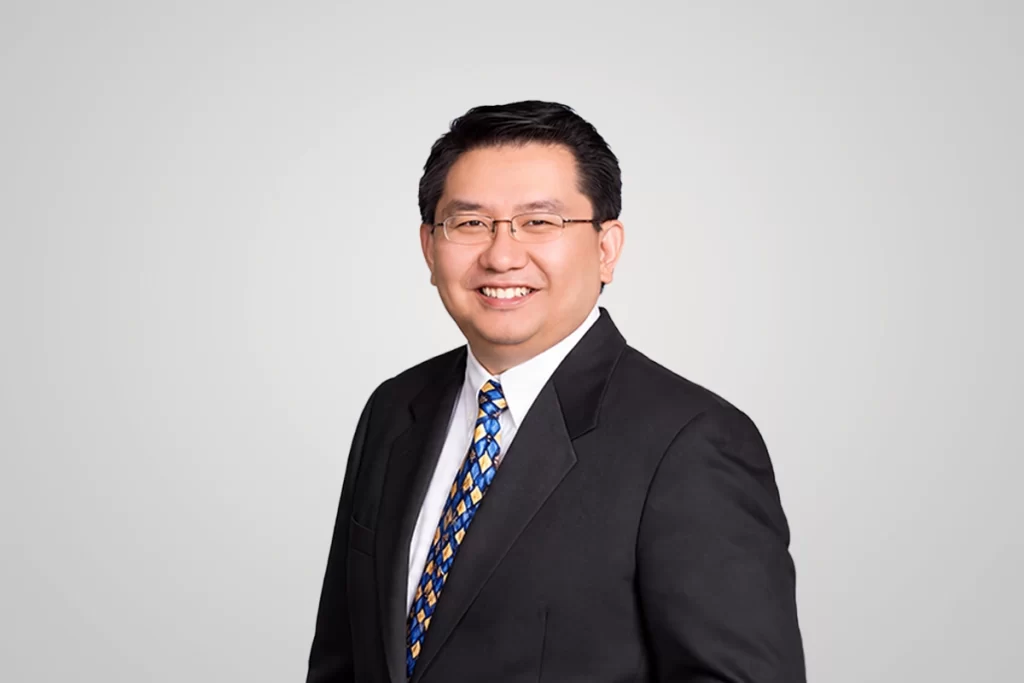
Henry Tan-Best Business Leaders from Singapore 2026
Real estate was still largely a business of paperwork, spreadsheets and fragmented processes when Henry Tan began asking a different question: what if technology could become part of the industry’s operating backbone? Long before PropTech became a recognised category, Henry was working at the intersection of property and information systems, helping businesses replace traditional workflows with integrated technology. His journey took shape during more than a decade at SISV Services Pte Ltd, where he served as General Manager and Chief Technical Officer and worked closely with Singapore’s real estate industry. In 2007, Henrycarried that experience into entrepreneurship and co-founded AES Technologies Pte. Ltd., with a vision to build technology around the complex workflows of property businesses.
Nearly two decades later, that vision has evolved into a portfolio of applications spanning valuation, agency management, developer ERP, leasing, property management, assets and wealth management. Among them, AES’s Valuation Management System has become a significant part of Singapore’s property technology landscape. Henry says the platform serves around 80–90% of the relevant valuation market in Singapore, supporting valuation firms and consultancies in their work with banks and financial institutions.
What distinguishes Henry’s journey is not simply his longevity in PropTech but the timing of his entry into it. He began digitising real estate when technology adoption was still at an early stage and has continued to evolve his approach as the industry moves toward analytics and artificial intelligence. When talking with TradeFlock, Tan shares his perspective on leadership, innovation, AI and the next chapter of PropTech across Asia.
What leadership principle has guided your journey?
Our core mission is to develop complete ecosystem solutions for the real estate industry. We specialise in B2B applications across valuation, agency management, assets and wealth management, among other areas.
Over the years, we have supported SMEs and international property consultancies in digitising their workflows and integrating our products into their operations. This has reinforced my belief that technology must create tangible business value. It should help companies become more efficient and productive, reduce operating costs and improve profit margins.
Which AES innovation are you most proud of?
Over the past 17 years, we have developed products including the Valuation Management System, Agency Management System, Developer ERP System, Shopping Mall Management System, Leasing Management System and Real Estate Assets and Wealth Management System, along with other solutions for the real estate industry across Southeast Asia.
The Valuation Management System has been our most successful product. In Singapore, we estimate that we have around 80–90% of the relevant market. Valuation firms and property consultancies use our platform to manage their jobs and provide valuation indications and reports to banks and financial institutions.
The impact is particularly meaningful because the system has become part of the everyday workflow of property professionals.
What will shape the future of PropTech?
AI and data analytics will have a major impact. The opportunity is particularly important because Singapore and other ASEAN countries are experiencing ageing populations and will face greater manpower challenges.
We expect to develop more products that can help address manpower shortages by supporting professionals and improving productivity. Technology can handle repetitive processes, assist with analysis and allow professionals to focus on areas where their experience and judgement are most valuable.
The future of PropTech is about using technology to enhance professional capabilities and help businesses operate more effectively.
What has been the biggest challenge in driving digital transformation?
One of the biggest challenges is changing established ways of working. Real estate is an industry with many traditional processes, and introducing technology requires more than developing a good system. It requires organisations and people to adapt.
Our experience has taught us that technology must be practical and closely aligned with customer workflows. If a system creates complexity, adoption becomes difficult. When it saves time, improves efficiency and makes work easier, users can see its value.
Understanding the industry is therefore as important as understanding the technology.
What legacy do you want to leave through AES Technologies?
I would like AES Technologies to be remembered as a company that helped real estate businesses move from traditional operations to integrated digital platforms.
Success is not simply about growth. It is about creating lasting value for the industry and building technology that remains useful as the market changes.
If AES can help real estate businesses become more efficient, more data-driven and better prepared for the future, while supporting the professionals who drive the industry, that would be a legacy I would be proud of.
What did you see in real estate before PropTech took off?
Real estate has always involved large amounts of information and documentation, but many processes were traditionally handled manually or through fragmented systems. I saw an opportunity to bring these processes together through technology and create solutions specifically designed around property businesses.
That thinking became the foundation of AES Technologies. Rather than providing generic software, we wanted to understand the industry’s workflows and build integrated applications around them.
How do you keep AES ahead of industry change?
We believe in preparing for change rather than simply reacting to it. For around eight years, we have been researching artificial intelligence and modernising our systems through big data analytics to better support our clients.
Our approach is to understand where the industry is heading and how technology can address emerging needs. Real estate businesses are dealing with changing customer expectations, greater amounts of data and increasing pressure to improve productivity. We therefore need to continuously improve our products and explore technologies that create practical value.
How should leaders adapt to AI and data?
Business leaders need to fully embrace digitalisation and implement AI to strengthen their competitive advantage. They also need to become more effective at analysing data.
Businesses already have valuable information internally, while public data can provide additional market insights. Leaders need to understand how to bring these sources together and use them to make better decisions.
Technology should therefore be viewed as a business capability rather than simply an IT investment.
How has entrepreneurship shaped your leadership?
Earlier in my career, I was focused primarily on technology and systems. Moving into entrepreneurship required me to look at the business from a much broader perspective.
As an entrepreneur, you have to think about people, customers, markets, execution and long-term direction. Technology remains important, but it is only one part of building a sustainable organisation.
I have also learned the importance of having a committed team. Leadership means setting clear goals and giving people the confidence and responsibility to work toward them. Leaders must also continue learning as technology and markets evolve.
Where do you see AES Technologies going next?
We are expanding further into emerging markets where we have already built experience over the past 15 years, while continuing to take our products and services into other Asian markets.
Our long-term aim is to integrate our applications and platforms across the Asia-Pacific region. We want to create a connected ecosystem that supports different segments of the real estate industry.
There is significant potential across Asia because markets are at different stages of digital maturity. Our experience gives us an opportunity to adapt our solutions to new environments.