For quite some time, conversations around women and sustainability in business were limited to the armchair act of advocacy, in rallies, pledges, and panel discussions. However, that framing is changing now. Across Asia, a generation of women, instead of adding to the armchair discourse on a green, sustainable economy, is actually building it: one grid connection, one electric vehicle, and a restored coastline at a time.
Yet, the numbers continue to tell a familiar tale of underrepresentation. According to a gender report released by IRENA in October last year, women hold 32% of full-time jobs in the renewable energy sector. This figure has been unchanged since IRENA first released its gender analysis in 2019. The gap is sharpest at the top: women account for only 19% of senior leadership positions in the sector. In India, the disparity is still more acute. Women represent only about 11% of the renewable energy workforce in India, compared with the global average of around 32%.
These figures also obscure the change occurring simultaneously. Women who are now at the forefront of building Asia’s green, sustainable economy are not doing so by climbing up the corporate ladder in organisations. Instead, they are building and leading companies, restructuring public institutions and deploying capital at scale in sectors that traditionally resisted female leadership for decades.
Engineers, Founders, Operators
What makes the current moment notable is not the persistence of the gap but the quality and range of the women working against it, often from positions of genuine industrial authority.
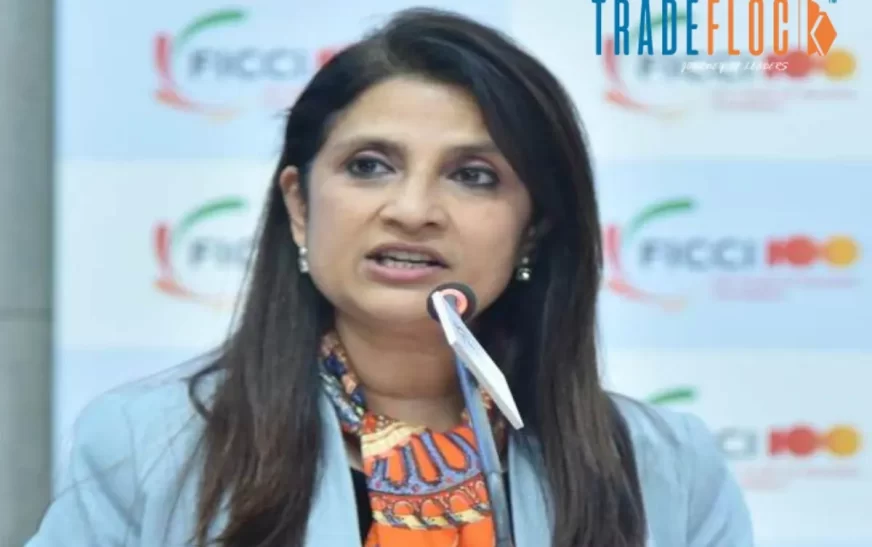
In India’s electric mobility sector, Sulajja Firodia Motwani founded Kinetic Green Energy and Power Solutions in 2015, pivoting from traditional internal combustion vehicles to electric two- and three-wheelers long before EVs became a national policy priority. She chairs the National Electric Vehicle Task Force at the Federation of Indian Chambers of Commerce and Industry. Her firm’s product decisions—which vehicles to electrify, at what price point, for which users—are infrastructure decisions. They shape who participates in India’s mobility transition and on what terms.
She is not alone. The WENERGY Top Women Leaders India 2025 initiative documented a cohort spanning solar project development, grid engineering, corporate finance, and environmental policy across firms including Ayana Renewable Power, SMA Solar India, and others. They reflect women in operational roles: AGMs of engineering departments, strategy and investment leads, whole-time directors. The pipeline is deeper than the headline numbers suggest.
In Indonesia, the story plays out differently but with equivalent practical weight. In Berau Regency, East Kalimantan, home to over 86,000 hectares of mangrove ecosystem, women’s groups have been central to both the management and the economic case for restoration, running sustainable aquaculture operations that make conservation financially viable for coastal communities. Mangrove ecosystems are carbon sinks, coastal protection infrastructure, and livelihood systems. Managing them is technical, economic, and political work. Women are doing much of it.
On Pari Island, North Jakarta, Asmania leads the Pari Island Women’s Group in active coastal restoration, planting mangrove seedlings along a shoreline under pressure from rising sea levels and stronger storm surges. Mangroves sequester carbon, protect coastlines, and sustain fishery-based livelihoods, making them a legitimate asset class in the emerging blue-carbon market. The women managing these ecosystems are, in effect, managing natural infrastructure with measurable economic and climatic value.
The Execution Premium
What connects these women is the shift from representation to execution. The green economy’s next decade will be determined less by how many countries set net-zero targets and more by who builds the systems to reach them. Southeast Asia’s green transition increasingly requires a systems-based approach to interconnected challenges across power, transport, and land use. That kind of integrated, operationally complex work is precisely where the leaders have demonstrated an edge.
At the same time, none of this should be read as evidence that the problem has been solved. The ASEAN Gender Outlook 2024 found that women in Southeast Asia remain underrepresented in key environmental ministries despite overall increases in political participation. Policy architecture, the layer above corporate and community action, remains overwhelmingly male.
IRENA has warned that without greater gender equality, the energy transition risks being neither fair nor sustainable, with the risk of labour shortages and a lack of diverse perspectives at precisely the moment when diversity of thought is most needed.
Asia’s decarbonisation is, in material part, a project being engineered by women. The question for business leaders and policymakers is whether institutional structures are moving fast enough to keep pace with what they are already building.
FAQs
What percentage of the renewable energy workforce is made up of women?
How are women leaders impacting Asia's electric vehicle (EV) sector?
What role do women play in blue carbon and coastal restoration in Southeast Asia?
Why is gender diversity critical to a successful green energy transition?