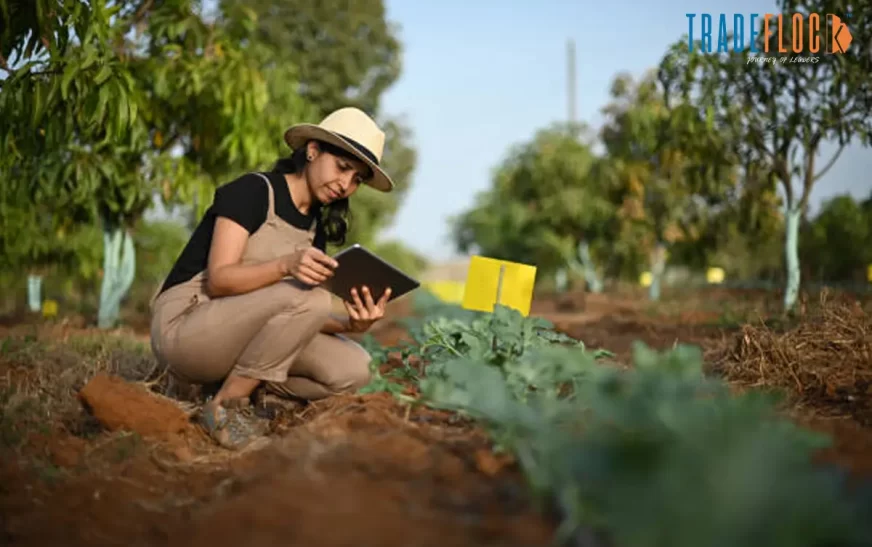
Philanthropy and commerce went hand-in-hand. Money was minted in one place and dispensed in another. In Asia, more women leaders are breaking that divide by using capital to address local issues and create sustainable economic value. It’s a trend that’s taken such a firm grip that family offices, development institutions and impact investors are starting to take it seriously.
The significance of this discussion is quite simple. Asia’s major development challenges are very local. Neighbouring districts may have very different levels of access to health care, clean water, financial services, agricultural assistance and education. There has been significant progress in large-scale government programmes, but gaps remain. Long-term impact has been a challenge for traditional philanthropy after funding cycles have passed. Commercial enterprises have tended to focus on the higher-paying markets where profits are more predictable. There is another model that is becoming more popular. Leaders are developing ventures that tackle issues at a community level and creating financially sustainable ventures that can grow in the future.
Capital that has a Local Operating System
In 2024, the Global Impact Investing Network (GIIN) estimated that the total value of impact investments was over $1.5 trillion globally. Asia is one of the most rapidly expanding regions for impact capital investment, especially in healthcare, financial inclusion, climate resilience, and agriculture.
This is illustrated in several examples. Fazle Hasan Abed, the 2006 Nobel Peace Prize winner and social entrepreneur, established BRAC, a relief organisation that became one of the world’s biggest development companies in Bangladesh. BRAC’s social enterprises utilise the agriculture, dairy and retail sectors to generate profits that finance education, healthcare and livelihood programmes.
For several years now, Tri Mumpuni has been developing community-owned Micro-Hydro Power (MHP) systems in Indonesia, which are installed in remote villages to generate electricity and spur economic activity. The model is not one that relies on ongoing donations for support, but rather on infrastructure development, community ownership, and sustainability.
In the Philippines, it is a trend that social enterprises are increasingly targeting livelihood creation and entrepreneurship programmes that empower communities to earn a living and not just receive assistance from organisations like the Ayala Foundation. The common denominator of these initiatives is. Capital comes into communities with the goal of establishing self-sustaining systems.
Why Investors Are Paying Attention
It is not only about social impact. According to the International Finance Corporation, SMEs make up more than 90% of the world’s businesses and provide more than 50% of the world’s jobs. Many communities in emerging Asian markets remain largely untouched, creating vast economic ecosystems.
The Asian Development Bank (ADB) has consistently identified financial inclusion, access to health care and agricultural productivity as the most powerful drivers of long-term economic development. Businesses in these sectors tend to have strong demand and strong community engagement.
There is growing awareness among investors that addressing local challenges can lead to sustainable economic opportunities. Platforms in the rural health space, community lending networks, women-led agricultural cooperatives, and decentralised energy systems are gaining traction in attracting patient capital because these services meet needs that are not going away.
The Debate on Scale
There are some criticisms of the model. Other investors have suggested that hyper-local solutions are hard to emulate in other parts of the world with varying cultures, regulations, and economies. Trust takes time, local knowledge and a long-term commitment to build within a community. Returns are typically slower in traditional venture-backed industries.
Supporters refer to another reality. Community-based organisations often achieve higher uptake because the solution is built on lived experience, not assumptions. Larger institutions may be unable to overcome the barriers that local credibility can mitigate.
The discussion has grown due to the ongoing accumulation of evidence in Asia. Social outcomes and economic sustainability are not mutually exclusive in the same operating model, as evidenced by community-based healthcare networks, locally governed renewable energy systems, and financial inclusion platforms.
Hyper-local philanthro-capitalism is gaining attention due to the broader redefinition of leadership. It’s about giving back and doing more than traditional business growth. The focus is now on ensuring systems continue to generate value beyond the initial investment.
In Asia, leaders are demonstrating that some of the most replicable concepts start with a very localised issue. Their work is part of a larger conversation already underway: how capital can build community and create long-term economic value. As investors, policymakers, and development institutions become more interested in this, it appears to be no longer a small-scale experiment. It has emerged as one of the watchwords for inclusive growth in the region.