Consumers encounter brands everywhere, from social media to stores. With competing messages, earning attention is easier than earning confidence. Visibility alone is insufficient; the overall experience determines whether a customer returns. This is vital across FMCG, construction, hardware, and consumer products, where varied expectations shape decisions. Factors like reliability, availability, service, convenience, and product experience influence how customers judge brands.
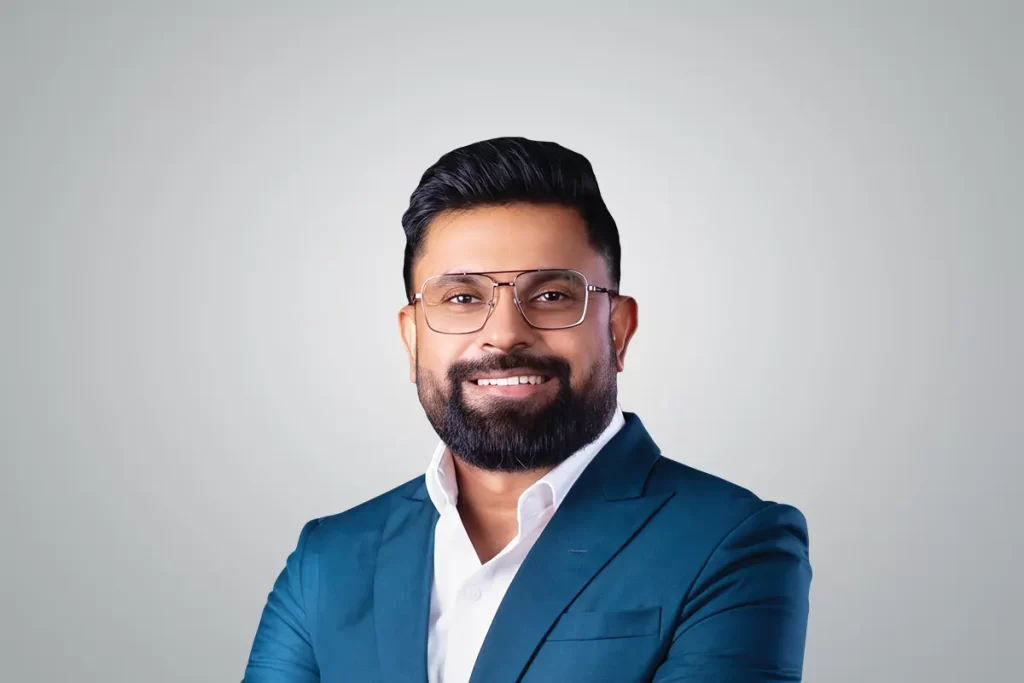
For Rumesh Jayasekara, Head of Marketing at St. Anthony’s Group, marketers must rethink their approach. His multi-category experience shows no single formula builds trust. Speaking to TradeFlock, Rumesh explains why brands must look beyond reach to prioritize the entire customer journey.
How can marketers use AI for personalisation without losing the human connection?
AI is one of the most significant shifts in modern marketing, but its greatest opportunity extends far beyond generating content faster. Its strategic value lies in helping marketers understand better, decide faster and personalise more intelligently, turning complex data into deeper customer insight and more relevant experiences. The risk begins when we confuse personalisation with human understanding. As brands increasingly use similar tools and optimisation models, marketing may become more efficient yet less distinctive, perfectly personalised, but emotionally forgettable.
My doctoral research into AI-generated, human-generated and hybrid advertising has strengthened my belief that the future is a human-AI partnership, not a choice between the two. AI can identify patterns; humans understand context. AI can optimise; humans empathise. AI can accelerate creativity; humans provide judgement, cultural relevance and meaning. The marketers who succeed will be those who understand where AI should lead, where humans should lead, and where both create greater value together.
How can brands communicate sustainability credibly without turning it into a marketing exercise?
Sustainability becomes problematic when communication moves faster than action. Marketing should not manufacture a sustainability story; its role is to translate genuine organisational action into something customers and stakeholders can understand. Credibility begins with business decisions: how products are designed, resources consumed, suppliers selected, waste managed and long-term value created. Communication should follow.
For me, credible sustainability rests on three principles: evidence, transparency and consistency. Brands should communicate what they have achieved, quantify impact where possible and acknowledge where improvement is still needed. Admitting that sustainability is a journey can be more credible than projecting perfection.
Sustainability should also extend beyond CSR or marketing and influence innovation, operations, product development and corporate strategy. As information becomes more accessible, unsupported claims will be harder to defend. The future therefore demands sustainability accountability—making real impact visible rather than making ordinary activity appear extraordinary.
Which capability will define the next generation of marketing leaders?
I believe the defining capability for the next generation of marketing leaders will be strategic systems thinking, the ability to connect customer insight, creativity, data, technology, commercial objectives and customer experience into one growth ecosystem. The marketer of the future cannot afford to be defined by a channel. My experience across businesses with very different customers and routes to market has reinforced that marketing leadership is increasingly about connecting systems rather than mastering isolated tools. AI will accelerate this convergence. But as technology becomes widely accessible, access itself will no longer be the differentiator. Judgement will.
Tomorrow’s leaders will need commercial understanding, data literacy, technological curiosity, creative judgement and customer empathy, combined with the ability to work across functions and see the business as an interconnected whole. Complex business problems rarely belong to one discipline. That is why I believe the future CMO will increasingly become a business strategist who happens to understand marketing exceptionally well.
If you weren't in marketing, what career would you have pursued and why?
Had marketing not become my profession, I would have gravitated towards education, training, people development and public speaking. These are the fields where I could influence thinking, unlock potential and inspire action. I see learning and teaching as a continuous cycle. My journey from science into marketing, management, human resources, IT, finance and doctoral research reflects my curiosity about different ways of understanding and solving problems. The more I learn, the more I can contribute; the more I teach, the more I realise there is still to learn.
Beyond business and academia, boxing has taught me discipline, resilience and adaptability, while serving as President of the Lions Club of Biyagama strengthened my belief in leadership through service. These experiences converge around one philosophy: Never Settle. To me, leadership means continually raising your own standard while enabling others to raise theirs to keep learning, keep evolving, create meaningful impact, and leave people and organisations stronger than you found them.
POWER PROFILE CARD –
Age: 39 Years
Country: Sri Lanka
Industry: Multi-sector leadership across diverse industrial and consumer markets
Years in Leadership: Over 15 Years
Leadership Philosophy: Never settle: continuously grow, learn, execute, and innovate.
Motivation: Grow brands, businesses, and people through continuous evolution.