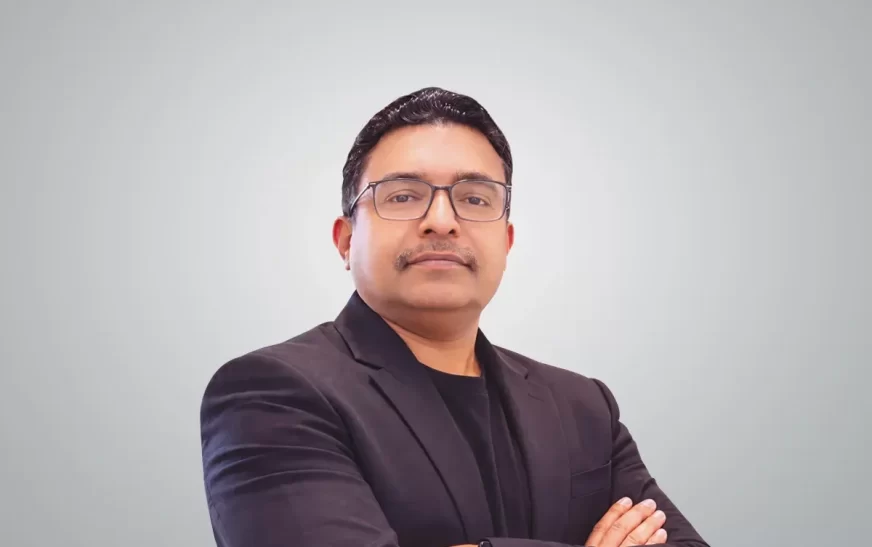
Credentials, identities, and records are becoming increasingly digital, but the systems that establish their credibility have not always kept pace. Yao-Chieh (Jeff) Huis working to close that gap. What began at Turing Spacewith digital certificates has evolved into a broader pursuit of trust infrastructure that can operate across institutions, industries, and borders. His experience has shown that the biggest challenges are often not technological but rooted in governance, recognition, issuer legitimacy, and long-term maintenance.
These lessons have shaped Jeff’s approach to international expansion and AI-driven fraud, where credible provenance can provide a more durable foundation than continually detecting new forms of deception. His philosophy extends to infrastructure itself: technology should remain useful without creating dependence on its provider. This combination of technological thinking, institutional awareness, and long-term vision defines Jeff’s contribution to digital trust.
Under his leadership, the company has issued over 6,000,000 credentials across 15 countries and regions to date. Speaking with TradeFlock, Jeff shares his vision for identity, verification, and trusted digital infrastructure as founder and CEO of Turing Space and founding organiser of Asia-Pacific Digital Identity (APDI) consortium.
What does digital trust mean today, and where is the world still getting it wrong?
Digital trust is not about belief; it is about whether something can be verified without relying on another person or institution. Today, checking a diploma, certification, or supplier claim often requires calls, emails, and manual confirmation. That friction means verification is frequently skipped, creating opportunities for fraud. True digital trust should make verification immediate and independent, with credentials carrying their own proof and remaining verifiable even offline.
Yet the world continues to focus on building bigger databases rather than creating trust that travels with the individual. The overlooked challenge is the infrastructure beneath these systems: determining which issuers are legitimate and maintaining that information over time. Technology may enable trust, but reliable registries and governance make it sustainable.
What has been the biggest challenge in making digital identity work across borders?
The biggest challenge has been governance, not technology. In the Taiwan-Japan corridor, technical interoperability was achieved early, but progress stalled over responsibility for maintaining recognised-issuer lists and funding them. Three approaches helped. First, start with commercially relevant use cases such as hotel check-ins, car rentals, and tax-free shopping. Second, build industry consortia before products, creating shared recognition frameworks instead of negotiating integrations individually. That is why we helped start the APDI consortium.
Third, enable independent verification rather than relying on one government’s list. Published standards and open tools allow both sides to verify credentials independently. This makes cross-border trust more scalable and technically verifiable.
What personal belief guides your decisions when business opportunities and missions pull in different directions?
My guiding belief is that technology should outlast its creator. We deliberately use published standards instead of proprietary formats, allowing customers to verify credentials independently and leave without losing access to their data. That sometimes means turning down commercially attractive opportunities, but we believe true infrastructure should not create dependency.
If a system stops working when its provider disappears, it is not infrastructure. When governments entrust us with citizen credentials, they should always have the freedom to move away.
What did you learn that changed the problem you wanted to solve?
We initially believed the problem was forgery: make certificates tamper-proof, and the job was done. But when WHO PMNCH sent paper certificates to 150 countries, we realised the bigger problem was verification. Documents could still be useless if checking them required a phone call and weeks of waiting.
That changed our focus from preventing forgery to making verification effortless. The credential is simple; the harder challenge is the infrastructure behind it. The system must identify legitimate issuers, support recognition across borders, and remain current. We learned that trust is not purely technical; governance remains essential.
Is the industry focusing too much on detecting what is fake rather than establishing what can be trusted?
Yes. Fraud detection is becoming harder as bad actors improve faster, and models often learn from yesterday’s threats. As the cost of creating convincing fakes falls, the challenge will intensify. A stronger approach is provenance: establishing who created or signed something and whether they were authorised. Unlike detection, provenance offers a stable basis for verification over time.
Detection still matters when no credential or verified origin exists. However, more resources should go toward establishing trustworthy origins rather than continually responding to increasingly sophisticated fraud.
Has building Turing Space changed the way you decide whom to trust in your own life?
Building Turing Space has changed how I understand trust. I now pay less attention to who vouches for someone and more attention to what happens when that judgement proves wrong. In people, I value those who acknowledge mistakes and correct themselves without being forced to.
I have also become less comfortable with trust that cannot be checked and more appreciative of people who acknowledge their limitations. This perspective has naturally shaped both my personal relationships and the way I approach trust professionally.
POWER PROFILE CARD –
Age: 30
Country: Taiwan
Industry/Sector: Digital trust infrastructure. Verifiable credentials and decentralised identity
Years in Leadership: 6
Leadership Philosophy: Building a team of “A” players. Never settle.
Motivation: Proof should travel with the person, not sit in somebody else’s database