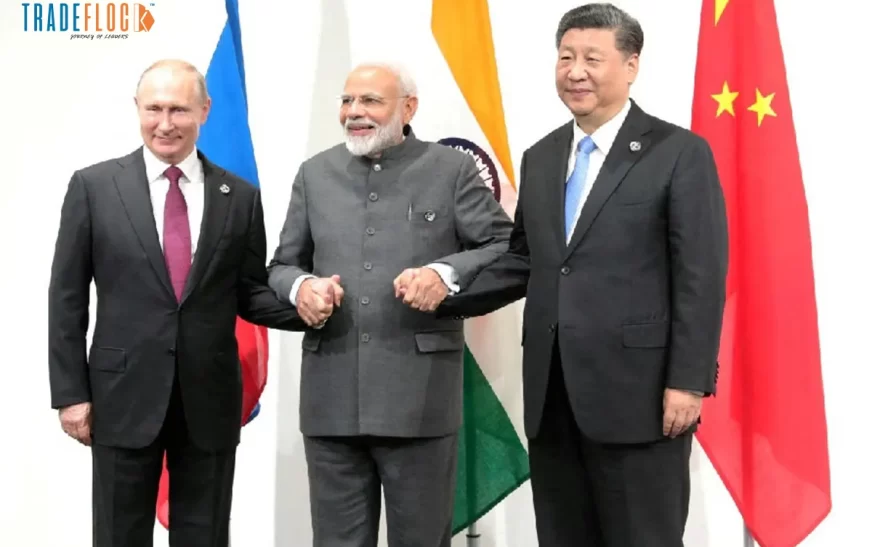
China’s President Xi Jinping will host over 20 world leaders at the Shanghai Cooperation Organisation (SCO) summit in Tianjin from August 31 to September 1, showcasing solidarity among the Global South amid escalating geopolitical tensions. Key invitees include Russian President Vladimir Putin, Indian Prime Minister Narendra Modi, marking his first China visit in over seven years, and leaders from Central Asia, the Middle East, South Asia, and Southeast Asia. The summit aims to demonstrate a potential post-American-led international order, amid U.S. efforts to counter China, Russia, Iran, and India, which have largely failed, according to analysts.
Established in 2001, the SCO has grown from six to 10 members and now includes 16 observer states, expanding its focus from security and counter-terrorism also to cover economic and military cooperation. Though its expansion indicates growing influence, experts note the bloc’s practical achievements are limited, and its initiatives often lack concrete outcomes. Tensions persist between India and Pakistan; recent meetings have faced disagreements over attacks in Indian Kashmir and the conflict with Iran, demonstrating ongoing friction within the bloc.
Despite these issues, improved India-China relations and pressure from the U.S. on India suggest a conciliatory approach, with expectations of bilateral talks and incremental border and trade measures at the summit. Modi is expected to pursue discussions on trade, sovereignty, and regional connectivity, as well as bilateral meetings. Conversely, Putin will attend a World War II military parade in Beijing after the summit.
Also Read: Hyundai Boosts US Investment to $26 Billion After Lee Visit
Analysts underscore that, despite limited substantive policy announcements, the summit’s significance lies in optics and narrative-building, emphasising its role as a platform for demonstrating solidarity among the Global South against Western influence. Overall, the SCO summit underscores shifting geopolitical alliances and the importance of regional diplomacy in a turbulent international landscape.