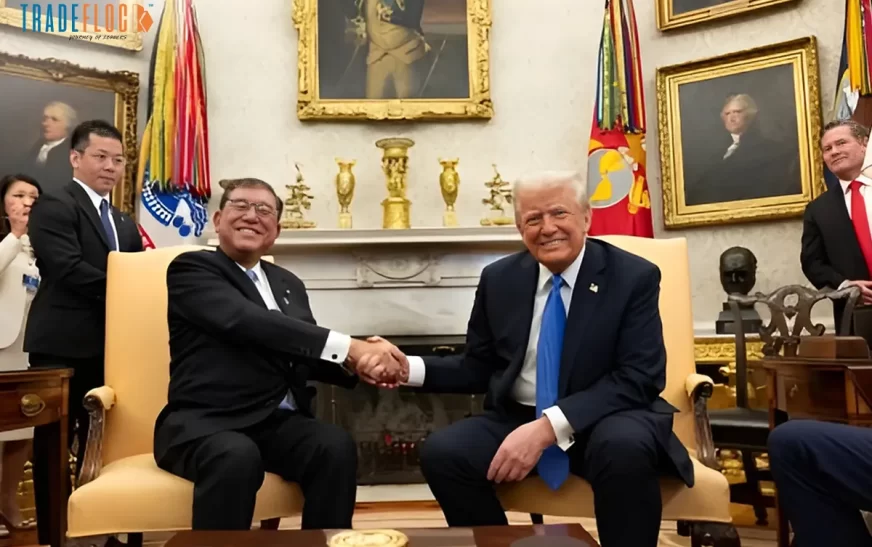
On July 22, 2025, U.S. President Donald Trump declared a trade agreement with Japan that incorporates a 15% tariff on Japanese imports. Trump affirmed that this agreement would create hundreds of thousands of jobs and enhance US-Japan relations. He further noted Japan’s pledge to invest $550 billion in the United States and to open its market to American automobiles and rice. This 15% tariff signifies a reduction from the prior 25%, which Trump had threatened to enforce starting August 1.
Also Read: Emirates Group to Hire 17,300 Professionals in Global Talent Drive
This move is part of Trump’s broader strategy to portray tariffs as beneficial for the U.S., aiming to reduce the budget deficit and encourage factory relocations to America. However, tariffs have caused market instability and fears of higher consumer and business prices, as seen in General Motors’ recent 35% drop in Q2 net income, warning tariffs will impact their business.
Trump also announced a trade framework with the Philippines, imposing a 19% tariff on its goods, while US products face no taxes. He reaffirmed 19% tariffs on Indonesia. Last year, the U.S. experienced a trade deficit of $69.4 billion with Japan, $17.9 billion with Indonesia, and $4.9 billion with the Philippines, reflecting greater US iMotorsmports.
Ahead of the August 1 tariffs deadline, Trump plans to impose broader tariffs on other nations, with negotiations ongoing with the EU and China. He indicated the EU would be in Washington for talks on August 2 after threatening a 30% tax on EU goods earlier in the month. The US-China trade talks run through August 12, with a 30% baseline tariff.