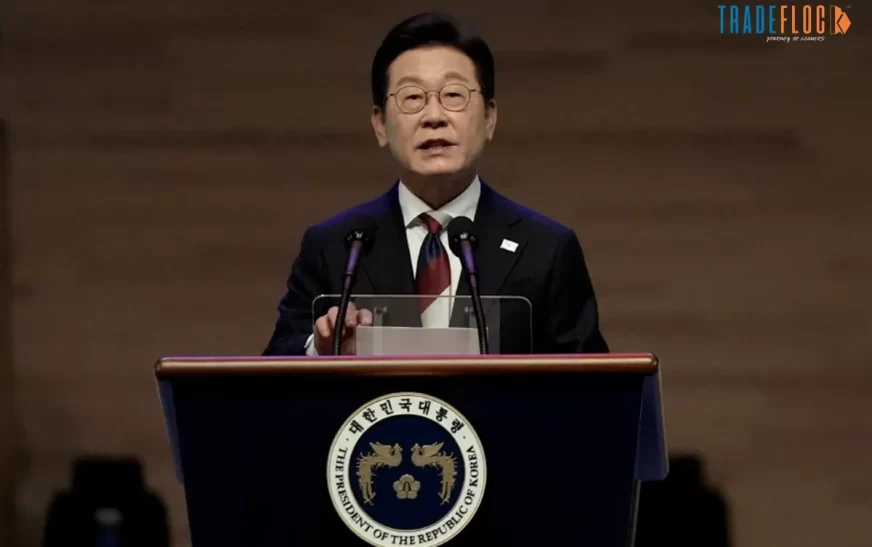
South Korean President Lee Jae Myung addressed the recent U.S. immigration raid at a Hyundai Motor project site in Georgia, which resulted in the detention of approximately 300 South Korean workers. He expressed concern that such events could influence U.S. investment decisions by Korean companies, citing the confusion and hesitancy among businesses to operate confidently in the U.S.
Lee highlighted that the incident, which involved the detention of 316 workers, including some who were soon to be repatriated, has caused significant uncertainty in South Korea’s economic relations with the U.S. Despite this, he noted there has been no official review by the South Korean government on potential policy changes regarding business cooperation with the United States.
The incident has sent shockwaves through South Korea, with the government and businesses concerned about the implications for future investments. Seoul’s Foreign Minister Cho Hyun has travelled to Washington to address the diplomatic fallout, meeting with U.S. Secretary of State Marco Rubio. During their discussions, Cho mentioned that the detained workers were in the U.S. to transfer technology and support the U.S. manufacturing sector, which underscores the importance of skilled foreign labour for Korean companies.
Korean firms have also criticised U.S. visa restrictions, which they say hinder their ability to oversee factory construction and train local workers. Both countries are now discussing ways to improve visa processes for South Koreans, with Washington likely seeking balanced solutions to this diplomatic challenge.
In addition to diplomatic concerns, Lee also questioned the need to proceed with a proposed revision to South Korea’s capital gains tax. He indicated that the plan to raise revenue by targeting large shareholders might be unnecessary, especially given the public backlash from investors.
Also Read: NAB to Cut 410 Jobs, Expand Hiring in India and Vietnam
Lee highlighted South Korea’s ongoing efforts to improve relations with North Korea and promote peace on the Korean Peninsula. Despite North Korea’s lukewarm response to Seoul’s outreach, he noted U.S. President Donald Trump’s potential key role in resuming talks with Pyongyang, suggesting Seoul might not need to lead alone due to Trump’s influence. The Georgia incident underscores the complex U.S.-South Korea relationship, involving economic, diplomatic, and security issues amid efforts to build stability and cooperation.