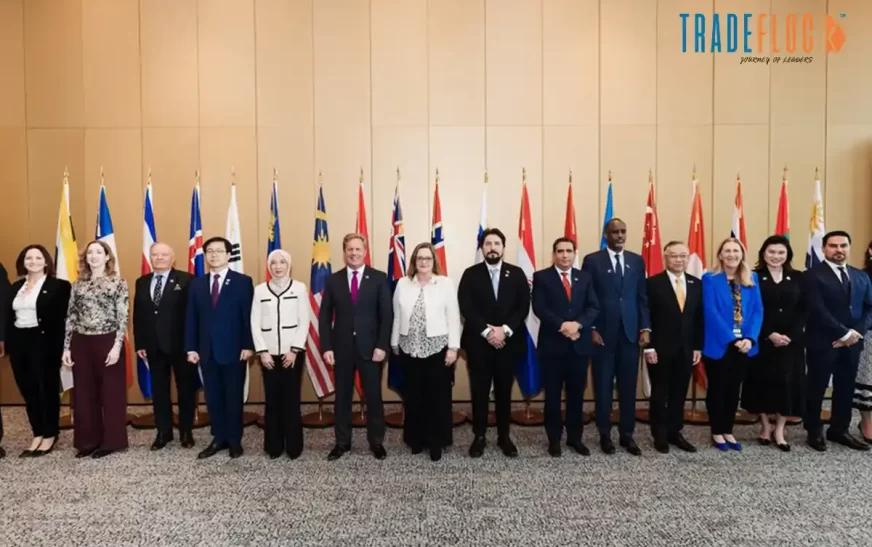
Trade ministers and officials from 21 countries met in New Zealand on 17th July to discuss and advance work on the Future of the Investment and Trade Partnership (FIT-P), a new group aimed at improving global trade and investment. FIT-P was launched in September 2025 by Singapore, Switzerland, New Zealand, and the United Arab Emirates. It started with 14 countries and now has 19 members after Malaysia, Paraguay, South Korea, Peru, and Thailand joined. Samoa and Fiji attended the meeting as observers.
The goal of this agreement is to streamline trade among nations worldwide. It tackles that by fixing supply chain bottlenecks, cutting down tariffs and friction, driving investment, and leaning heavily into modern digital tools. While its members already control almost 20% of the world’s trade in goods, what really sets FIT-P apart is its structure. Unlike rigid, old-school trade deals, this opt-in approach lets countries pick only the projects that actually work for them.
One special feature of FIT-P is its flexible approach. Countries can choose which projects they want to join instead of agreeing to every rule. At the Auckland meeting, members signed separate declarations to reduce non-tariff barriers, improve digital trade, and strengthen economic resilience.
ALSO READ – India’s 8th WTO Trade Policy Review Starts From July 21
With global trade feeling more unpredictable than ever, FIT-P gives small and medium-sized economies a real space to stick together, keep trade open and fair, and build stronger financial bonds. The fact that more countries are signing on proves just how eager people are for practical ways to collaborate right now.