Building a Practice Around Thoughtful, Context-Driven Design
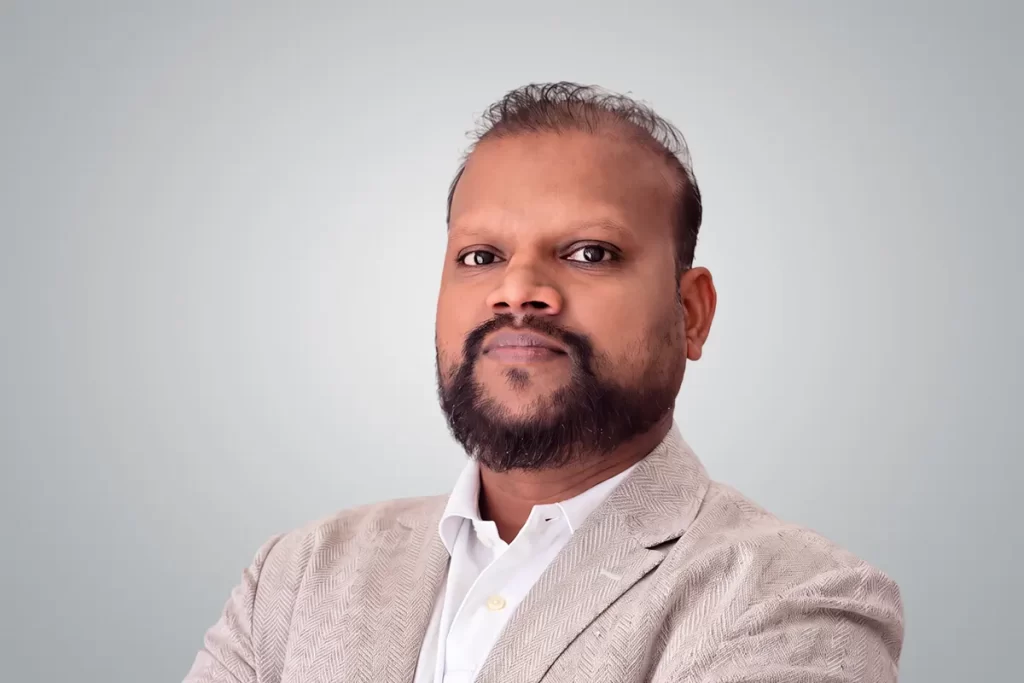
Chithan Chandrabose
Founder & Managing Director
C+C Design Studio (CCDS Engineering Consultants)
Building a Practice Around Thoughtful, Context-Driven Design
Chithan Chandrabose
Founder & Managing Director
C+C Design Studio (CCDS Engineering Consultants)
Chithan Chandrabose-Asia's 40 Under 40 2026
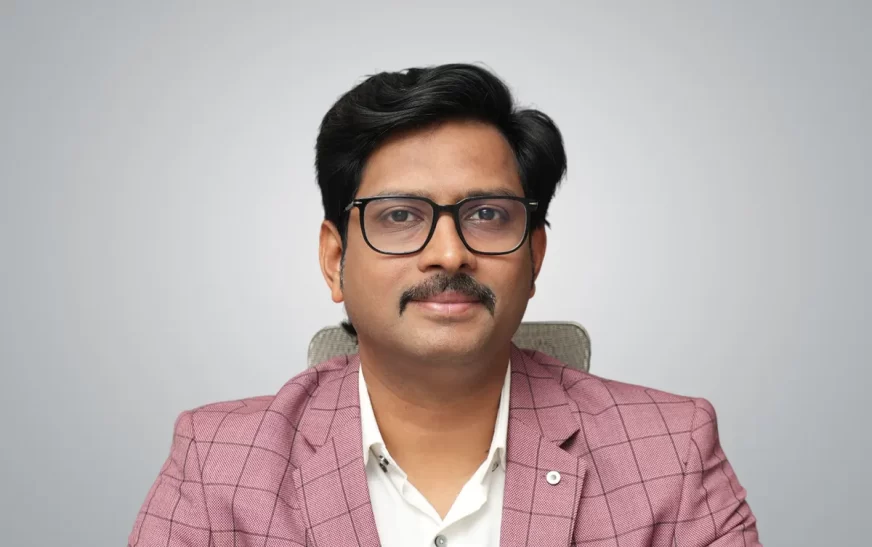
Working across India, the UK, and the UAE gave Chithan Chandrabosean unusual vantage point on architecture. Each environment brought a different relationship between people, place, culture, and the built environment. His architectural education at R.V. College of Engineering, Bengaluru, established the foundation, while his master’s in architecture and urban design at the Mackintosh School of Architecture, University of Glasgow, broadened his perspective on urban context, history, and climate.
Dubai then brought design closer to its practical consequences. The experience showed him that architecture does not end with a concept; it has to withstand budgets, regulations, construction constraints, client expectations, and countless decisions between drawing and delivery. In 2016, these lessons became the foundation for C+C Design Studio (CCDS Engineering Consultants),which he established with a growing understanding of what it means to take ownership of design decisions.
As Founder and Managing Director, Chithan continues to see architecture through that wider lens. When speaking with TradeFlock, he shares how these experiences shaped the architect and entrepreneur he has become.
How has understanding a client’s identity, culture, and lifestyle changed your approach to a project?
One of the things I have learned through residential projects is that clients often communicate their requirements in terms of rooms, finishes and features, while what they really want is something much more personal.
In one of our luxury residential projects in Dubai, the initial expectation was for a highly contemporary, visually dramatic home. As we spent more time understanding the family, their routines and how they actually wanted to use the house, we realised that their priorities were privacy, family interaction, natural light and a stronger connection between the interior and exterior.
That changed our approach considerably. Instead of designing a house around a predetermined aesthetic, we developed the planning around their lifestyle. Spaces became more connected, transitions between inside and outside became more important, and the landscape became part of the architecture rather than an afterthought.
The final design was still contemporary, but it was more personal. That experience reinforced something I strongly believe: the best projects are not necessarily the ones that look the most impressive in the beginning; they are the ones that feel right to the people who live in them.
What would you tell your younger self based on what you have learned throughout your career?
I would tell my younger self to be patient with the process. Early in a career, there is a strong desire to prove yourself by taking on more, growing faster, and getting every project right. Experience has taught me that architecture is a long journey, and every project brings lessons that cannot be learned elsewhere.
I would also tell myself to listen more. Clients, consultants, contractors, and even difficult project situations can teach you things no textbook can.
Founding C+C Design Studio showed me that leadership is not about having every answer. It is about building a team that asks the right questions, makes informed decisions, and remains accountable from concept to delivery. I still aim to create architecture that has meaning, performs well, responds to context, and adds value to people’s lives.
POWER PROFILE CARD –
Age: 39
Country: United Arab Emirates
Industry/Sector: Architecture
Years in Leadership: 15+ years
Leadership Philosophy: Lead clearly, collaborate, deliver accountably
Motivation: Impactful architecture through trusted execution
What strategy do you use to turn an ambiguous client brief into a clear design direction?
I usually begin by asking questions rather than drawing.
When a brief is unclear, I try to understand three things: what the client needs, what they value, and what they have not yet articulated. I then translate those answers into a series of priorities , function, experience, context, budget, time and long-term value.
I often describe this as finding the “real brief” behind the written brief.
This approach has been particularly valuable on large residential and mixed-use projects where multiple stakeholders have different expectations. Once those expectations are mapped out, the design conversation becomes much clearer. Instead of discussing whether something simply “looks good”, we can discuss why it works, who it serves and what value it creates.
For me, architecture becomes stronger when the reasoning behind the design is clear.
What assumption about architecture in rapidly developing cities has your experience in Dubai challenged?
I believe the assumption that rapid development and meaningful architecture are naturally in conflict deserves to be challenged. Dubai has shown me that a city can grow at extraordinary speed while still creating room for thoughtful design. However, speed places greater responsibility on architects. We cannot allow pressure to deliver quickly to overshadow context, climate, human behaviour, and long-term value.
I have observed that some of the most successful projects are not those chasing the latest visual trends but those responding intelligently to their environment and remaining relevant as the city evolves. The challenge is not to slow development but to ensure quality, identity, and human experience remain central to it.