The Man Who Taught India to Think in Code
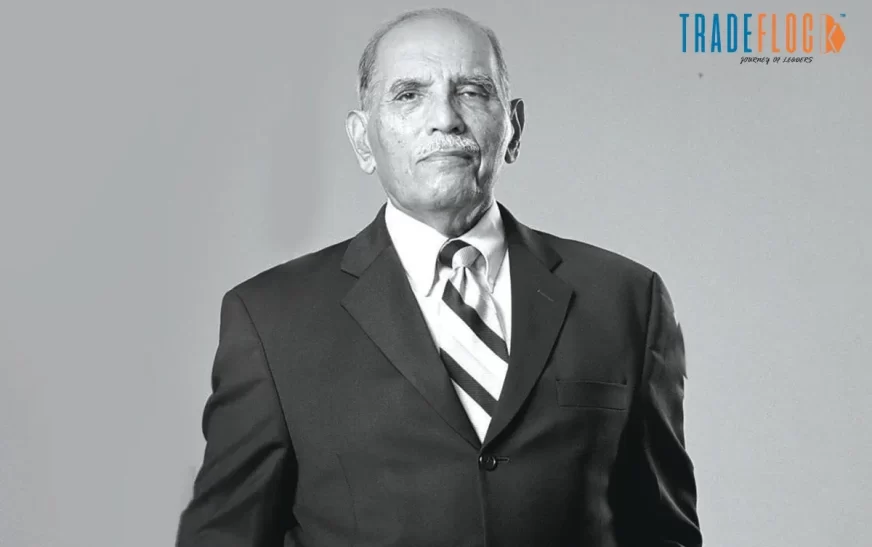
When F.C. Kohli took over leadership of Tata Consultancy Services in 1969, India didn’t really have an IT industry to speak of. There was ambition, and there were skilled engineers — but there wasn’t a clear sense of direction. Kohli gave the industry that direction.
Kohli’s real contribution wasn’t just building a company — it was building the foundation an entire industry could stand on. And that’s the first big lesson from his leadership: vision paired with relentless, hands-on building.
Build Real Capability Before You Chase Scale
In India’s early tech years, the country barely had any computing infrastructure — mainframes and internet access were almost nonexistent. Despite that, Kohli stayed committed to training engineers, because he genuinely believed skills would determine the country’s future.
Turns out, he was right. The World Economic Forum estimates that by 2027, half of all employees worldwide will need reskilling because technology is changing so fast. A 2024 LinkedIn report also found that companies with a strong learning culture are 92% more likely to innovate.
Kohli understood this decades before it became common knowledge. With very few external resources to rely on, he built in-house training programs and pushed young engineers into challenging international projects — never cutting corners when it came to their learning. That kind of foresight still holds up today, and it’s a reminder that real growth comes from investing in people first.
Lesson: Leaders who focus on building real capability tend to see steady returns over the long run — it’s what leads to lasting growth and resilience.
Think Globally Before It Was Even a Thing
Back in the 1970s and 80s, exporting software out of India seemed nearly impossible. Foreign clients were sceptical, and the local infrastructure was shaky at best. But Kohli didn’t back down. He positioned TCS as a reliable global partner long before terms like “global delivery model” even existed in the industry.
Today, exports make up more than 60% of India’s IT revenue. Banks, airlines, retailers, and governments around the world depend on Indian companies to run their critical systems. By 2027, the global IT services market is expected to cross $1.5 trillion — and India’s story remains central to that growth.
Kohli understood something simple but powerful: credibility travels; excuses don’t. A 2023 PwC survey found that 76% of global CEOs now see cross-border digital collaboration as a major growth driver. Kohli was living that mindset four decades before it became mainstream — proof that clear vision and consistency can genuinely change the game.
Lesson: Don’t think small just because you’re acting locally — even local work can (and should) have a global mindset behind it.
Discipline as a Growth Strategy
Kohli was a man who valued precision — time, facts, careful planning — and he had zero tolerance for complacency. But this wasn’t about being rigid. It was about foresight.
McKinsey research shows that companies balancing operational discipline with innovation can outperform competitors by up to 30% in long-term shareholder returns. A 2024 Deloitte study backs this up too, finding that disciplined execution is one of the strongest predictors of long-term profitability.
Kohli pushed for systematic processes and expected maturity at every level of the company. He set high quality standards long before clients even asked for them. That culture of excellence didn’t just happen by chance — it became the backbone that allowed Indian IT companies to grow independently, without just copying what everyone else was doing.
Lesson: Culture isn’t something that just happens as a company grows — it’s something you deliberately build before you scale. That early foundation shapes everything that comes after.
Never Stop Learning
Even after stepping down as CEO, Kohli stayed deeply involved in technology and education. He was a strong advocate for computer literacy in India, pushing hard for curriculum reforms and encouraging schools to teach analytical thinking. He believed that knowledge only grows when it’s shared.
Kohli never really stopped evolving. His constant drive to keep learning and moving forward still inspires people today — a reminder that learning is one of the most powerful tools we have, no matter what stage of life we’re in.
Also Read: Women Leaders at the Heart of Asia’s Green Transition
Lesson: There’s no age limit on learning. Real leadership isn’t defined by how many years you’ve worked — it’s defined by staying curious and passionate for the long haul.
The Kohli Standard
India’s IT revolution wasn’t luck — it happened because of visionary leadership that truly believed in the power of skilled people. Today, digital technology is a major part of India’s economy, supporting millions of middle-class jobs through the ecosystem Kohli helped build.
Kohli was never chasing headlines or trends. He focused on real competence and reliability, avoiding the trap of short-term hype and instead building something meant to last for generations.
F.C. Kohli’s story isn’t just a biography — it’s a blueprint for long-term leadership, a reminder to think beyond the moment and build something that actually lasts.