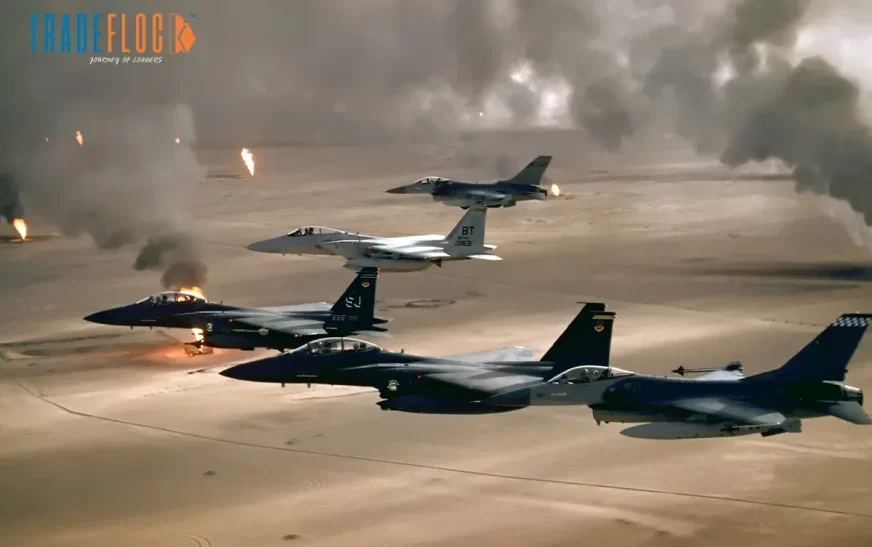
On the night of January 16, 1991, Baghdad went dark. Then, suddenly, a flash of light cut through the sky — almost too surreal to be real. Green tracer fire lit up the darkness, TV cameras were rolling live, and the whole world watched as a new kind of warfare began. The Gulf War had started. But this wasn’t just about pushing Iraqi troops out of Kuwait — it ended up reshaping global politics, military strategy, and even how we experience war through the media.
How a Local Conflict Became a Global Crisis
It all started months earlier, in August 1990, when Iraq invaded Kuwait. The world took notice fast. Kuwait wasn’t just any small nation — it played a huge role in global oil supply and Middle East stability. For the US and its allies, this wasn’t just a regional issue. It felt like a test: would the world let this kind of aggression slide right after the Cold War ended?
Diplomacy kicked in quickly. The UN slapped sanctions on Iraq and demanded they withdraw. Meanwhile, coalition forces began building up in Saudi Arabia — a defensive move known as Operation Desert Shield — just in case Iraq tried anything else. But when the deadline passed and talks broke down, war became unavoidable.
A Coalition Like No Other
What made the Gulf War different was just how many countries came together to fight it. Over 30 nations joined the coalition, not just Western allies, but also Arab nations like Saudi Arabia, Egypt, and Syria. That was a big deal. It was the first time since World War II that the UN Security Council approved military action with this much global backing.
At the same time, the Soviet Union was falling apart and chose to support the diplomatic effort instead of opposing the US. The world was shifting from a two-superpower system to something new — and this was one of the first big conflicts to show that shift in action.
A New Kind of Shock and Awe — Before That Term Even Existed
Day one of the war was all about destruction. Coalition air forces hit Iraqi command centres, air defences, communication lines, and infrastructure hard. This wasn’t your typical bombing campaign — it involved precision-guided weapons, stealth aircraft, and cruise missiles. The goal? Weaken Iraq fast, before ground troops even entered the picture.
It was one of the most advanced air campaigns the world had ever seen. Coalition jets kept up the pressure, crippling Iraqi forces and cutting off their supply lines. Looking back, military experts say this marked a turning point — war was no longer just about wearing down the enemy on the ground. It had shifted to something driven by technology, satellites, and precision strikes.
War Comes Into Your Living Room
That same night — January 16, 1991 changed how people experienced war forever. For the first time, a major war was broadcast live on TV. CNN’s reporters in Baghdad gave real-time updates as explosions lit up the sky, and people around the world watched it happen live, right from their homes.
This changed everything about how people saw war. It felt more real and immediate, yet strangely distant at the same time. The bombs looked like flashes of light on a screen rather than something happening to real people. Sure, it made the war feel more “transparent” but it also raised tough questions about how media shapes the story we see, and whether watching war from a screen creates emotional distance from its real human cost.
A Ground War That Ended Almost as Fast as It Began
After weeks of intense bombing, coalition ground troops finally moved in during late February. And it was over fast. Iraqi soldiers, tired, demoralised, and overwhelmed, didn’t put up much of a fight. The ground war wrapped up in just about 100 hours. Kuwait was freed, and coalition forces stopped there instead of pushing on to Baghdad.
That decision sparked a lot of debate. Coalition leaders said their mission was only to free Kuwait, not to remove Iraq’s government. It avoided a deeper, messier conflict — but it also left problems unresolved, ones that would come back to haunt the region in the years ahead.
A War Won, But Not Everything Was Solved
By most measures, the Gulf War was a military success. The coalition lost very few soldiers, achieved its goals, and proved just how advanced modern military technology had become. But not everything ended cleanly; sanctions on Iraq continued, ordinary Iraqis suffered under them, and the region remained unstable.
The war also changed how militaries around the world thought about combat. Countries paid close attention, realising future wars would likely be faster, more high-tech, and less about two evenly matched armies going head-to-head.
Why This Night Still Matters Today
January 16, 1991, wasn’t just the start of a war; it was the start of a new era of warfare. One shaped by satellites, live TV coverage, and a harsh realisation: winning a war doesn’t always mean securing peace. That night over Baghdad marked the beginning of modern warfare as we know it.