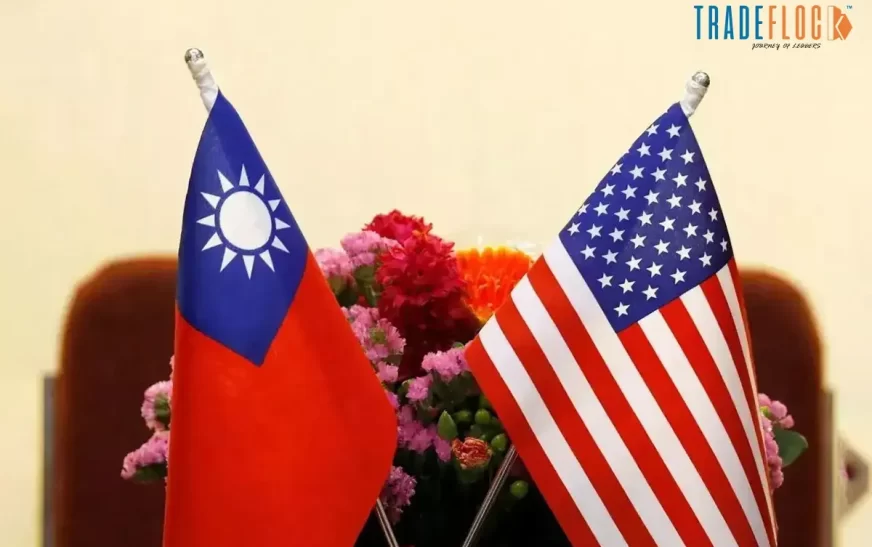
The relationship between the U.S., China and Taiwan remains one of Asia’s most sensitive geopolitical fault lines, where tensions are a constant in the region’s security outlook and in global diplomacy. The issue has received new focus ahead of expected talks between U.S. President Donald Trump and China’s President Xi Jinping, in which Taiwan would surely be one of the central topics. China regards Taiwan, which has a democratically elected government, as an inseparable part of its territory and has frequently pledged reunification. Taiwan’s government has denied Beijing’s claims of sovereignty and asserted the island’s future is up to its own people.
The United States, which doesn’t formally recognise Taiwan’s government, is its biggest international patron and weapons supplier and continues to support Taiwan’s self-defence capability through longstanding policy commitments. In recent years, Beijing has stepped up military activity in its surrounding region, launching large drills and a greater number of air and naval patrols near Taiwan, and framing these activities as necessary deterrents against separatism and external meddling. Taiwan, in turn, has sought to increase its defences, petitioning for additional defence spending and more U.S. Weapons sales.
Read More: McDonald’s Super-Sizing Business Growth Across China
Diplomatic engagements continue in tandem with the growing military pressure. Earlier this year, Cheng Li-wun, a Taiwan opposition leader, was in China for dialogues with Chinese officials and has called her trip “a visit aimed at alleviating cross-strait tensions.” Analysts see Taiwan as the “most sensitive issue” of U.S.-China relations and will be observing developments of the region closely across the Indo-Pacific. “Any changes to this military stance or to U.S. Policy on the Taiwan issue would have the greatest ripple effects on the region and the global markets,” they note.