The Doctor Rewriting the Rules of Global Health
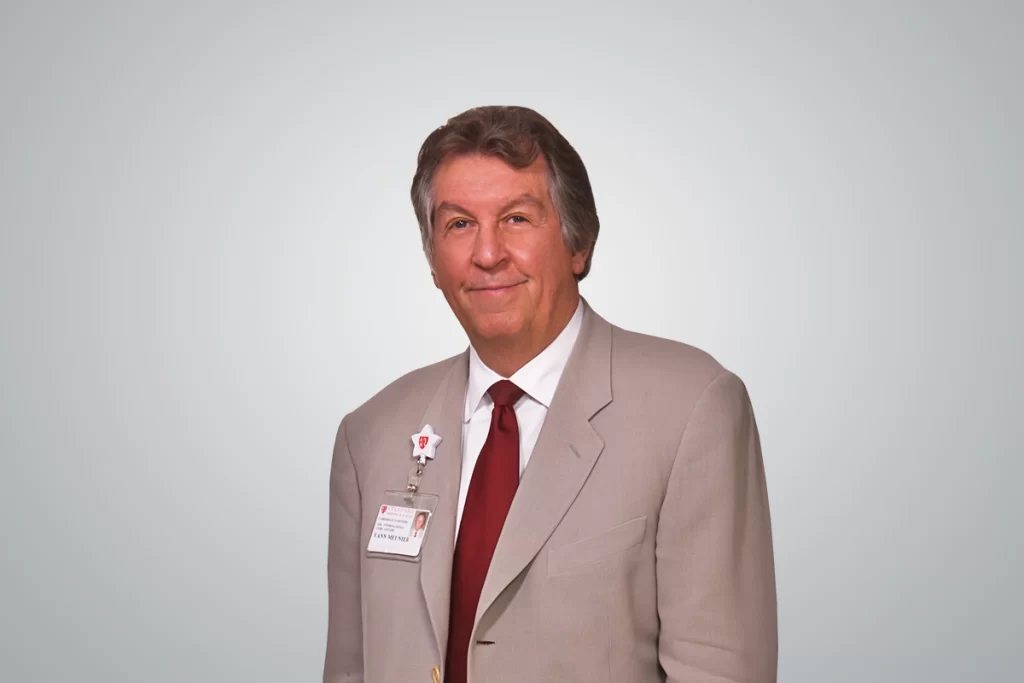
Yann A. Meunier, MD
Director and Former CEO
International Institute of Medicine & Science and Health Connect International, LLC
"The Doctor Rewriting the Rules of Global Health"
Yann A. Meunier, MD
Director and Former CEO
International Institute of Medicine & Science and Health Connect International, LLC
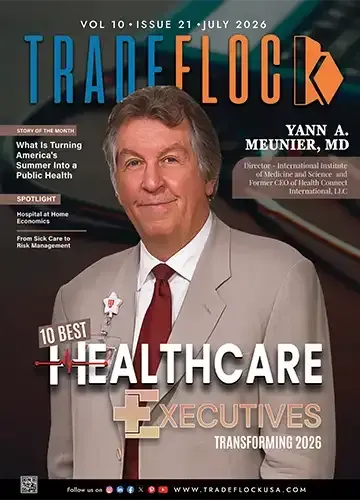
Yann A. Meunier, MD-10 Best Healthcare Executive Transforming 2026
Global health has spent decades fighting diseases. Yann A. Meunier believes it has often been fighting the wrong battles.
Across policy forums, academic institutions, aid organizations, and healthcare systems, discussions frequently revolve around pathogens, treatments, vaccines, and technologies. Yet after more than four decades working across 43 countries on six continents, Yann arrived at a different conclusion. Medical interventions matter, but they rarely determine long-term outcomes on their own. Infrastructure, governance, education, and economic conditions often exert a greater influence on health than the treatments delivered inside a clinic.
That perspective was not developed in conference rooms but emerged from years spent practicing medicine in some of the world’s best and most challenging environments. From tropical medicine in Paris and private general practice in Singapore to frontline clinical work in Nigeria, from establishing the first and only private medical practice on the island of Lifou in New Caledonia to developing public health programs in Papua New Guinea, he witnessed healthcare systems at their strongest and most fragile. Leadership roles at Stanford University, executive positions in international healthcare organizations, and advisory work in multiple milieus further reinforced his conviction that many global health challenges cannot be solved through medicine alone.
Today, as Director and Professor at the International Institute of Medicine and Science, author, researcher, and global health advocate, Yann continues to challenge conventional thinking about healthcare delivery, preparedness, and equity. His work increasingly focuses on a simple but provocative question: if decades of investment have not eliminated many of the world’s most persistent health disparities and not been able to perfectly control some historic diseases, what needs to change?
In an exclusive conversation with TradeFlock, Yann A. Meunier reflects on healthcare systems, poverty, pandemic preparedness, and the future of global health.
After working across more than 40 countries, what has your experience taught you about the real drivers of health outcomes?
One of the most important lessons I learned is that healthcare outcomes are rarely determined by medicine alone. Medical knowledge is remarkably consistent across much of the world and increasingly accessible. What differs is the environments in which people live and the systems that support their care.
Early in my career, I assumed clinical expertise would be the primary driver of impact. Experience taught me otherwise. Whether I was working in Africa, Oceania, Asia, or Europe, I repeatedly saw that infrastructure, economic conditions, governance, education, sanitation, and access to basic services often influenced outcomes more than medical interventions themselves.
Over time, I stopped viewing healthcare as an isolated discipline. Medicine operates within a larger ecosystem. A healthcare system cannot function effectively if the surrounding social and economic structures are failing. Sustainable progress requires alignment between healthcare, public policy, infrastructure, and economic development. Once you begin seeing health through that broader lens, many global disparities and intervention outcomes become easier to understand.
What lessons from places like Lifou, Cameroon, and Papua New Guinea continue to influence your thinking today?
Those experiences fundamentally changed my understanding of healthcare delivery. When I established a medical practice on Lifou Island, patient care was only one part of the challenge. Before I began working, practical issues had to be addressed. Electricity, plumbing, sanitation, equipment, and operational readiness had to be of good quality.
In Cameroon, I encountered recurring health conditions that persisted despite appropriate medical treatment. Eventually, it became clear that the issue was not clinical capability. The surrounding conditions remained unchanged. Patients returned to the same environments that had contributed to their illnesses in the first place.
Papua New Guinea reinforced similar lessons on a larger scale. Building public health programs required looking beyond medicine and addressing communication systems, logistics, accessibility, and community engagement. One of the initiatives involved helping establish the country’s first radio communication system exclusively supporting medical evacuations. Success depended as much on operational design as clinical expertise. Those experiences taught me that healthcare cannot be separated from the conditions in which people live. Effective solutions must address both.
“Writing a prescription without addressing poverty often treats the symptom rather than the cause.”
Long before COVID-19, you warned about weaknesses in pandemic preparedness. What did the pandemic reveal?
The pandemic did an excellent job, simply exposing vulnerabilities that had existed for years.
Many healthcare systems entered the crisis without adequate preparation for large-scale disruptions. Supply chains proved fragile. Communication systems struggled under pressure. Coordination frequently broke down between institutions, regions, and countries. Even highly developed healthcare systems encountered serious difficulties responding effectively.
What concerned me most was not that mistakes occurred. Every crisis generates uncertainty. What concerned me was how many of the vulnerabilities had already been identified long before the pandemic. History provides numerous examples of infectious disease outbreaks, yet many lessons were not adequately incorporated into preparedness planning. As a result, organizations found themselves confronting predictable challenges without sufficient readiness. Appropriate lessons learned from the SARS pandemic would have avoided the COVID-19 strategic fiasco.
The COVID-19 pandemic demonstrated that preparedness cannot exist only on paper. It requires continuous investment, practical exercises, clear communication structures, and operational discipline. Future outbreaks will occur. The question is whether we will learn enough from recent experiences to respond more effectively when they do and have the most adequate management.
What gives you optimism about the future of global health?
Despite the challenges, I remain optimistic because awareness is growing and the current negative trends must be reversed. More healthcare leaders recognize that health outcomes are shaped by forces extending far beyond hospitals and clinics. There is increasing recognition of the connections between health, poverty, education, infrastructure, and economic development.
Technology also creates new opportunities. AI, communication, data analysis, remote care, and knowledge sharing are advancing at a remarkable speed. Used appropriately, these tools can improve access and strengthen healthcare systems worldwide. Most importantly, younger generations of healthcare professionals are increasingly willing to question assumptions and challenge outdated models. Progress often begins when people stop accepting existing limitations as inevitable. One of my favorite sayings is “be realistic, ask for the impossible.”
Global health needs new structures replacing the old ones, new leadership with a new vision, new priorities, stronger execution, and a deeper commitment to addressing root causes rather than symptoms. If we can achieve that, the future remains full of possibilities.
“Global health does not suffer from a lack of knowledge. It suffers from a failure to act aptly on what we already know.”
You have argued that poverty is the most important health risk. Why do you see it that way?
Because poverty sits at the center of many health problems, even today.
Many discussions focus on specific diseases, treatments, or technologies, but those conversations often overlook the conditions that make people vulnerable in the first place. Poverty affects nutrition, housing, sanitation, education, environmental exposure, access to care, and many other factors that influence health outcomes.
When people lack clean water, stable housing, reliable income, or access to basic infrastructure and/or treatment, their vulnerability increases dramatically, regardless of which disease affects them. In many situations, writing a prescription without addressing the patient’s economic reality treats only part of the problem and often leads to relapse.
This perspective challenges some traditional approaches to global health because it shifts attention away from individual diseases and toward underlying conditions. Poverty also weakens communities, limits resilience, and creates environments where health problems multiply and/or worsen. If we are serious about improving global health outcomes, poverty reduction cannot remain a secondary objective. It must become a primary strategy.
Many of your writings challenge traditional global health structures. What concerns you most about the current model?
My concern is not with the intent behind global health institutions. Many dedicated people work within those organizations. My concern lies with the structure itself.
Large systems often become increasingly focused on managing processes, reporting requirements, and institutional priorities. Over time, there is a risk that organizations begin serving primarily their own structures rather than the communities they were created to support.
In many regions, resources move through multiple administrative layers before reaching the people who need them most. Every additional layer introduces more costs, complexity, delay, and inefficiency. Meanwhile, local communities frequently possess a far better understanding of their own needs than distant institutions. Global health must become more operationally focused. Solutions should be grounded in local realities, local leadership, and measurable outcomes rather than administrative activity and irrelevant statistics. The ultimate objective should be to build capacity and self-sufficiency rather than perpetuating dependency.
I often describe the challenge as a disconnect between strategy and execution. The world does not suffer from a shortage of reports, committees, or conferences. It suffers from a shortage of practical and impactful implementation where it matters most.
You often speak about a “New Morality of Global Health.” What does that mean?
At its core, it is an ethical framework that places human dignity above institutional convenience. Healthcare decisions should ultimately be evaluated by their impact on people and communities rather than by organizational preferences or bureaucratic objectives. This requires greater accountability, transparency, and responsiveness.
A new morality also requires us to reconsider how success is measured. Programs should not be judged solely by activity levels or funding volumes. They should be evaluated by their ability to create meaningful improvements in people’s lives. The new morality is based on return on investment, measured across 4 dimensions: financial, medical, social, and individual.
Another important principle involves local empowerment. Communities should not remain perpetual recipients of external assistance. Sustainable development depends on building local expertise, local leadership, and local ownership. Healthcare becomes stronger when people gain the tools and capacity to solve problems themselves.
If resources are always limited, how should healthcare leaders decide what deserves priority?
My thinking has been heavily influenced by triage principles. Prioritization still remains one of the most difficult responsibilities in healthcare leadership. In emergency medicine, every problem cannot be addressed simultaneously. Decisions must be made based on urgency, impact, feasibility, and available resources.
The same logic applies at a systems level. Leaders must evaluate interventions across multiple dimensions, including medical outcomes, economic implications, social consequences, political realities, and ethical considerations.
One of the biggest mistakes organizations make is treating every issue as equally urgent. When everything becomes a priority, nothing truly receives priority. Effective leadership requires discipline. It requires making difficult choices based on evidence and long-term impact rather than short-term visibility. Technology can support those decisions, but judgment is always essential and human factors should be addressed first and foremost.
All Magazines -




Success Insights
Ravindranath Garaga-Best CXOs in Asia 2026
Dr Tharindu Samarajeewa-Asia’s 40 Under 40 2026