Leading Operations Through the Lens of People
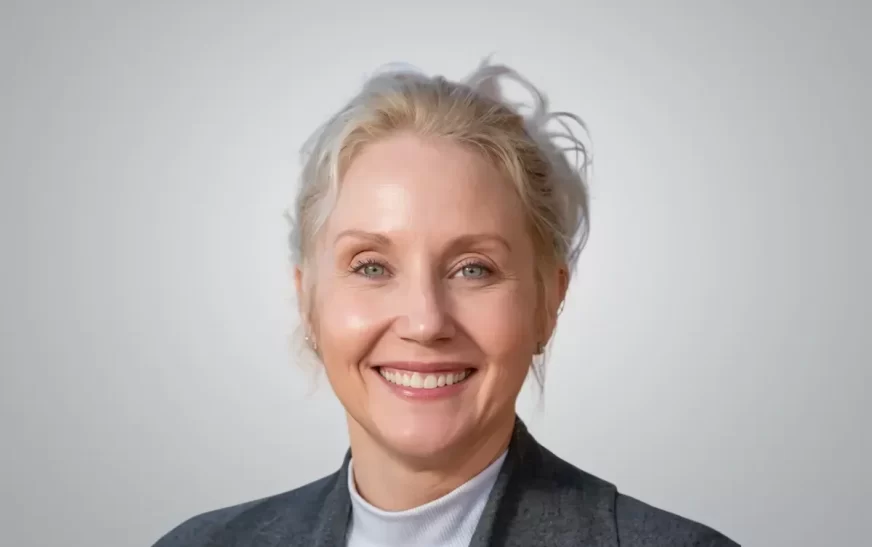
Wallapa Tangsopa
COO
SynerMac Co. Ltd.
Leading Operations Through the Lens of People
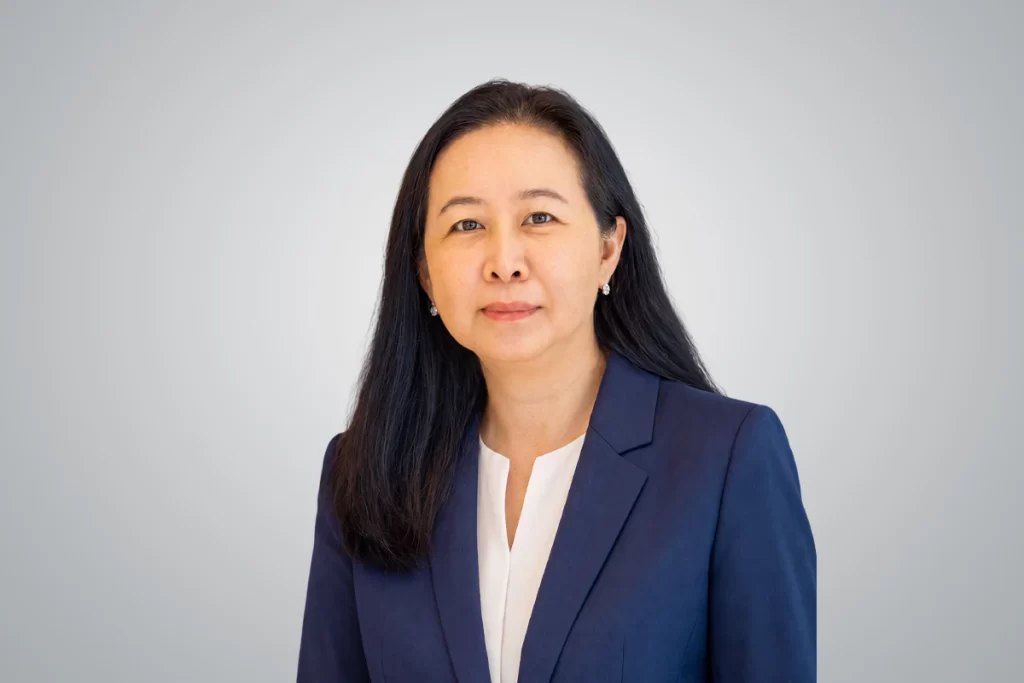
Wallapa Tangsopa
COO
SynerMac Co. Ltd.
Wallapa Tangsopa-Most Innovative Global COOs 2026
Modern operations are no longer confined to what happens on a production floor. The strongest COOs are increasingly expected to understand how people, processes, technology, customers and commercial decisions influence one another, because a weakness in one rarely stays contained for long.
Wallapa Tangsopa reached this intersection through an unconventional career path. Over nearly three decades with Caltex Lubricants, Autoliv Thailand, TI Automotive, BMW Manufacturing Thailand, Ford Thailand and MG Sales, she developed cross-functional experience spanning executive support, HR, labour and union relations, quality management systems, purchasing, automotive manufacturing, corporate governance, sales and marketing—particularly during her time at MG Sales. These diverse responsibilities prepared her to step into the role of COO at SynerMac in 2026. Her advantage today is not simply knowing each function, but understanding how they connect. As she brings HR experience into production, engineering, sales, service and organisational development, her journey offers a compelling view of modern operational leadership, where sustainable performance depends as much on developing people and decision-making capability as it does on improving processes. In this conversation with TradeFlock, Wallapa shares how her cross-functional journey has shaped her approach to operational excellence, technological change, people development and sustainable growth.
Your career began in HR and governance before moving into operations. What changed in your leadership approach?
When I look at how my role has evolved, I don’t think the fundamentals of my HR leadership have changed. Fairness, compliance, people development and employee well-being remain just as important to me today. What has changed is the amount of information available to us and the speed at which we can use it. Digital applications, QR codes and AI-assisted models have made it possible to connect information that once sat in different places and took days to compile, giving us a much clearer picture of what is happening across the organisation.
What I found most interesting was seeing how quickly people-related information could reveal something much bigger. A workforce issue can affect production, service, an operational bottleneck or ultimately a customer outcome. That changed how I looked at HR. It isn’t simply an administrative function anymore. It can sit alongside operations, identify risks earlier and help leaders make better decisions. Technology should give us more time to do what technology cannot, like listening to people, developing them, and addressing problems before they become serious.
Technology is reshaping manufacturing. How do you prepare people for that change?
Technology in manufacturing has always evolved, so I don’t believe the answer is simply to adopt the newest tool. The more important question is whether we are choosing the right technology for the industry, the organisation and its customers.
I remember working nearly two decades ago with a German supplier for a blow-moulding machine used to manufacture plastic automotive fuel tanks, where engineers in Germany could remotely diagnose and resolve problems on a machine operating in Thailand. At the time, it showed me that capabilities we consider new today can sometimes have existed for years. What changes is an organisation’s readiness to adopt them.
Our responsibility, therefore, is to connect technology with capability development. We identify the skills required, create relevant training, provide hands-on learning and update standard processes as technology changes. Technology creates value only when employees understand it and can apply it confidently.
What has becoming COO taught you about leadership and developing people?
Accepting the role of Chief Operating Officer at Synermac in January 2026 was a defining moment for me because it brought together everything I had learned across my career. I had started as an executive assistant to senior management and gradually moved through HR, gradually moved through HR, labour relations and union negotiations, corporate legal affairs, quality, after-sales service, safety, production / ISO and financial planning. I remain deeply grateful to the supervisors who mentored me along the way because they gave me an understanding of every side of running a business.
The COO role made me responsible for production, engineering, service, sales, HR and administration, quality and purchasing. I quickly realised that neither title nor past expertise alone would carry me through it. I had to listen carefully, ask the right questions and connect people, processes, controls and business data into one picture.
The quality I value most in people is ownership of outcomes, paired with a willingness to learn. A leader doesn’t need the technical answer to everything. A leader creates the environment where experts can apply their knowledge toward the same goal.
“Ownership turns problems into contributions, and learning turns individuals into the leaders an organisation needs next.”
What small operational change has delivered the biggest impact at Synermac?
Great operations often depend on doing the simple things consistently well. At Synermac, one of the changes that delivered the greatest impact was our short daily morning meeting, reinforced by 5S, small Kaizen improvements and a job-flow sheet to monitor the process of work.
Every morning, the entire company gathers for a few minutes, and anyone, from assembly to sales, can raise an issue identified the previous day. It could be a delayed part, an unclear drawing, customer feedback or an improvement idea. We discuss it, agree on the next action and assign an owner before a small issue becomes a costly delay or repeated error.
What makes it work is that improvement is immediate, visible and shared. Raising a problem is treated as a contribution, never a confession. The job-flow sheet creates the same visibility across departments. Visibility creates accountability, and those simple disciplines have strengthened planning, quality, delivery, after-sales service and team ownership.
How do you balance efficiency, growth and people when making difficult decisions?
I don’t see efficiency and growth as opposing priorities. The more important question is whether a decision strengthens the organisation’s long-term capabilities. My experience in multinational automotive organisations taught me that something that appears efficient for one function can create additional costs, risks or disruption somewhere else.
I therefore look at six areas: people impact and readiness, safety, legal compliance and governance, customer impact, quality and delivery, and financial return and cash flow. People come first because even a sound investment will fail if employees don’t understand the change or have the capability to implement it.
An SME also needs to consider speed and cash flow, so decisions have to be practical. If the organisation isn’t ready, I prefer starting with a pilot, learning from the results and expanding gradually. Efficiency should create time and capacity for growth, not simply reduce costs or place additional pressure on employees.
All Magazines -
Success Insights
Yussy Santoso-Best HR Leaders from Asia 2026
Rumesh Jayasekara-Asia’s 40 Under 40 2026