Turning On-Site Challenges into Strategic Leadership
Vivek
Business Lead-UAE (PS)
TQ Cert Services Pvt. Ltd.

Turning On-Site Challenges into Strategic Leadership
Vivek
Business Lead-UAE (PS)
TQ Cert Services Pvt. Ltd.
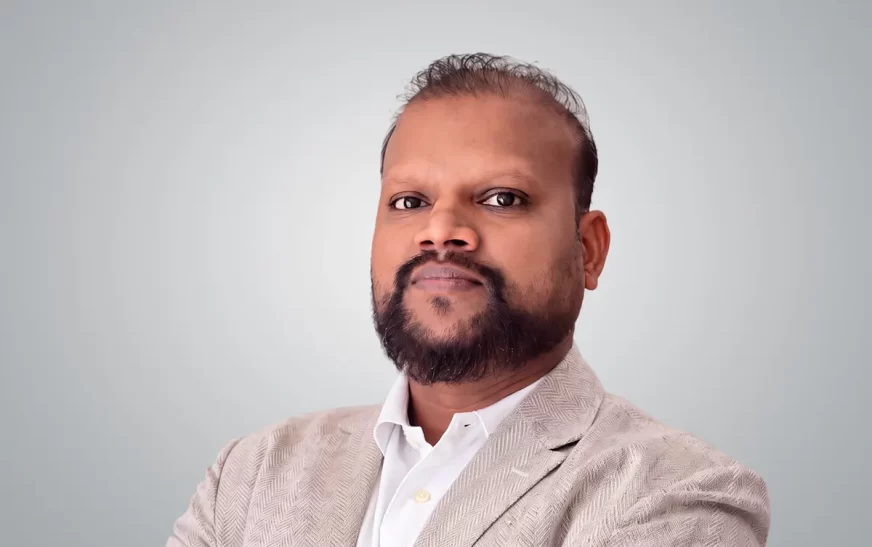
Vivek-Asia’s 40 Under 40 2025
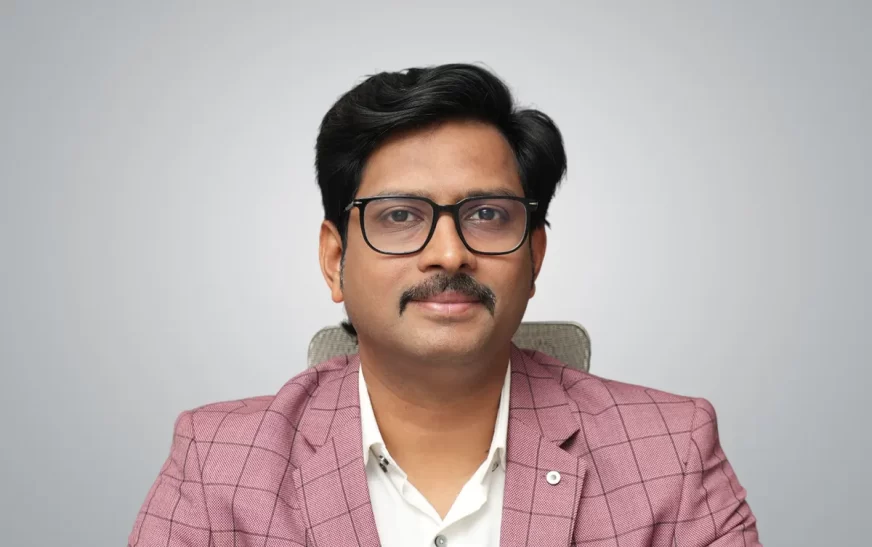
Vivek believes that “every challenge on-site is a live case study in decision-making, teamwork, and resilience.” This philosophy was forged not in classrooms, but in the grit and discipline of construction sites, where deadlines are tight, risks are tangible, and leadership is tested at every turn. Today, as Business Lead at TQ Cert, Vivek applies that same hands-on wisdom in the boardroom, shaping business strategy with the precision and pragmatism honed over years managing complex industrial projects. His career began in the construction sector, where he engaged deeply in every aspect of project delivery, from planning and cost control to quality assurance and risk management. Working on logistics parks, manufacturing hubs, and industrial developments, he learnt that success requires not only technical expertise but also clarity, coordination, and relentless followthrough. Each project sharpened his operational insight and ability to navigate unpredictability with composure. As he progressed into project management leadership, Vivek orchestrated multidisciplinary teams and client collaborations, introducing structured reporting systems and workflow optimisations that redefined efficiency and demonstrated that innovation often begins with careful observation. At TQ Cert, he now combines strategic acumen with fieldtested grit, building relationships, driving growth, and positioning the organisation as a trusted partner in the industrial and logistics ecosystem. In this exclusive conversation with TradeFlock, Vivek shares how hands-on experience, foresight, and adaptability are elevating his leadership and shaping industry progress.
What challenges have you faced leading operations in the consultancy industry?
Leading business operations in the industrial construction comes with a complex mix of challenges—from labour shortages and supply chain disruptions to regulatory hurdles and slow technology adoption. The scarcity of skilled workers, particularly in technical and supervisory roles, often delays project execution and impacts quality. Simultaneously, fluctuating material costs and inconsistent supplier performance make cost and schedule management increasingly difficult. Navigating evolving compliance norms adds another layer of complexity, while resistance to new technologies slows modernisation. To overcome these, we focused on digitising and diversifying supply chains, building strong local partnerships, and deploying real-time procurement systems to minimise material risks. Through lean project management practices and milestone-based contracts, we achieved tighter cost control and reduced waste. A major shift came with accelerating technology adoption—implementing BIM and AI to improve scheduling, risk forecasting, and on-site coordination. Additionally, we emphasised reducing cast-in-situ work by integrating pre-engineered and precast solutions, which shortened timelines, improved quality, and lowered labour dependency. Together, these strategies have created a resilient, efficient, and future-ready operational model, enabling us to deliver complex industrial projects with consistency, speed, and precision even in volatile conditions.
What advice would you give to young professionals aiming for corporate leadership before 40?
For young professionals aspiring to reach corporate leadership before 40, success starts with purposeful skillbuilding, strategic networking, and a growth mindset, underpinned by relentless hard work and clear goal manifestation. Technical mastery and crossfunctional expertise are crucial. Excelling in your core domain while expanding knowledge in finance, strategy, and leadership, complemented by continuous learning and certifications, builds credibility and prepares you for broader responsibilities. Equally vital are communication and relationship skills. Effective leaders articulate vision, influence decisions, negotiate, and listen actively. Seeking mentorship, building authentic connections, and embracing feedback accelerate professional growth.
Ownership, impact, and accountability distinguish future leaders. Taking on challenging roles, solving problems proactively, and delivering measurable results demonstrate readiness for higher responsibilities. Finally, success requires agility, resilience, and ethical leadership, combined with hard work and purposeful manifestation. Aligning daily actions with envisioned goals, persisting through challenges, and grounding efforts in faith and gratitude create the synergy that transforms ambition into meaningful leadership achievements.
In a process-driven PMC industry, how do you foster purpose, creativity, and agility?
Injecting purpose, creativity, and agility into the traditionally process-driven Project Management Consultancy (PMC) environment requires a deliberate balance of structure and flexibility, with the Project Management Office (PMO) at the heart of this transformation. The PMO provides standardised methodologies, governance frameworks, and best practices that ensure projects are executed efficiently and aligned with organisational goals. Yet, it goes beyond control; it embeds flexibility into workflows, enabling iterative planning and adaptive responses critical for agility. By fostering transparency and collaboration through reporting dashboards and communication platforms, the PMO encourages cross-functional teams to generate creative solutions while remaining aligned with objectives. It also anticipates resource needs, dynamically allocating personnel and equipment to shifting priorities, ensuring projects remain on track without stifling innovation. Furthermore, the PMO promotes a culture of continuous learning and innovation through knowledge management systems and targeted training, while robust risk and change frameworks allow teams to experiment safely. By clearly articulating project purpose and strategic alignment, leadership can inspire engagement and creative problem-solving across the organisation. In essence, the PMO transforms a process-heavy environment into a dynamic, purpose-driven organisation, combining discipline with innovation to deliver superior outcomes and sustainable competitive advantage.
All Magazines -


Success Insights
Ravindranath Garaga-Best CXOs in Asia 2026

Dr Tharindu Samarajeewa-Asia’s 40 Under 40 2026