Making the Future Executable
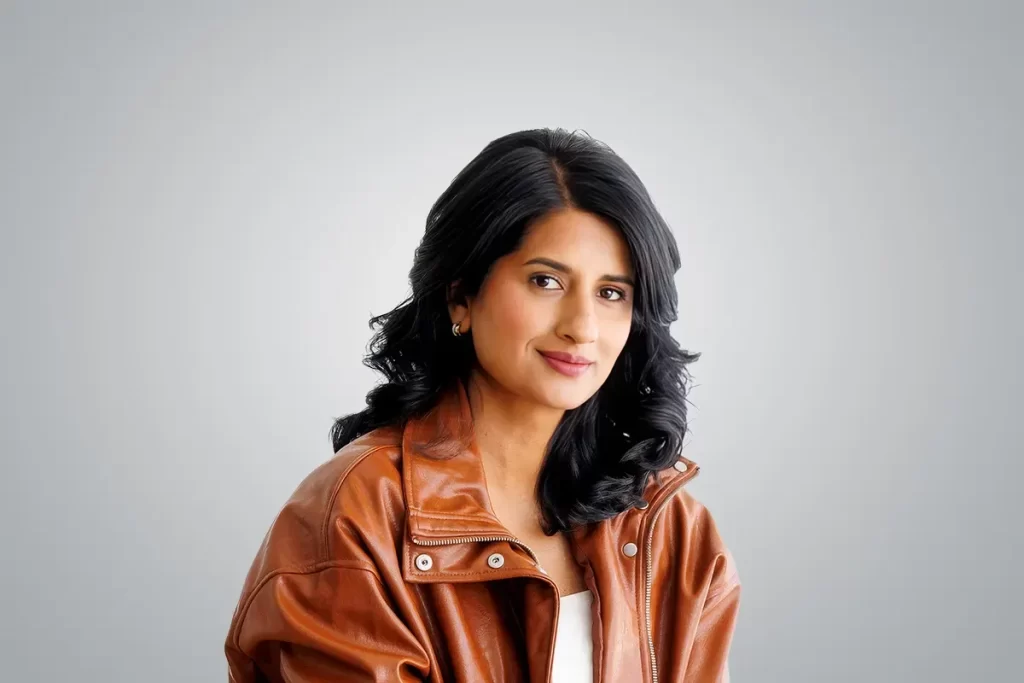
Samyuktha Kilaru (Samy)
Sr. Director, Strategy Planning & Delivery - Office of the CIO
NVIDIA
Making the Future Executable
Samyuktha Kilaru (Samy)
Sr. Director, Strategy Planning & Delivery - Office of the CIO
NVIDIA
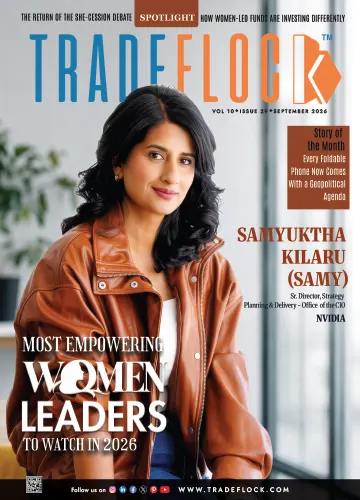
Samyuktha Kilaru (Samy)-Most Empowering Women Leaders to Watch in 2026
Visionary leadership is often associated with seeing what others cannot yet see, but vision becomes meaningful only when someone can turn it into something an organisation can act upon. Samyuktha Kilaru has spent her career doing exactly the same, moving from engineering and enterprise applications into global programme leadership, digital transformation, business development and strategic planning. Her experience across Mahindra Satyam, GE, BNSF Railway and Tech Mahindra gave her exposure to the operational detail behind large transformations, while her role today as Sr. Director, IT Strategy and Planning in NVIDIA’s Office of the CIO places her closer to the decisions that connect technology capability with enterprise priorities. Her focus spans business applications, supply chain operations, enterprise productivity and high-value reinvention programmes. In this conversation with TradeFlock, Samyuktha reflects on the leadership choices, strategic discipline and human trust that help turn transformation from an ambition into an organisational capability.
As enterprise reinvention becomes an operating discipline, how are you making that shift tangible?
Enterprise reinvention can easily become a collection of important initiatives without changing how an organisation actually operates. I have seen that happen, which is why my focus today is on strengthening the connective tissue between product thinking, portfolio management, insights and business operations. When those pieces work together, leaders can make better investment choices, sequence work more intelligently and connect strategy with measurable outcomes.
An earlier transformation experience made the lesson particularly clear. Every dashboard looked healthy, yet the leadership team remained uneasy because the business impact was not showing up where it mattered. I realised we were measuring activity rather than outcomes, which can create the illusion of progress without the reality of it. Another programme only accelerated after different teams became honest about the fact that they were solving for different goals. Once everyone aligned around a common business outcome, the work moved much faster. Competitive advantage rarely comes from one successful project. It comes from building an organisation capable of adapting and executing well, repeatedly.
What have high standards and humility taught you about leadership?
Some of the strongest leaders I have worked with held an unmistakably high bar without ever making the work about themselves. You felt the urgency and the expectations, but you never felt ego getting in the way. People became more willing to raise risks early, challenge assumptions honestly and make difficult calls because the conversation remained anchored in the mission rather than personalities. As AI takes on more of the analytical and operational work, I believe this human side of leadership becomes even more important. Technology can surface patterns and accelerate decisions, but it cannot replace the trust that allows people to speak openly or the judgement needed to understand what sits behind a problem.
I try to create the same environment in my own teams. Humility shows up in practical ways: listening carefully before reacting, changing my view when better facts emerge, sharing credit and keeping the focus on what is right for the business rather than who is right in the room. One principle I feel strongly about is that;
“The problem is the problem, not the person.”
I have seen conversations become unproductive when an issue becomes too closely associated with an individual. Separating the issue from the person changes the quality of the discussion. Strong ownership is valuable, but people should not feel they have to carry every organisational challenge personally. My responsibility is to preserve their commitment while creating enough balance for them to solve problems with confidence.
How has strategic planning changed over the past decade?
I remember when strategic planning was more naturally treated as a periodic exercise. A strategy was defined, the organisation aligned around it and execution followed against a relatively stable backdrop. The environment today moves much faster. Technology cycles are shorter, market shifts happen quickly and dependencies stretch across functions and geographies, leaving little room for slow decision-making.
My approach has consequently become much more deliberate about connecting strategic clarity with execution adaptability. Teams need to understand what we are doing, why it matters, which assumptions we are making and what signals would tell us to change course. One lesson I carried from my earlier roles is how often organisations try to manage complexity through volume: more meetings, more reporting and more layers of explanation. Progress tends to come when the questions become simpler and sharper: What problem are we solving? What matters most? Who owns it? What is getting in the way? What decision needs to happen next? AI adds another dimension by reducing coordination friction and giving people more time for higher-value thinking. Strategic management is increasingly becoming an exercise in better orchestration.
How have geopolitical shifts changed global business relationships?
Global collaboration feels different today because assumptions that once seemed stable can change very quickly. Supply conditions shift, regional realities evolve and teams working across markets can find themselves responding to very different circumstances. Strong relationships have consequently become even more valuable, but goodwill alone is no longer enough. Trust needs to be reinforced by clarity, shared context and a dependable operating model.
Earlier roles taught me that global friction is often described as a communication problem when the deeper issue is incentives or context. Teams can be equally capable and committed and still pull in different directions because they are solving for different realities. Recognising that changes the leadership response. Alignment becomes a design problem rather than a messaging exercise, requiring clearer priorities, explicit ownership, better risk visibility and a stronger cadence across regions. Technology and AI can reduce coordination friction and help distributed teams work from the same signals, but the foundation remains human. Trust, credibility and follow-through become even more important when uncertainty makes everything else less predictable.
Which early experience shaped your leadership most?
I was barely eight months out of college when I was entrusted with leading a global team, and I remember wondering whether I was genuinely ready for that responsibility. I didn’t have years of experience behind me, but several leaders saw something in me before I could see it myself. A call from the global PLM leader at TechMahindra about a bonus recognising my readiness to take on the global team as a successor remains particularly vivid. The recognition mattered, but the confidence behind it mattered more.
Experience certainly matters, but I learned early that intent, capability, courage and willingness to learn can tell you just as much about someone’s potential. I have tried to carry that lesson throughout my career by looking for people who demonstrate ownership, curiosity and genuine intent, then giving them opportunities that stretch them without leaving them unsupported. Leaders who believed in me early shaped not only my career but also the leader I wanted to become.
“Sometimes the most meaningful thing we can give someone is the confidence that they can become more than they are today.”
All Magazines -
Success Insights
Ravindranath Garaga-Best CXOs in Asia 2026
Dr Tharindu Samarajeewa-Asia’s 40 Under 40 2026