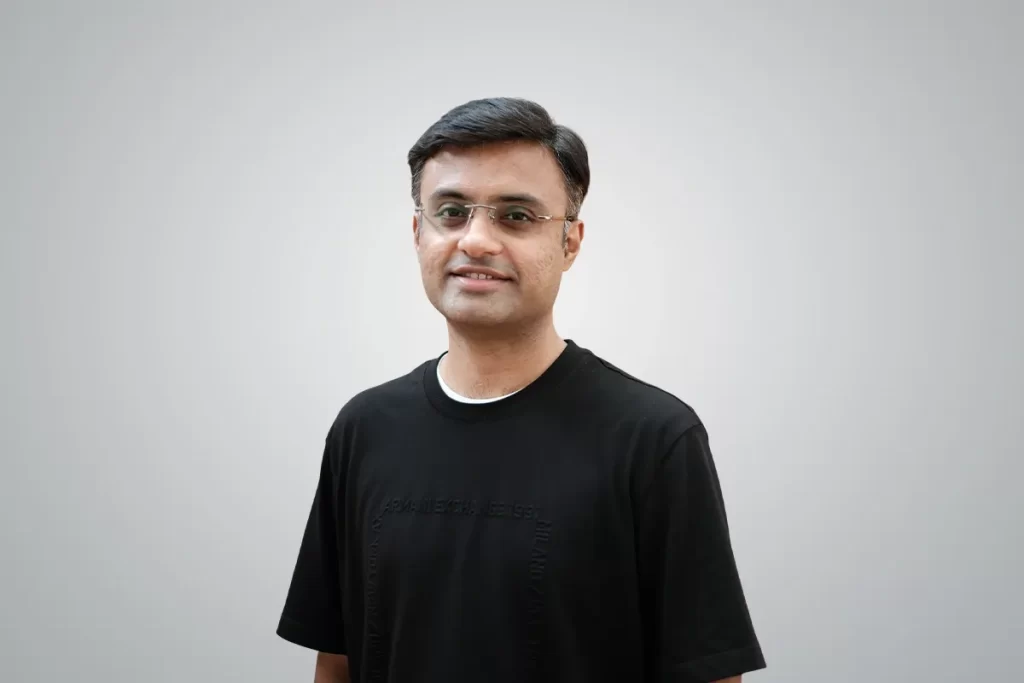
Bhavin Mehta-Best Business Leaders from Singapore 2026
A P&L shows how a business is performing, but it does not capture everything that keeps an organisation healthy. Bhavin Mehtabelieves lasting performance depends on the strength of an organisation’s people, processes and culture. That understanding became stronger during some of the more difficult phases of the high-growth businesses he helped build. Those experiences taught him to look at the wider organisation, understand where problems are emerging and act before they grow.
His leadership perspective has also been shaped by the founders he worked with, who taught him to make decisions with conviction, and by his early exposure to senior executives at Citibank, where he saw the importance of discipline and accountability. Today, as Managing Director – APAC at Helping Singapore Pte Ltd.,Bhavin places greater emphasis on building strong systems and developing capable leaders who can take ownership and keep the business moving.
Talking exclusively with TradeFlock, Bhavin reflects on what it takes to build a healthy, resilient organisation and sustain performance over the long term and much more.
What are the biggest challenges and opportunities in the home services industry?
In recent years, the home services industry has gradually come to terms that convenience and speed are now baseline expectations. The real challenge is solving for predictability at scale and delivering a consistent quality experience while maintaining the highest standards of trust.
Every home can have unique expectations, and that is where I see the biggest opportunity – combining technology and operational excellence that enables trained professionals to deliver a consistently high standard of service in every home. The winners will not simply make it easier to book a service; they will make the experience reliable enough that customers know exactly what to expect every time.
How do you balance digital efficiency with the human touch in Singapore’s service market?
When it comes to service standards in the region, Singapore is arguably the market with the highest expectations. Customers here don’t look for the cheapest option; they turn towards brands that deliver on their promise repeatedly, and importantly, vouch for them.
For me, the human touch in a service business ultimately comes back to the culture you build. Culture is defined not by a select few great experiences, but by your tolerance for what happens when something goes wrong.
Many leaders confuse efficiency with effectiveness. Being available to customers 24/7 is one thing; going the extra mile to actually solve their problem is another. As a leader, if you are genuinely obsessed with customer satisfaction and consistently walk the talk, the organisation usually aligns and reflects that in its actions.
If not business leadership, what career would you have chosen and why?
I would probably have chosen public or community service. Even in business, I have always been drawn to the idea of servant leadership—solving problems that affect people and communities rather than simply pursuing commercial outcomes. I care deeply about better living and community wellbeing.
What attracts me to public service is the opportunity to work on issues where the impact extends beyond one organisation or balance sheet. In some form, I think I would still be solving meaningful problems, bringing people together and leaving things better than I found them.
How can home service companies build customer trust at scale, and what works best?
Building trust at scale requires creating an experience that works exceptionally well and then repeating it millions of times. At Helpling, we have engineered the entire system around protecting how customers perceive and feel about the professionals entering their homes and their service standard. That starts with stringent vetting but goes far beyond with how professionals are sourced, trained and supported, and whether their own needs are being taken care of. I strongly believe that happy providers deliver better service standards, which ultimately strengthens customer trust.
In home services, customers are not just buying a service; they are seeking a feeling – of coming home to a clean house, getting back time from chores, or having someone they can trust who simply ‘gets you’. Understanding both your customers and your providers deeply usually creates the strongest trust.
Where should home service companies invest to stay competitive, and which trend is being underestimated?
Technology has become one of the great levellers for businesses in recent years, and the gap is closing faster than ever. A smaller, younger company can today build an onboarding or booking experience that is as good or better than that of a larger legacy incumbent. But relying on technology alone will cease to bring a lasting competitive advantage. The real moat will be built deeper into the core of the system: quality of execution, platform liquidity, distribution, proprietary data, or the strength and wellbeing of a long-standing provider network.
What I think the industry is underestimating is how technology will reshape the actual execution of home services. The next shift will not simply be AI-powered customer service. It will be integrating execution intelligence and predictability into the service itself and building solutions proactively sometimes even before the customer articulates what and when they need. And I’m personally quite excited about this phase.