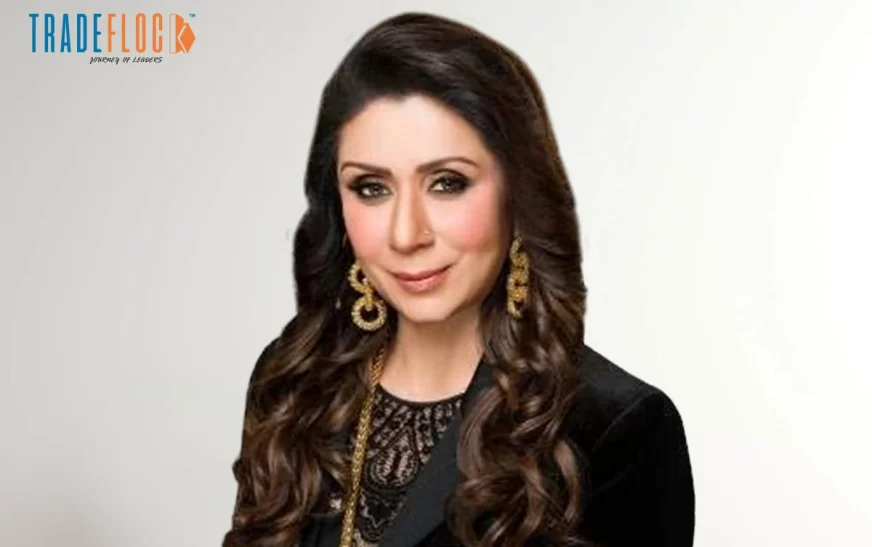
When Vandana Luthra started a wellness centre in a basement in the Safdarjung Enclave area of Delhi in 1989, from a small bank loan of ₹20,000, the concept of ‘wellness’ was far from the corporate buzzword that it has become now. On the contrary, it was as alien a concept as a startup was. Yet, the alienness of wellness to Indian women was not the biggest hurdle that Vandana had to cross.
The biggest hurdle for Vandana was stigma. Married into a ‘respectable’ business family, people dismissively laughed at her, unable to understand why someone of Vandana’s social status would want to start a business which many ignorantly thought was just a ‘beauty parlour’. In fact, even her in-laws did not support her venture initially, and they would only come around with much difficulty.
Today, that venture, which was started as Vandana Luthra Curls and Curves, has transformed into VLCC, a brand that caters not just to metropolitan India but also to tier-2 and tier-3 cities. Vandana would later say in an interview that VLCC became something bigger than she had ever imagined, expanding into the Middle East, Southeast Asia, and East Africa, among other countries. In 2023, when the private equity firm Carlyle Group acquired a 70% stake in VLCC for about ₹2,500 crore, the brand was valued at ₹4,500 crore. In FY25, it generated revenues of ₹986.8 crore and has 311 centres and 100 training centres across 144 cities.
Leadership Lesson: If there is conviction behind a novel idea, then one should go ahead with it, unfazed by societal norms and derision by detractors for going against those norms.
From Wanting to Impact People’s Lives to Bringing Science Into Wellness
Vandana did not have to cast a wide net to find the inspiration to start something of her own. She was born into an upper-middle-class family; her mother was an Ayurvedic doctor and ran a charitable initiative called Amar Jyoti, helping people in her community feel better. Inspired, Vandana too wanted to help people, create an impact, and make things better for them.
That is when the idea of running a holistic centre, where everything from a customer’s head to toe was taken care of, was born. After finishing a degree from the Polytechnic College for Women in Delhi, Vandana, at 21 and married, went to Germany to formally study health and beauty.
She then took a tough call, putting her learnings into practice by opening the aforementioned wellness centre, but leaving her three-year-old daughter behind in the process. Sure-footed, she focused on bringing science-backed conviction to a nascent space that was, till now, largely defined by ‘mom-and-pop’ slimming centres that used saunas or strange contraptions that vibrated around their bodies to sweat off some weight.
Yet, sure-footedness was not enough to bring scientific backing to VLCC. Vandana would tell in multiple interviews that it took her years to convince doctors to work with nutritionists and people in wellness centres, making them unlearn a long-standing belief that people in the medical fraternity did not need to work with Vandana’s ilk. By 2015, more than 60% of VLCC’s clients were referred by doctors.
Leadership Lesson: It takes perseverance and patience to convince people with deep-rooted beliefs to do something novel that challenges those beliefs, for unlearning takes more time than learning.
The Secret Sauce of Leadership Is Empathy, Honesty, and Maternal Instinct
People were also quick to dismiss Vandana’s venture, believing that women in India would not spend on themselves. Vandana challenged this belief by arguing that women in India would spend on themselves if they were given the respect they deserved and spoken to with empathy rather than judgment.
Along with empathy, Vandana’s honesty and maternal instincts in leadership have played a huge role in her success. When Vandana expanded her network of wellness centres, she could not offer higher fixed salaries. Instead, she offered them a strong variable component, in which women who make up 70% of her workforce—could earn more than under the fixed component. She later claimed that she openly shared a centre’s profitability metrics with the head and has treated her employees like her family.
Leadership Lesson: Trust and honesty are rare and invaluable traits in any organisation. If candour and openness come from the top, they set an example for employees to be more trustworthy and honest with their work.
Showing Up Matters More Than Saying It
Vandana’s maternal instincts in leadership are best illustrated by an anecdote from her husband, Mukesh. While out on holiday in Paris, Vandana received a phone call from a distraught junior employee in India. She spoke to her for half an hour, even when she did not need to. Luthra tries to remember the names of all her employees and often walks into VLCC stores unannounced, candidly chatting with employees and clients to gather feedback.
Leadership Lesson: Employees often feel distant from the leader, assuming that the leadership dehumanises them as a resource, reducing them to a metric. By showing intent and effort to treat employees as persons with their own identity and personality, leaders can carve a distinct identity and earn greater respect in the eyes of their employees.
Vandana’s success story is that of grit, determination, and resilience, of how a woman overcame prejudiced societal norms and carved a position for herself in entrepreneurship, which was a male-dominated field when she acquired an old, loss-making beauty parlour in 1989. Today, she is not only a successful entrepreneur but also regarded as having pioneered an entire segment in India.