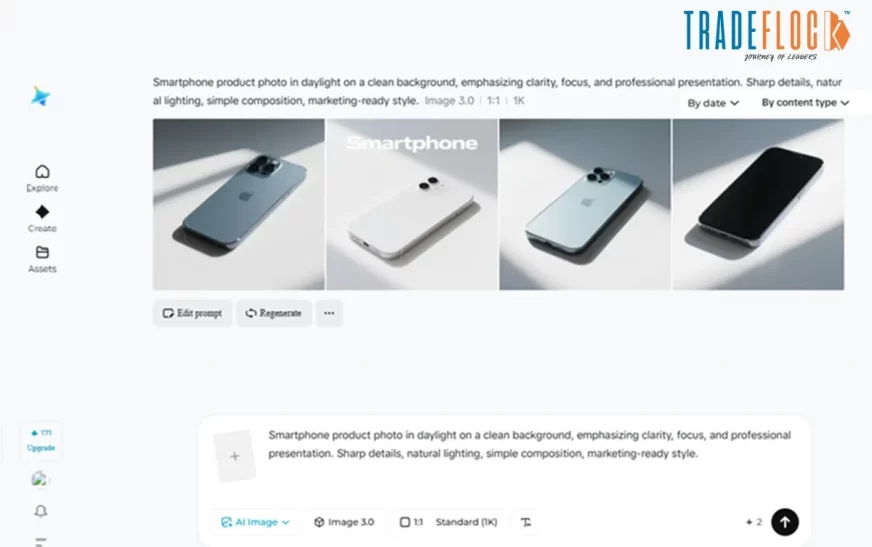
Simple photos may be the beginning of great products. A phone, daylight, and a snap are all you need to take a picture of what you are selling. It is one thing to steal a product, and it is another thing to sell a product. Customers do not simply view pictures; they make quality judgments based on them. Dreamina is one of the applications that bridges that divide since it converts ordinary product images into marketing-ready images with an AI image generator that is more focused on clarity, focus, and presentation rather than flashy effects. The transition is not very dramatic but impactful.
Why phone pictures rarely transfer themselves on their own
The smartphone cameras can, but raw photos are usually incomplete. The neutral effect of background clutter, unbalanced lighting, and informal framing is the reduction of perceived value. Buyers do not hesitate to make decisions based on the visuals online as they determine whether a thing is worth purchasing. The poor performing product images tend to fail due to:
- Backgrounds are a distraction from the product.
- Light conceals change and form.
- The composition is informal as opposed to commercial.
These issues are not associated with talent or production resources. They are presentation-based and purpose-based.
Converting product images into videos
Video is useful in some of the products, particularly when launching the product or as part of promotions. This is where an AI video generator is a natural part of the working process. Through text prompts or reference photos in the visuals of the already existing products, sellers can create marketing videos corresponding to their brand representation.
You do not have to shoot or edit; tell us what the product should look like and what the promotion should be like. The generator produces a video that matches your image, so video marketing is available without complicated production.
The 3-step visual product process at Dreamina
When the workflow is well understood, turning a simple product shot into a marketing piece will be easy.
Step 1: Write a text prompt
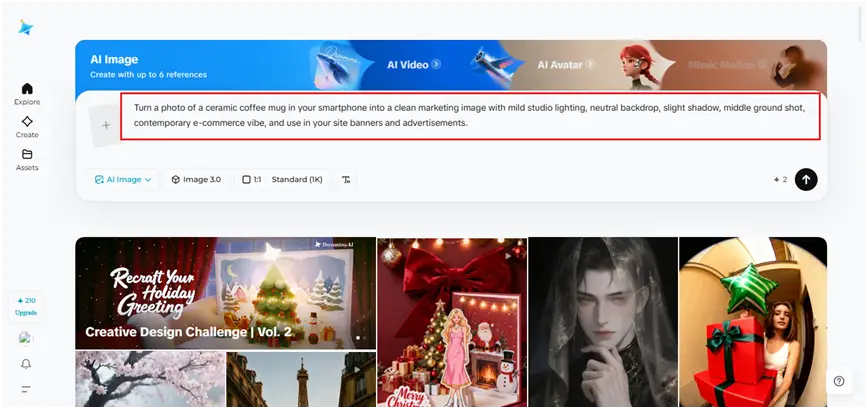
Click Dreamina, then open the text prompt interface directly without selecting any image generator option. This is the step that involves explaining the final marketing image, rather than the original picture. Add details such as the product type, the mood of the light, the background style, and the place where the image will be used.
An example prompt might look like this: “Turn a photo of a ceramic coffee mug on your smartphone into a clean marketing image with mild studio lighting, neutral backdrop, slight shadow, middle ground shot, contemporary e-commerce vibe, and use in your site banners and advertisements.”
Step 2: Parameter adjustment and production
Following the writing of the prompt, modify parameters. Select a model that suits your brand tone, an aspect ratio based on whether your image is to appear in ads, banners or product listing, and also select the size and resolution. Dreamina works with both 1k and 2k resolution, which provides sharp images on all web and social sites.
After all this is configured, click the generate icon at Dreamina. The description that you give is refined as a product image to be used in marketing.
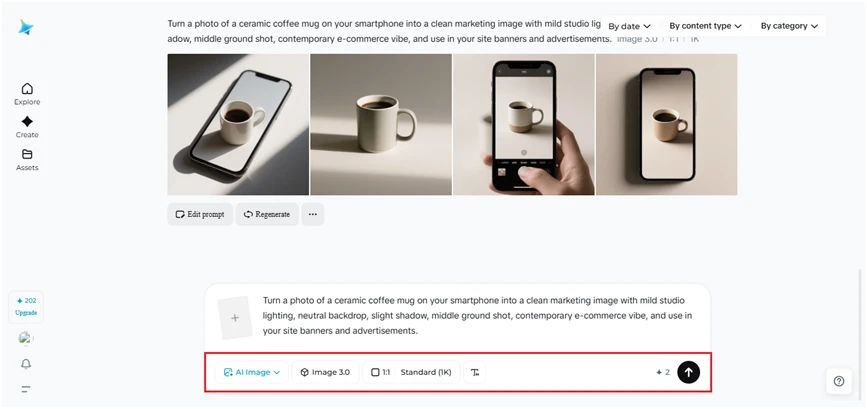
Step 3: Customise and download
Dreamina AI customisation tools may be further refined after generation. Fix tiny imperfections, expand the canvas so the banners can be used, rectify distractions in the background, and retouch the surfaces to be clear, without losing the texture of the surfaces.
Once the image is complete, it will be saved in the form of a downloading icon. This is a professionally ready asset who is about to go to the campaign.
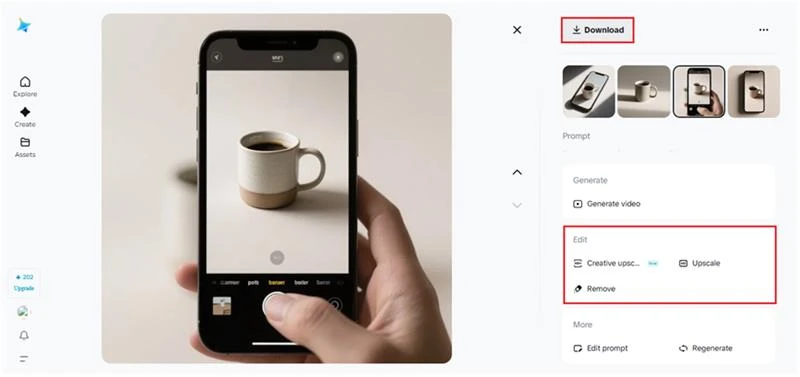
A single picture, numerous selling areas.
One powerful product image can be used to back several marketing requirements. Listings are better done in square, banners in wide, and ads in vertical.
This level of flexibility is important since uniformity creates familiarity. Customers are more assured when graphics are more familiar on different platforms. Dreamina does not need a complete redesign, which saves time and does not compromise quality.
Respondent strike between ingenuity and business acumen.
One wants to over-style the product images. Although artistic images may draw attention, clarity must be considered the first thing. Buyers desire to know what they are buying.
Expressive visuals are also tried out by some brands, with an AI art generator, particularly for campaign graphics. Artistic touches can be used to add personality when applied in moderation. Dreamina, on the other hand, focuses on proportions, so creativity will be added to the product instead of being its distractor.
Uniformity between a product catalogue.
Professional shops can be deemed together since they adhere to the same guidelines in their visuals. Even when the products change, they are consistent in terms of the tone of the background, the type of lighting, and spacing.
Dreamina can do this by enabling sellers to reuse prompt structures. Change the product, retain the visual logic. The effect is that of a whole, even though photos may have been captured at other occasions or locations.
Concluding remarks: Pictures are better sellers than words.
Customers decide quickly. Sharp, clear images make such decisions work to your advantage. The problem of professional marketing images with only a smartphone (and no need to spend a lot of money) is solved through Dreamina.
Since one picture is not enough, Dreamina makes products appear as valuable as they are, which proves that efficient creative direction is the first step to a great presentation.