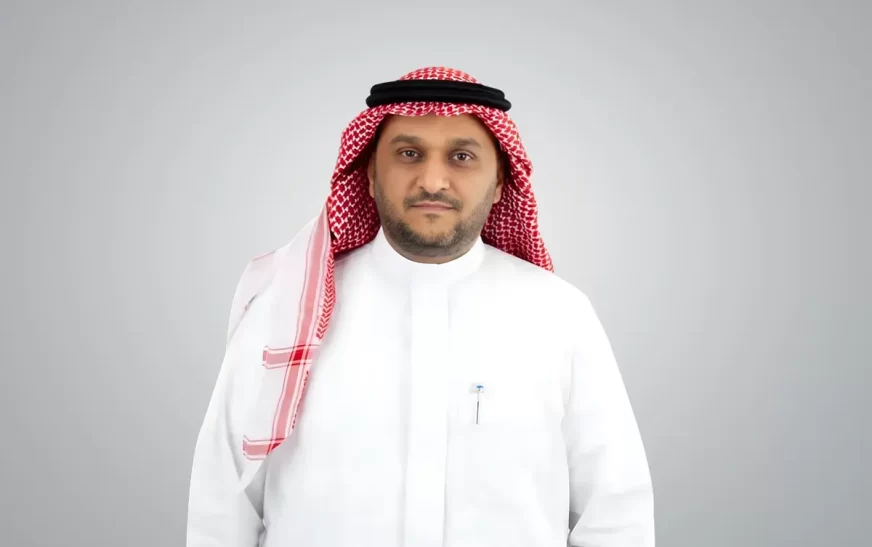
Tech is evolving fast. So fast that it keeps senior leaders on their toes to stay ahead and future-ready. In an era of what feels like permanent upheaval, where businesses cannot afford to dwell on issues or hesitate over decisions, leaders like Mohammed Sibgathullah Khan, Director of Information Technology at National Petrochemical Industrial Company, are defining the path forward. With over 17 years at NATPET, he has risen from Network & Security Administrator to IT Director, leading major digital transformation initiatives, SAP ERP rollouts, AI-driven analytics & security solutions, and cloud migrations. His track record spans building ICT infrastructure from the ground up, steering cybersecurity strategies, and ensuring business continuity in a mission-critical industry. Recognized for uniting technical mastery with strategic vision, he has made technology a true enabler of resilience & innovation and is currently managing & leading five entities. In an exclusive conversation with TradeFlock, Sibgathullah opens up about his journey, the hidden challenges of petrochemical IT, and the bold vision driving his next chapter.
"We don’t chase hype.
We chase usefulness. At ByteBrain,
that philosophy drives every decision,
from prototyping to deployment."
You began as a Network &
Security Administrator and is
now Director of IT. What has this
journey taught you about growth,
resilience, and reinvention?
It’s been a transformative climb—from hands on network work to leading IT strategy. Growth, I’ve learned, isn’t just about promotions; it’s about expanding perspective, taking responsibility, and helping others rise. Resilience came from navigating constant change, unexpected issues, and evolving cyber threats—staying calm under pressure and keeping long-term goals in sight. Reinvention meant shifting from technical problem-solving to big-picture leadership—unlearning habits, embracing new tools, and aligning tech with business impact. Today, I value people as much as systems and see technology as a force for meaningful change
What was the most difficult digital
transformation project you’ve led,
and how did you navigate it?
Migrating from a legacy on-prem ERP to SAP S/4HANA in the cloud was the toughest. It touched every part of the business—finance, supply chain, operations, compliance—while demanding tight timelines, minimal downtime, and strict regulatory adherence, including ZATCA e-invoicing and national cybersecurity standards. We formed a cross-functional steering committee, kept communication constant, ran multiple mock cutovers, and trained users thoroughly. In projects of this scale, success depends as much on people as on technology. The result was a smooth go-live, streamlined processes, and real-time insights that brought the entire operation closer together.
Looking back at your
career and ahead to the
future, what legacy do
you hope to leave as a tech leader
and as a human being?
My journey has taken me from fixing systems to shaping strategies that drive resilience and innovation. As a tech leader, I want to be remembered for building secure, future-ready systems that empower people to work smarter, safer, and more efficiently—making technology a true enabler of progress. As a person, I hope my legacy is about mentoring others, leading with integrity, and valuing the people behind the systems. Success is not just what you build, but how you bring people along with you. In the end, I want to leave a balance of technical excellence and human connection, because in leadership, both matter equally.
What IT challenges in
petrochemical manufacturing do
outsiders rarely understand, and
how do you tackle them?
One of the most complex issues is the convergence of IT and OT. Petrochemical plants rely on legacy control systems that run nonstop and were never built with cybersecurity in mind. Connecting them to IT networks boosts data visibility but also raises serious risks. Equally challenging are strict regulatory and safety requirements. Every solution must meet business goals while complying with environmental, health, and safety standards, as well as national cybersecurity frameworks like Saudi Arabia’s NCA standards. Mistakes can have serious operational and safety consequences. Cybersecurity here is high stakes — a breach could halt production or cause hazardous incidents. In petrochemical manufacturing, IT and OT must work together without risking security. My approach is to design secure IT/OT integration, segment networks, use continuous risk assessments and AI-driven monitoring, work closely with operations teams, and build a strong cybersecurity culture through training and simulations. I also invest in redundancy and disaster recovery to keep systems running no matter what.
"I value people
as much as
systems and see
technology as a
force for
meaningful
change."
What’s the most misunderstood
aspect of being an IT Director in a
mission-critical, round-the-clock
industry like petrochemicals?
People think it is just about keeping systems running, but in petrochemicals, IT is protecting operations, safety, and continuity. A cyber incident or downtime can halt production, breach compliance, and even create safety risks. The job means real-time decisions, constant coordination with OT teams, and relentless vigilance. Here, IT is not a back-office function—it is the heartbeat of the operation