Bringing Compassion to Clinical Innovation
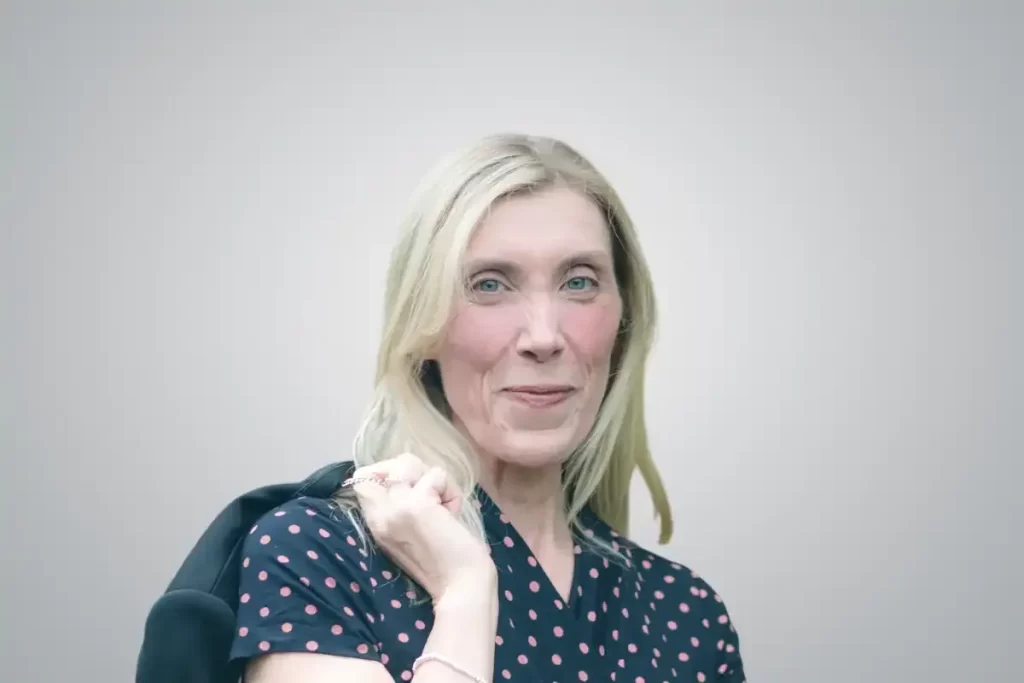
Justine Paula Nichol
Clinical Director
Veiros Ltd.
Bringing Compassion to Clinical Innovation
Justine Paula Nichol
Clinical Director
Veiros Ltd.
Justine Paula Nichol-10 Best Healthcare Executive Transforming 2026
Every advancement in healthcare promises better outcomes, faster decisions, and more personalised care. Yet the true measure of progress has never been technology alone. It lies in whether innovation makes patients feel safer, better understood, and better cared for. Justine Paula Nichol has spent her career working across both sides of that equation, first as a nurse caring for patients directly, then helping shape clinical practice, medical affairs, and healthcare innovation on a much broader scale. Each chapter has strengthened the belief that meaningful progress begins by listening before leading. Now, as Clinical Director of Veiros Ltd., while pursuing doctoral research, she continues to bridge clinical experience, evidence-based practice, and emerging technologies with one constant purpose: improving patient care where it matters most. In this conversation with TradeFlock Magazine, Justine reflects on leadership, innovation, and the future of patient-centred healthcare.
Looking back at your journey, which experience has shaped your leadership philosophy more than anything else?
People often assume leadership is something you learn once you start managing teams. Looking back, I learnt far more about it as a nurse than I ever did sitting in a boardroom. Nursing places you beside people during some of the hardest moments of their lives. You meet families who are frightened, patients who are vulnerable, and situations where you can’t always change the outcome. What you can change is how people feel as they go through it.
Those experiences have stayed with me far longer than any job title. They taught me to listen before trying to solve, to stay calm when others need reassurance, and to remember that behind every decision is a person placing their trust in you.
I’ve carried one thought with me throughout my career: feel the fear and do it anyway. Every opportunity that has changed my life has arrived with uncertainty attached. Once I accepted that fear and growth usually travel together, making difficult decisions became much easier. I still try to lead people the way I once cared for patients, by giving them confidence before expecting them to believe in themselves.
Driven by curiosity throughout your career, what continues to inspire you to keep learning and push the boundaries of healthcare?
I don’t think curiosity is something you consciously choose. For me, it’s always been there. Every time I’ve answered one question, another one seems to appear.
That’s probably what led me towards doctoral research. My work focuses on Paediatric Early Warning Scores in primary and urgent care, an area where evidence remains limited to guide clinical practice. The more I explored it, the more I realised how much we still don’t know, particularly when it comes to assessing children safely outside hospital settings.
Research gives us the opportunity to challenge assumptions rather than accept them. If my work helps strengthen the evidence, supports better clinical decisions and ultimately keeps even a small number of children safer, then every hour spent studying will have been worthwhile. Learning has never been about collecting another qualification. It’s about making the next decision a little better than the last.
As your journey continues through research, innovation and entrepreneurship, what lasting impact do you hope to leave on the future of healthcare?
As my clinical experience grew, the less interested I became in simply introducing another product or completing another project. I’m far more interested in whether the work genuinely improves someone’s life.
Alongside my doctoral research, I’m building a business with my business partner around VeinViewer technology. His motivation comes from watching his father navigate long-term healthcare challenges. Mine comes from years of caring for patients who needed treatment quickly and deserved the best possible experience during treatment. Those experiences have given both of us a very clear sense of why we’re doing this.
If people look back at my career, I hope they don’t remember the job titles or the organisations I’ve worked with. I hope they remember someone who never lost sight of the patient, no matter how different the role became. Careers evolve. Healthcare evolves. Purpose doesn’t.
“The further my career has attempted to take me from the bedside, the harder I've worked to keep every patient at the centre of every decision.”
What inspired you to move beyond bedside nursing into healthcare innovation, and how did it redefine the impact you could make?
I would never leave nursing as a profession and still cover clinical hours in frontline patient care as a senior advanced nurse practitioner within urgent and emergency care. Many people assumed I was moving away from healthcare, but that was never part of my career aspirations; I simply saw there may be additional ways to contribute.
As a nurse, I could help one patient at a time, and that work will always be incredibly important. At the same time, I became increasingly curious about the decisions that shaped care long before patients ever reached a hospital or clinic. Medicines, clinical research, patient education and medical technology all influence outcomes in ways people rarely see.
The turning point came completely unexpectedly. I met my current business partner on a train. He’d secured the UK distribution rights for an innovative medical device and was looking at the opportunity through a commercial lens. I couldn’t stop thinking about the patients who might benefit from it. We were looking at exactly the same innovation but saw two very different possibilities. That conversation opened a door I never expected to walk through, and it’s reminded me ever since that innovation has very little value unless it genuinely improves someone’s experience of care.
Amid HealthTech's rapid evolution, which innovations do you believe will have the greatest impact on patient care?
Healthcare is entering a fascinating period because technology is no longer simply helping us work faster. It’s beginning to help us make better decisions. Artificial intelligence, predictive analytics, remote patient monitoring and precision medicine all have the potential to change how we diagnose, treat and support patients. More importantly, they give us the opportunity to intervene earlier, personalise care and help people stay healthier for longer rather than waiting until they become seriously unwell.
What I hope we never lose sight of is why we’re introducing these technologies in the first place. AI can process enormous amounts of information, but it doesn’t replace clinical judgement or human compassion. Patients still want to feel heard. Clinicians still need confidence in the decisions they’re making. The organisations that will make the biggest difference won’t necessarily be those adopting the newest technology first. They’ll be the ones that combine innovation with strong clinical governance, responsible use of data and an unwavering commitment to patient-centred care.
All Magazines -



Success Insights
Ravindranath Garaga-Best CXOs in Asia 2026
Dr Tharindu Samarajeewa-Asia’s 40 Under 40 2026