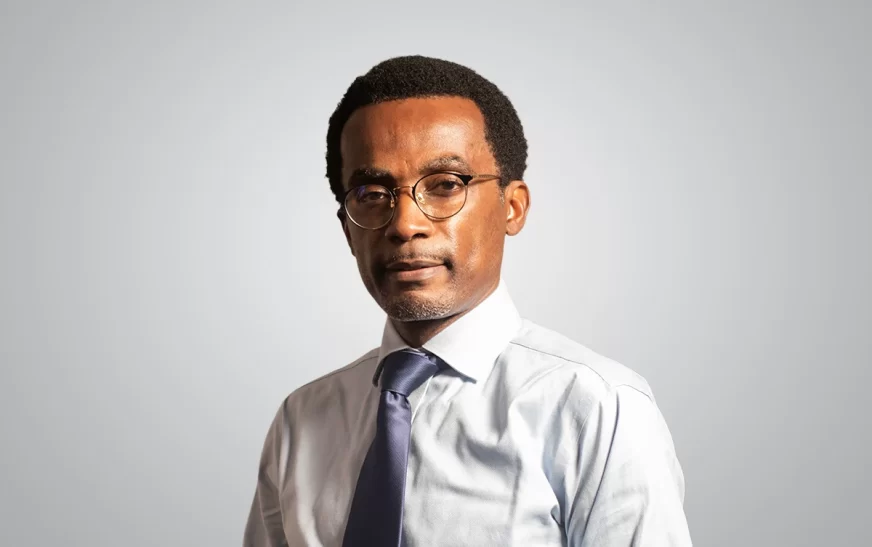

Joseph Frankie-Visionary CEOs to Watch in 2026
Leadership, in Joseph Frankie III’s world, has never been an abstract idea; it has been lived in environments where decisions carry real consequence and clarity cannot be optional. From leading in combat zones to navigating boardrooms and now advising executives globally, his perspective has been shaped by one consistent belief that leadership begins and ends with people, not position.
As CEO of JFIII Associates LLC, Joseph works closely with leaders to refine how they think, communicate, and present their value in a rapidly evolving landscape. Drawing from decades of experience across military and corporate environments, his focus remains on building leaders who can adapt, stay grounded under pressure, and create alignment where it matters most.
In an exclusive conversation with TradeFlock, he shares the principles, decisions, and lessons that continue to define his approach to leadership today.
Across military, corporate, and advisory roles, what leadership principle has remained constant for you?
Environments change, but people rarely do, and that realisation tends to reshape how leadership is understood over time. Whether operating in high-pressure military settings or complex corporate environments, the fundamentals of trust, clarity, and accountability continue to define outcomes more than strategy alone.
Leadership, in that sense, is less about authority and more about consistency. Teams observe behavior far more than they respond to instruction. When expectations are clear, communication is direct, and leaders demonstrate the standards they expect, alignment follows naturally. When those elements are missing, even the most capable teams begin to fragment under pressure.
What becomes evident across different environments is that performance is rarely a function of individual brilliance. It is a function of how well people understand the mission, trust each other, and operate within a shared framework of intent.
In a world defined by constant disruption, what does prepared leadership look like today?
Change is no longer an event; it is the environment. The pace at which industries, technologies, and geopolitical conditions are evolving has shifted leadership from planning for stability to operating within continuous motion.
Prepared leadership, therefore, is less about predicting outcomes and more about building adaptability into both mindset and culture. Comfort with uncertainty becomes a core capability, not an optional trait. The real challenge lies in extending that adaptability beyond the leader to the organisation itself.
One approach that has proven effective is creating space for focused thinking, separating individuals or teams from existing constraints so they can operate without being influenced by legacy patterns. This allows new ideas and responses to emerge more organically.
Fighting change consumes energy without creating progress. Leaders who accept its inevitability and build systems that can move with it are the ones who remain effective over time.
After decades of leadership and mentoring, how do you define success and legacy today?
Over time, the definition of success tends to move away from individual achievement toward collective impact. Titles, roles, and milestones carry significance in the moment, but their relevance fades when measured against the influence left behind in people and organisations.
A more enduring measure emerges in how individuals grow through interaction, how teams perform after leadership transitions, and how effectively others are prepared to step into responsibility. Mentorship becomes central to this perspective, not as guidance alone, but as a multiplier of capability. There is also a shift in focus from being recognised to being useful. Contribution begins to outweigh visibility, and continuity becomes more important than momentary success.
“Success is not what you build for yourself, but what continues to grow because of you.”
Legacy, in that sense, is not something defined at the end of a career, but something built consistently through how others are enabled to lead.
What critical mistakes do leaders make today in how they present themselves and their values?
Professional identity today is no longer defined by what sits on paper; it is defined by how clearly value is communicated in context. Many leaders still approach platforms like LinkedIn as static resumes, listing responsibilities rather than demonstrating impact.
The shift that is taking place is subtle but significant. Visibility is no longer about presence; it is about narrative. Decision-makers are not just looking at what someone has done, but how they think, how they solve problems, and how consistently they communicate that perspective.
A resume captures history, but a well-crafted digital presence reflects evolution. It allows leaders to continuously refine how they are perceived, aligning their experience with current relevance.
“A resume is a snapshot of where you’ve been, but your narrative shows where you’re going and why it matters.”
Leaders who understand this distinction position themselves far more effectively in an increasingly transparent and competitive environment.
What defines a high-performing team in today’s complex operating environments?
High-performing teams are not built on uniformity; they are built on alignment. The difference lies in how individuals contribute to a shared objective while bringing varied strengths to the table.
One of the more overlooked aspects of team performance is placement. Having the right people in the right roles is not just about capability, but about fit. Individuals who excel in one environment may struggle in another, not because of limitations, but because alignment is missing.
Leadership, therefore, involves more than assembling talent. It requires understanding individuals at a deeper level, recognising what drives them, and positioning them where they can contribute most effectively. At the same time, it also means making difficult decisions when misalignment begins to affect the broader team dynamic.
Strong teams are not defined by the absence of challenge, but by their ability to navigate it together without losing cohesion.
All Magazines -









Success Insights
Ande Aditya-Best CXOs in Asia 2026

Olena Khlon-Best CXOs in Asia 2026