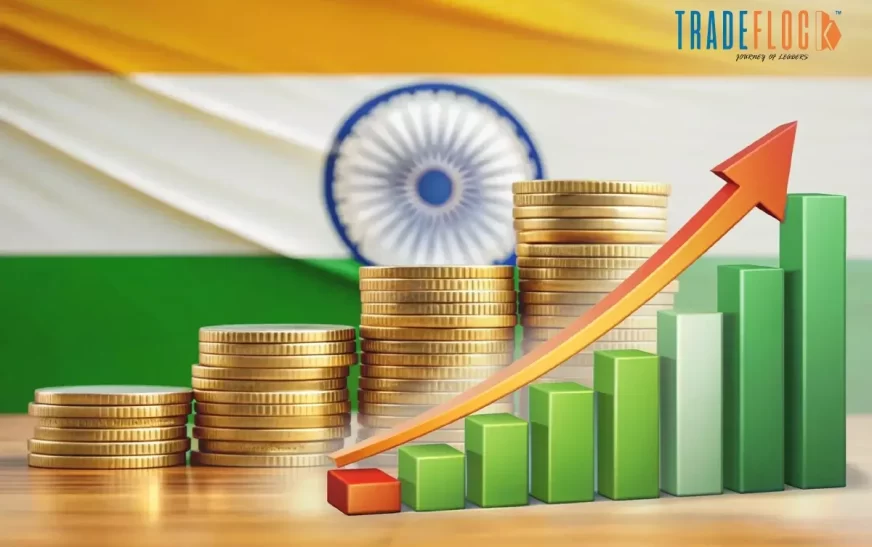
Amid rising global trade uncertainties and tariff pressure, India’s economy is expected to create strong momentum in fiscal year 2026. The country is projecting a 7.4% growth rate for the year ending March 2026, according to the first advance estimates released by the Government of India.
Last year, in May 2025, the Indian economy’s growth rate was 6.5%. The latest advance estimates indicate steady expansion, driven primarily by private consumption and higher government expenditure. Household spending is projected to grow at a healthy pace, reflecting improving rural demand, easing inflation, and stable employment conditions.
During the last year, India’s trade outlook, however, remained challenging. Exports, particularly to the United States, India’s largest trading partner, have been affected by elevated tariffs imposed since August 2025. While negotiations toward a bilateral trade agreement continue, prolonged trade restrictions could dampen export growth and manufacturing activity in the months ahead.
In December, the International Monetary Fund (IMF) projected that India’s real GDP would grow 6.6% in FY2026, before moderating to 6.2% in FY2027, assuming a prolonged delay in the U.S.-India trade deal.
Despite these risks, the Indian economy is growing faster than expected, at 7.8% in the June quarter and 8.2% in the September quarter.
Reflecting these trends, the Reserve Bank of India has revised its growth forecast to 7.3% while lowering its inflation projections. With consumer price inflation moderating, the central bank has moved to support growth by reducing policy interest rates, signaling a shift toward a more accommodative stance.
India is the 3rd largest GDP in Asia, and recently India has become the 4th largest economy, surpassing Japan. With growth and stability, the country is likely to continue boosting investment, sustaining consumption, and navigating global challenges to maintain steady growth in fiscal year 2026.