Where Wealth Meets Trust
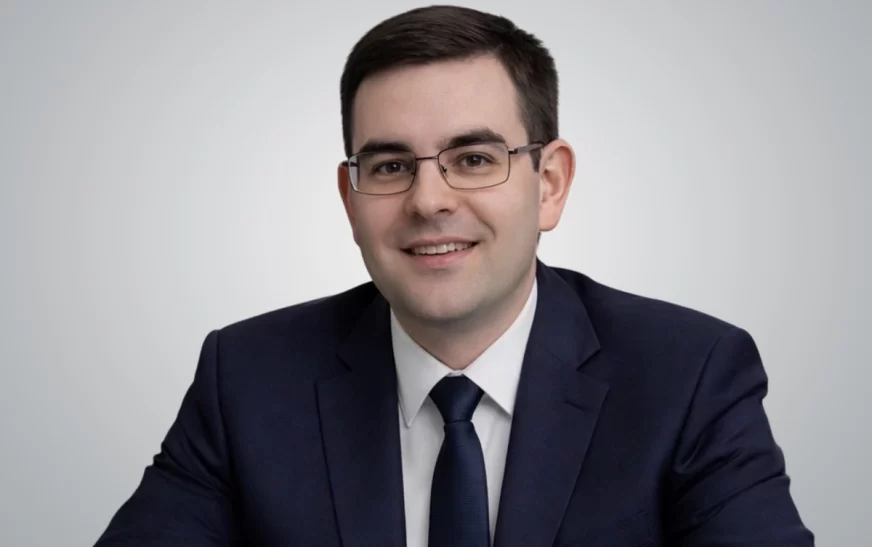
Arie Zorin
Head of Banque Cramer & Cie SA (Switzerland) – DIFC Representative Office
BANQUE CRAMER & CIE SA
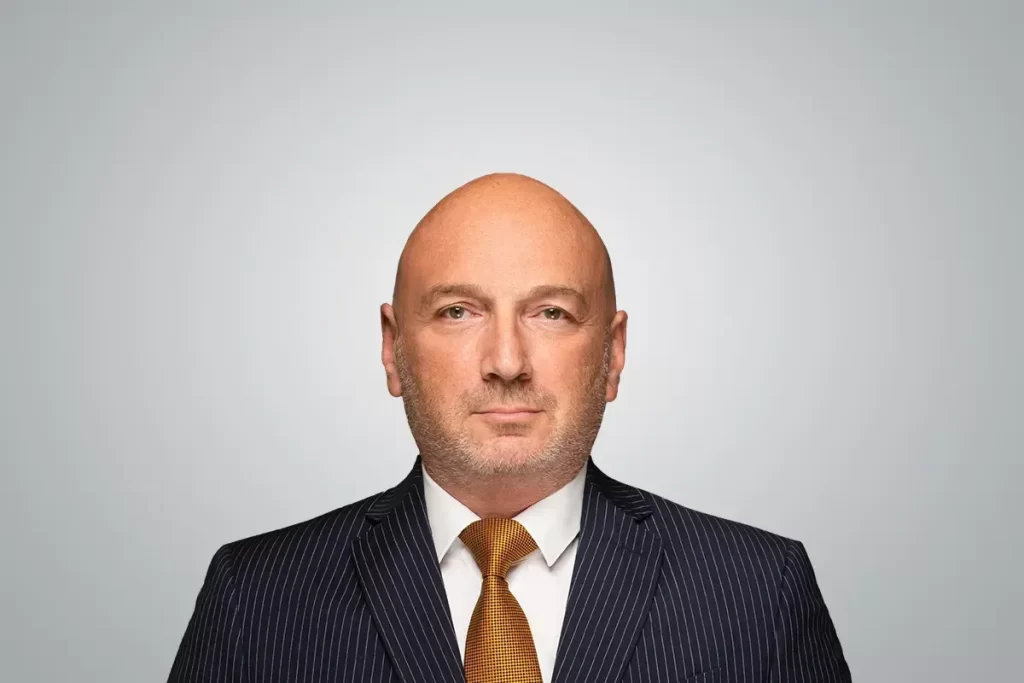
Where Wealth Meets Trust
Arie Zorin
Head of Banque Cramer & Cie SA (Switzerland) – DIFC Representative Office
BANQUE CRAMER & CIE SA
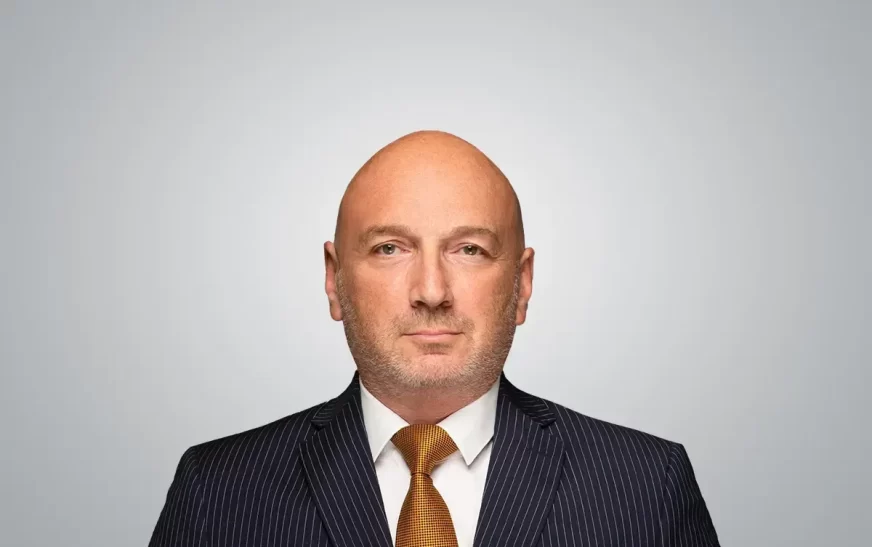
Arie Zorin-Most Influential Business Leaders in the UAE 2026
As Gulf families expand their international horizons, managing wealth across generations and jurisdictions is becoming increasingly complex. Arie Zorin, Head of Banque Cramer & Cie SA (Switzerland) – DIFC Representative Office in Dubai, which is regulated by the DFSA as a Representative Office, brings a distinctive perspective shaped by more than two decades in mergers and acquisitions at leading international law firms. He also founded his boutique law firm in Paris before transitioning into private banking a decade ago.
In an exclusive conversation with TradeFlock, Arie discusses the shared values underpinning the Swiss-UAE financial relationship, the evolving expectations of the next generation of wealth holders, and the principles that shape enduring private banking relationships. With roots dating back more than 300 years, Geneva-based Banque Cramer & Cie SA is one of Switzerland’s oldest independent private banks. At the end of 2025, Banque Cramer & Cie SA was named “Boutique Bank of the Year” at the 10th Annual Private Banking Awards Switzerland, organised by Arena International, recognising excellence in leadership, client focus and innovation.
Here are the excerpts.
In an age when wealth can be managed from almost anywhere, why does a Swiss private bank need a presence in Dubai?
Technology has transformed wealth management, but it has not changed how trust is built. In the UAE, where personal relationships and reputation carry considerable weight, that distinction matters.
Successful entrepreneurs often see their wealth as inseparable from their businesses, families and the legacy they hope to create. Understanding their priorities means understanding the people behind their financial decisions. That requires conversations, shared experiences and a consistent local presence.
Dubai is more than a strategic location. It is where international ambition meets a deeply rooted sense of family, human relationships and continuity.
Recent regional uncertainty has tested confidence. What has this reinforced about your view of the UAE?
It has deepened my respect for the UAE. When you build a life somewhere, stability becomes personal. It means your family feels safe, your colleagues can plan ahead and you can look to the future with confidence.
Throughout 2026, we have felt how much that matters. I’m grateful to the UAE’s leadership and authorities for protecting the country and the people who call it home. The investment in institutions, infrastructure and defence takes on a very real meaning when the world around you becomes less predictable.
For me, trust grows when you see how people respond in difficult moments. The UAE has shown resilience and stood by its citizens and residents. When you live here with your family, that stays with you.
For families rooted in the Gulf, what should international diversification achieve?
First, it should provide security for the individual and their family; then, protect part of their wealth in countries with monetary and political stability and resilience to geopolitical change; and finally, identify the best jurisdictions to support the growth of their main sources of income.
Switzerland meets many of these criteria. It also offers high-quality healthcare infrastructure, leading educational institutions and an internationally recognised capacity for innovation.
That said, I would want a client to be able to explain why each part of their arrangement is there. Moving assets across borders can add complexity. There should be a clear purpose behind it. Geography is one consideration, but it should never be the strategy itself.
The UAE has a remarkable entrepreneurial culture. Do you see a connection between that spirit and Banque Cramer’s history?
The connection lies in Banque Cramer’s DNA and history: it has always known how to look beyond what already exists and imagine what comes next.
The UAE’s entrepreneurial spirit encourages established businesses to grow, new ideas to emerge and ambition to extend further in preparation for the next generation.
There is an interesting parallel with Banque Cramer’s history, which combines Geneva’s banking tradition with an entrepreneurial outlook. The founding family also counted among its members Gabriel Cramer, the renowned Genevan mathematician and an early contributor to the mathematical study of risk and the subjective value of money. His work on diminishing marginal utility resonates with the idea that “a substantial financial loss can cause more pain than an equally large gain brings joy”. This principle of modern asset management has shaped our philosophy and, more broadly, the Swiss private banking mindset.
Three centuries later, when the new shareholders, led by Massimo Esposito, an entrepreneur of Italian origin based in Geneva, took over the institution from the last descendants of the Cramer family, they breathed new energy into the bank and helped shape its future.
Tradition and entrepreneurship are therefore not opposites, and Banque Cramer fits seamlessly into the vibrant spirit of the UAE.
As Banque Cramer develops its relationships in the UAE, what does success look like to you personally?
Ten years from now, I would like to be sitting with local families whose circumstances may have changed considerably and still be someone they want at the table.
I was blessed to be born into a family of successful classical musicians, and from the age of three, travel was part of my life. Later, I studied, worked and built a family across different continents and cultures. Those experiences taught me that belonging can grow in many places and that each encounter changes the way we see the world.
Arriving in Dubai at this stage of my life gives me the feeling that those different paths have found a meeting point. Here, I am in contact with fascinating people whose ideas and ambitions are giving shape to the world our children will share tomorrow. Building the business is part of my responsibility, but becoming a trusted part of the lives of Emirati families and Middle Eastern entrepreneurs would be a personal achievement. I would then be proud to leave that legacy to Banque Cramer.
Swiss private banking and Emirati family businesses come from different traditions. Where do their values meet?
There are more similarities than one might expect.
Swiss private banking has traditionally been built on the need to organise, preserve, grow and pass on wealth, with a long-term perspective. These principles resonate strongly with the UAE’s family business culture.
A family business, by definition, first protects its members and its name. It also safeguards its reputation by assuming responsibility towards those who helped build it. There is considerable pride in previous generations’ achievements, alongside a determination to take that legacy further.
What I particularly admire about the UAE is that respect for tradition has never prevented the country from looking ahead. Its strong attachment to family and cultural identity goes hand in hand with an extraordinary appetite for innovation and international opportunities.
We may come from different places, but we share common values and a similar approach. We always think beyond the immediate transaction and consider the overall interests of the individual or institution.
What is changing most significantly in the expectations of wealthy families in the Gulf?
The younger generation is changing the conversation, and I think that is both challenging and healthy.
Many of the region’s most successful families have built extraordinary businesses and substantial wealth. The question now is how that wealth will evolve as the next generation assumes greater responsibility.
Their children may have studied abroad, worked in different industries or acquired skills that differ from those of their parents. They want first to preserve that wealth and then to understand not only how it is managed but also the balance between risk and security.
A Lombard Odier survey on succession planning in the GCC, published in September 2025, found that 79% of next-generation wealth holders in the region were likely to change their parents’ wealth adviser. This is a telling indication of changing expectations. Since our origins, we have adapted to geopolitical changes in the environments of our clients, who come from diverse backgrounds, cultures and parts of the world. We are here to carry that tradition forward.
With so many international banks competing for Gulf wealth, why should Banque Cramer be part of the conversation?
For more than twenty years, I advised entrepreneurs and negotiated cross-border mergers and acquisitions. For over a decade, I also ran a law firm of my own. Those experiences taught me that every decision carries responsibilities: to the people who built a business, to the family that depends on it and to the generation that will one day inherit it.
So when an entrepreneur comes to Banque Cramer with a business question, the bank needs to understand what brought them to that moment. What have they built? What do they hope to achieve? What do they need to protect? The business, the family, their commitments and their ambitions all belong in that conversation.
Our clients should expect clear thinking, thoughtful advice and the discipline to do what we say we will do. Trust grows when we meet those expectations, consistently, over time.
Banque Cramer brings Swiss banking experience and the personal attention of a boutique bank. That means being accessible, providing continuity and taking the time to understand each client’s expectations.
That relationship must rest on financial strength. At the end of 2025, the bank reported a Tier 1 capital ratio of approximately 36% and a short-term liquidity coverage ratio of approximately 325%. These figures place us among the strongly capitalised and highly liquid Swiss private banks, exceeding the ratios reported by several of Switzerland’s largest and best-known banking institutions, as reflected in the Swiss Financial Market Supervisory Authority’s (FINMA) 2025 Key Metrics.
The security clients seek depends on their choice of institution: how carefully it manages risk, how prudently it maintains its balance sheet and how quickly it adapts to unpredictable changes.
A smaller bank with a long history and substantial capital and liquidity buffers can provide peace of mind for the families who place their trust in it.
What leadership qualities does it take to attract clients in a new market?
When you represent a financially strong bank, with shareholders who have vision and management that gets things done, you already have the key elements to attract new clients. But that alone is not enough. The banker has to bring skills, personality and the ability to communicate, listen and earn trust. The bank and the banker are the two pillars of a successful expansion. Both have to deliver.
All Magazines -



Success Insights
Arie Zorin-Most Influential Business Leaders in the UAE 2026
Rian Hidayat-Asia’s 40 Under 40 2026
Miguel Cardoso-Most Impactful CXOs of 2026
Jacob Chase Garmon-Most Impactful CXOs of 2026
Igue Bonifacio-Asia’s 40 Under 40 2026