Designing Capability, Systems and Leaders for What Comes Next
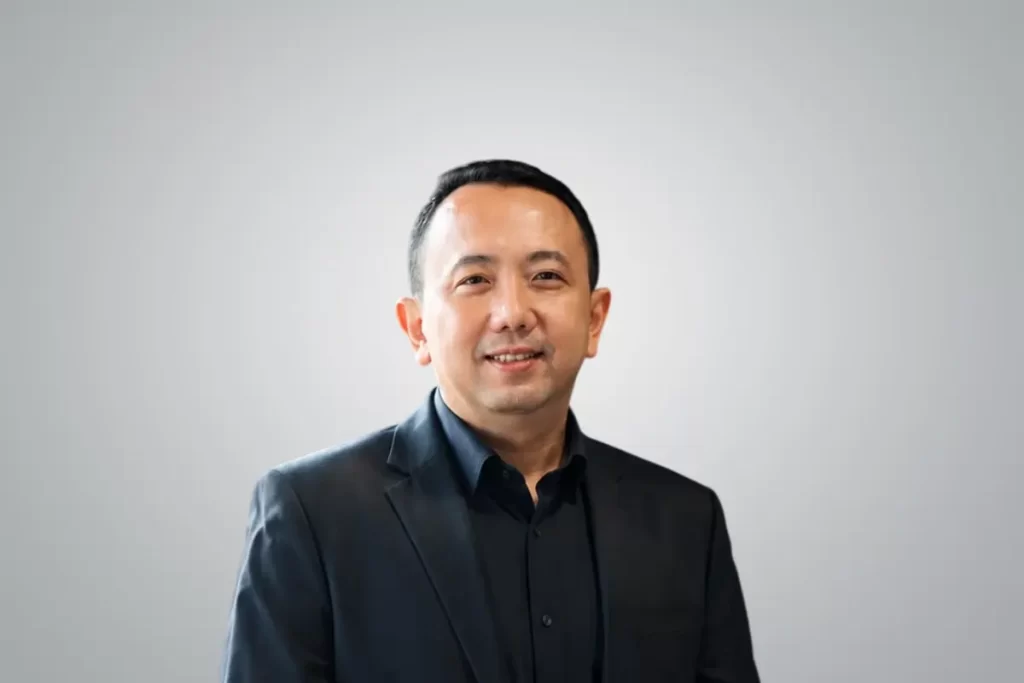
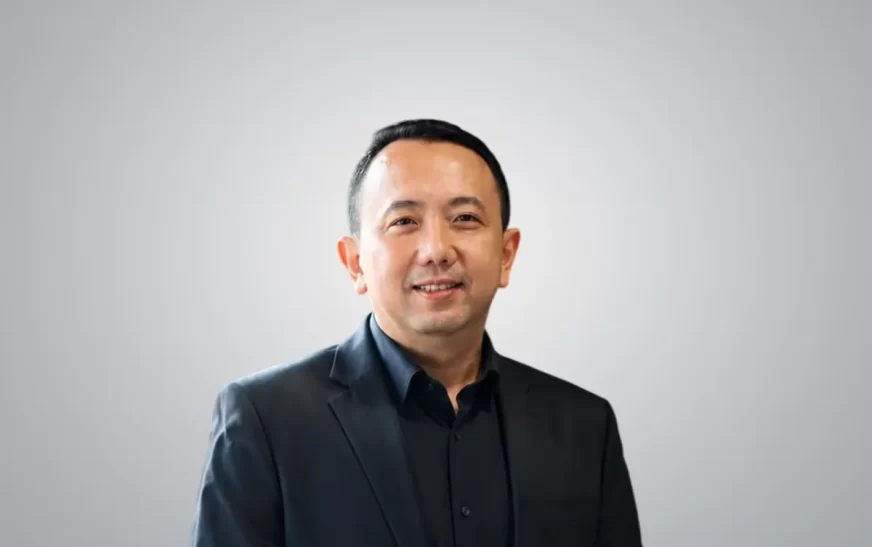
Yussy Santoso
Head of Corporate HR & General Affairs
PT MMS Group Indonesia
Designing Capability, Systems and Leaders for What Comes Next
Yussy Santoso
Head of Corporate HR & General Affairs
PT MMS Group Indonesia
The most consequential work in HR is rarely about implementing another system or launching another programme. It is about building organisations that can perform, adapt and learn long after the leader who designed them has moved on. That philosophy has shaped Yussy Santoso’s more than 23-year career across HR, organisational transformation and strategic management, spanning manufacturing, pharmaceuticals, banking, financial services, energy, mining, property, retail and engineering.
An engineer by training, Yussy developed a systems-orientated mindset through quality management, ISO and Kaizen. The experience taught him to look beyond symptoms, identify root causes and turn improvement into an organisational discipline. Over time, this became central to his approach to HR, where people, processes, organisation, governance and technology must work as an integrated system.
Speaking with TradeFlock, Yussy reflects on his evolution from execution-focused HR leadership to capability-led transformation, connecting business strategy, organisation design, people capability and technology to build scalable, adaptable operating models.
He has also authored books on job analysis, organisation design and executive compensation and pursued advanced management studies, including doctoral work. His perspective brings together engineering discipline, management thinking and human capital practice, positioning HR transformation as an exercise in organisational design.
I would describe my HR transformation journey through three shifts: from reactive to proactive, case-by-case decisions to standardised governance, and administrative HR to strategic human capital management.
The first is anticipation. HR must identify workforce risks and opportunities before they become operational issues, using workforce data, organisational diagnostics, capability assessments and business strategy.
The second is consistency. As organisations grow, informal decisions can create ambiguity. Job architecture, grading, compensation, performance management, career structures and talent frameworks provide governance while preserving flexibility.
The third is integration. Digitalisation enables HR to connect fragmented processes into integrated workforce management. I have worked with platforms including PeopleSoft and Workday, including HR processes at MMSGI spanning recruitment, performance, talent, core HR and manager self-service.
The key lesson is that technology enables transformation; it does not constitute transformation. Poor processes cannot be fixed by sophisticated platforms, and sustainable change requires leadership commitment and behavioural adoption.
Ultimately, transformation depends on process redesign, technology, governance, leadership capability, stakeholder alignment and behavioural change—while maintaining enough structure for consistency without limiting organisational adaptability.
One of the most important lessons in my career is that a technically strong HR solution does not automatically create organisational change. Earlier, I focused heavily on designing the right structure, process, system or policy, assuming that a robust solution would naturally be adopted.
Experience taught me that solution quality is only one part of transformation; adoption matters equally.
That changed how I lead. Today, I place greater emphasis on stakeholder mapping, organisational readiness, communication, timing, implementation pace and feedback. Before asking an organisation to change, leaders must understand whether it is ready to absorb that change.
My leadership philosophy has therefore shifted from “I have the solution” to “How do we build the solution together and make it sustainable?” Change becomes durable when people stop seeing it as something imposed on them and start becoming co-owners of it.
For me, trust begins with consistency between what we say, what we decide and what we do. This is especially important in family-owned and entrepreneurial organisations, where relationships, institutional history and entrepreneurial instincts can be significant strengths.
As organisations scale, however, informal mechanisms that once created speed can also create ambiguity around roles, decision rights, compensation, performance and accountability. The answer is not to eliminate the entrepreneurial culture but to build governance around it.
I describe my approach as “bridging relationships with systems.” Relationships recognise that organisations are ultimately human systems; systems ensure they do not depend entirely on individual judgement or personal connections.
Authenticity is essential. I communicate openly, use evidence and remain consistent, particularly when decisions are difficult. Influence is rarely created by hierarchy alone. It comes through credibility, preparation, business understanding and recognising what matters to different stakeholders.
The more deeply HR understands the business, the more effectively it can influence business decisions and build sustainable organisational alignment.
The future of HR is often framed around AI, analytics, automation and digital platforms. These technologies will reshape work, but the deeper question is whether organisations can continuously adapt as its nature changes.
As technology automates transactions and augments decisions, human capabilities such as leadership judgement, collaboration, adaptability, learning agility and ethical reasoning will become increasingly important.
I focus on three areas: capability architecture to understand future workforce needs; leadership and learning systems combining coaching, mentoring and experiential development; and digital enablement that improves decision-making.
I do not want my legacy measured simply by the HR systems I implemented or transformation projects I completed. I want it measured by the organisational capability that remains after I leave.
Across organisations including Mulia Group, APP Sinar Mas and MMSGI, my work has involved integrated HR systems, competency and career structures, talent management, governance and scalable operating models. The principle behind these initiatives is simple: a leader should not create dependency; a leader should create capability.
I hope to leave three things behind: stronger systems, stronger leaders and a culture of continuous improvement. Sustainable organisations are those where people have the capability, confidence and ownership to solve problems, make decisions and keep improving long after the original transformation has ended.