Leading Through Chaos, Building Systems That Endure
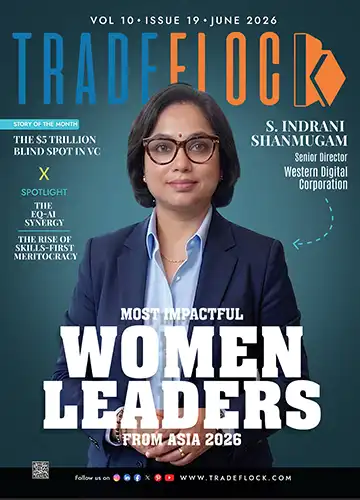
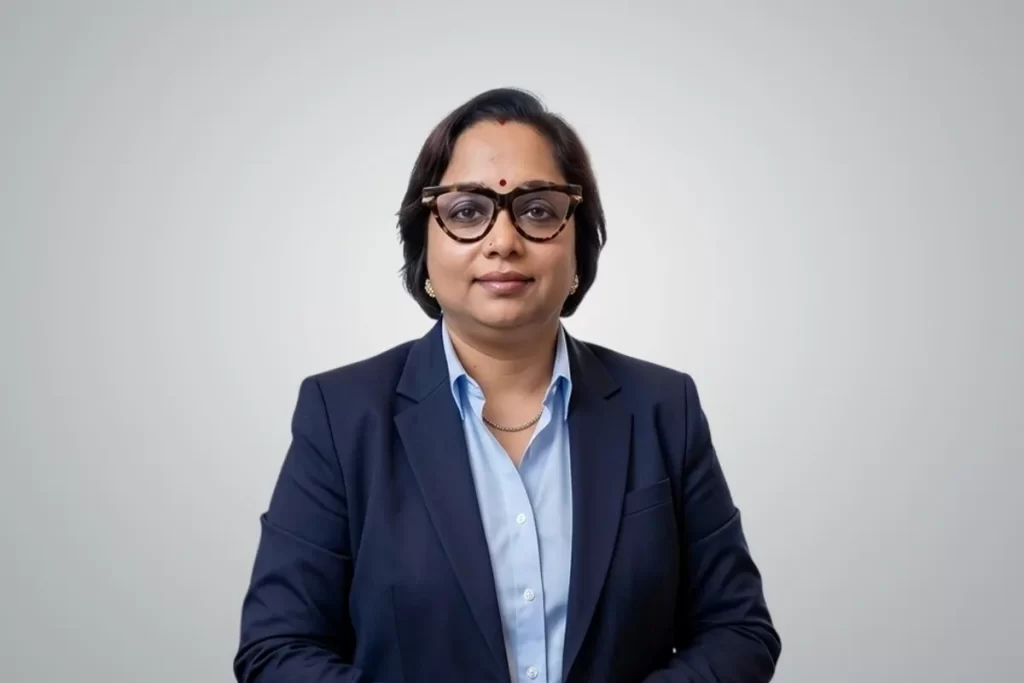
S. Indrani Shanmugam
Senior Director
Western Digital Corporation
Leading Through Chaos, Building Systems That Endure
S. Indrani Shanmugam
Senior Director
Western Digital Corporation
S. Indrani Shanmugam-Leading Through Chaos, Building Systems That Endure
Global supply chains today operate on the edge of disruption where geopolitical fault lines, regional instabilities, and demand volatility collide in real time. In this environment, continuity no longer remains just a function of process but has transformed into a function of leadership. S. Indrani Shanmugam has built her career mastering this reality over the last 35 years. As senior director of supply chain materials, planning & inventory at Western Digital Corporation, she leads high-stakes, multi-country supply chain operations where decisions carry immediate operational and human impact. Her leadership is defined by composure under pressure, bringing structure to chaos, aligning teams across cultures, and ensuring that when systems are tested, they do not break.
That command over complexity is not accidental. It is the result of a career that began at the ground level, long before global mandates and strategic oversight became part of her role. At just 21, Indrani entered a startup environment that demanded complete ownership of managing production floors, supplier networks, customer commitments, and operational outcomes end-to-end. There were no predefined playbooks, only accountability. That early exposure forged a deep operational instinct and a systems-thinking mindset that continues to define her leadership.
Her transition into Western Digital marked the beginning of a disciplined and expansive rise. Over nearly three decades, she moved across critical functions from production, planning, ERP transformation, and inventory management to procurement, with each role adding a new dimension to her capability and each challenge reinforcing her ability to lead at scale.
Today, Indrani stands as a leader who is shaped by experience and not titles, driving resilience in systems and strength in people. Speaking exclusively with TradeFlock, she shares further insights into her journey and work
Could you walk us through your journey and the experiences that shaped your leadership?
My career spans nearly 35 years in the manufacturing and semiconductor industry, beginning at the age of 21 with a startup. That early phase was transformative. In a startup, there are no defined boundaries. You manage everything end-to-end, right from raw materials and production to quality, suppliers, and customers. It was demanding, but it gave me a complete understanding of how businesses operate.
After four years, I transitioned to Western Digital, moving from a highly dynamic environment into a structured global organisation. I started in production, which allowed me to build depth in a focused area. Over time, I expanded across functions, including production control, scheduling, ERP implementation, inventory management, and procurement.
A key turning point was leading the Oracle ERP implementation, which exposed me to the integration of operations and technology. I eventually moved into procurement, where I have spent over two decades, and am now transitioning into a broader supply chain role.
This cross-functional journey has given me a holistic perspective of business and shaped my core belief that strong organisations are built on strong people.
How do you adapt your leadership across diverse global teams?
Leading across regions such as Malaysia, Thailand, the Philippines, and China and working with stakeholders in the United States requires adaptability. A single leadership style cannot work universally. Today, cultural nuances shape how teams respond to communication, authority, and decision-making.
I start by understanding the context, including language, behavioural expectations, and local work culture. In some regions, teams need more guidance and patience, especially where language is a barrier. In others, a direct and assertive approach drives better outcomes.
Respect and inclusivity remain constant. When people feel understood, collaboration improves. For me, global leadership is about maintaining consistency in values while being flexible in execution.
What advice has most shaped your leadership philosophy?
Yes, one piece of advice fundamentally transformed my leadership approach: “Stop carrying everything yourself. Build leaders, not dependency.”
This advice came at a critical point in my career when I was taking on increasing responsibilities. Like many leaders, I believed that delivering results personally was the key to success. But this mindset is not scalable.
That advice helped me reframe leadership. It shifted my focus from individual performance to collective capability. I began investing more in building teams, creating clarity, and empowering others.
Today, my success is not measured by what I achieve individually but by how many leaders I have developed. Succession planning has become a central pillar of my leadership strategy.
What role does succession planning play in your leadership?
Succession planning is at the core of my leadership philosophy. I firmly believe that no one is indispensable. Organisations must be prepared for continuity at all times.
For every role, I identify successors across three timelines—six months, one year, and two years. This ensures that there is always a pipeline of ready leaders.
More importantly, succession planning is not just about filling roles but about building capability. When leaders know they are being prepared for future roles, it creates motivation and accountability.
For me, legacy is not about tenure or position. It is about the people, processes, and systems you leave behind.
What message would you share with aspiring women leaders?
Women leaders often carry additional responsibilities, particularly balancing professional and personal commitments. However, it is important to recognise that family can be a strong support system.
Building a network of mentors and sponsors is equally critical. Leadership is not a solo journey. It requires guidance, support, and advocacy.
One key mindset shift I would encourage is this: Stop trying to prove yourself. Focus on creating pathways.
Leadership is not about doing more but building more leaders. Women must also actively participate in decision-making spaces. Silence does not create impact. Speak up, take ownership, and trust your capability. Confidence is built through action.
At the end of the day, leadership is measured by how many others you have empowered to succeed.
What key challenges did you face as a woman in manufacturing, and how did you overcome them?
One of the most significant challenges early in my career was the expectation to deliver outcomes without formal authority. I often had to influence decisions across functions without having direct control, which meant consistently building credibility through performance and reliability.
There was also a perceptual barrier. Women were frequently seen as secondary contributors, and leadership capability was often questioned. I addressed this by focusing on consistency, delivering results, and building trust over time.
As I moved into senior roles, the nature of challenges shifted. It became less about proving capability and more about driving transformation, often without full alignment or sponsorship. This is where interpersonal leadership became critical. I learned to influence without ego, listen actively, and avoid unnecessary escalation.
Emotional intelligence played a key role in my journey. While often misunderstood, I leveraged it as a strength by becoming a certified trainer and focusing on psychological safety and team well-being.
Equally important was unlearning the need to be a “hero leader”. I shifted toward building systems, empowering people, and enabling sustainable success beyond individual effort.
How do you ensure stability amid ongoing supply chain disruptions?
Supply chain disruptions are no longer exceptions but a constant. Whether driven by geopolitical tensions, trade restrictions, or regional conflicts, the key is responding with clarity and agility. The first step is always to define the problem, align responsibilities, and establish a structured communication framework.
Leadership visibility becomes critical during such moments. Teams look for direction and reassurance, and being present while communicating transparently helps build confidence and stability.
My approach is structured around three priorities. First, people need to address their emotional and psychological concerns to stabilise morale. Second, process to ensure operational continuity through alternative sourcing and risk mitigation. Third, stakeholder engagement by working closely with partners to resolve disruptions collaboratively.
How do you develop future leaders within your organisation?
For me, leadership development is not a standalone initiative but is embedded into everyday operations. In fast-paced environments like supply chain and procurement, I integrate development into real business challenges rather than treating it as a separate process.
I focus on assigning meaningful responsibilities that directly impact outcomes, ensuring individuals take ownership of critical tasks. Clear accountability is essential, so expectations are well-defined and aligned with business goals. Each team member has a tailored development plan based on their strengths and improvement areas, supported by regular assessments such as SWOT analysis to identify capability gaps.
Succession planning is a key priority. I identify potential leaders across immediate, mid-term, and long-term timelines, ensuring continuity. This structured approach enables consistent leadership growth aligned with organisational needs.
What leadership belief have you consciously unlearned?
One of my biggest realisations has been that leadership is not about proving capability. Early on, I focused on demonstrating competence. But over time, I understood that true leadership lies in shaping systems and enabling others.
I consciously moved away from the need to prove myself and instead focused on building sustainable frameworks, prioritising systems thinking over individual contribution, empowering teams with accountability, and trusting them to deliver independently. Unlearning, in many ways, has been as critical as learning in staying relevant.