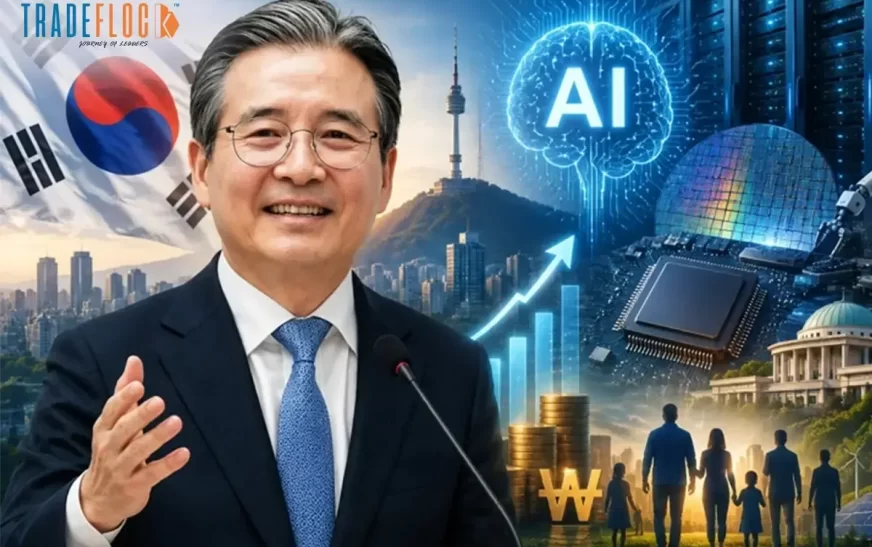
South Korea’s Deputy Prime Minister Bae Kyung-hoon recently said that the economic gains created by artificial intelligence must be shared with the wider public rather than pooled and concentrated among big corporations or investors. His remarks arrive while concerns are growing that AI may, in fact, widen inequality and also stir up labour tensions across the country. Deputy Prime Minister Bae noted governments need to handle, with careful attention, the social and economic effects of AI technologies as automation is expanding fast across different industries. He also suggested that even if AI boosts economic growth and helps innovation, it could still end up causing job losses and a broader wealth gap if the policies in place do not protect workers and ensure the gains are shared in a fair way.
These comments came not long after labour tensions at Samsung Electronics nearly turned into a major strike that would have involved the company’s largest labour union. Workers reportedly asked for a bigger portion of the company’s profits, especially amid strong growth in the semiconductors and AI sectors. South Korea, for its part, has been positioning itself as one of the world’s top AI and semiconductor hubs, pushing major investment into advanced chips, robotics, and automation technologies. Still, officials are increasingly debating how AI-driven growth should actually land with society, not just with companies.
Read More: China Strengthens the Drone and Flying Car Regulations
The discussions regarding public welfare, workers’ rights, and the redistribution of wealth generated by artificial intelligence have become important parts of the nation’s economic policy. According to Bae, it is imperative for the government, corporations, and other stakeholders to coordinate in order to ensure that artificial intelligence developments are socially sustainable. The comments were made in line with an increasing international concern over the effects of artificial intelligence on income levels and employment opportunities.