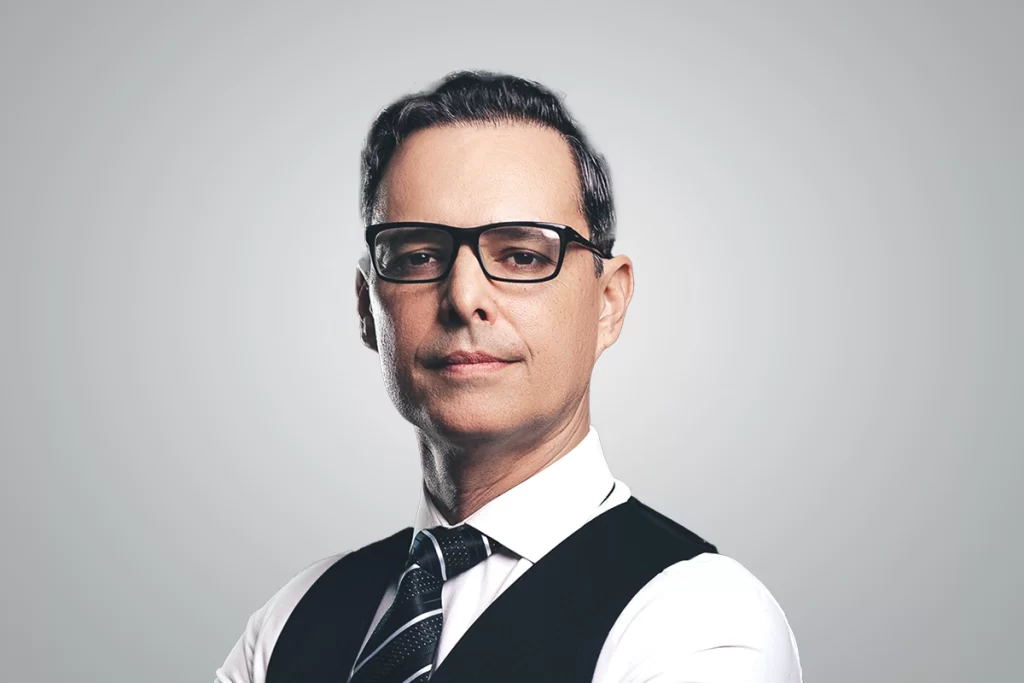

The Man Questioning Corporate Exhaustion
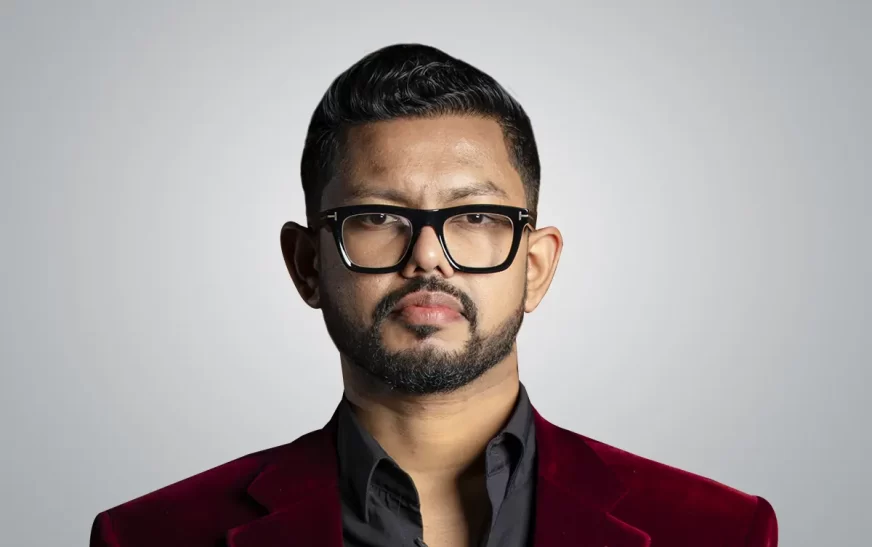
Renato Bispo de Oliveira
CEO
Óssea Medical Technology
Renato Bispo de Oliveira : Visionary CEOs to Watch in 2026
Healthcare leadership has become far more complex than managing products, hospitals, or quarterly growth targets. Executives today are expected to navigate clinical precision, AI-driven innovation, aggressive market consolidation, emotional well-being, and governance pressures simultaneously, often inside environments where decisions carry direct human consequences.
Over the last two decades, Renato Bispo de Oliveira has operated at the centre of that reality, leading businesses across Orthopaedics, Neurosurgery, Spine, Trauma, Urology, and advanced medical technologies through roles at Johnson & Johnson, Síntegra Surgical Sciences, and now as CEO of Óssea Medical Technology. Alongside scaling operations across Brazil and Portugal, leading M&A environments, and driving international growth, he has also emerged as a strong voice around emotionally intelligent leadership through books like Doença Corporativa and Seja um Líder Nexialista.
In an exclusive conversation with TradeFlock, he reflects on the leadership realities reshaping modern healthcare.
What turning points most shaped your leadership across the medical devices industry?
Twenty-four years inside the medical devices industry have gradually changed how I define leadership. Early in my career, I focused heavily on technical performance and commercial execution because those areas felt measurable and controllable. Over time, healthcare taught me a different lesson. Clinical outcomes are rarely influenced by product expertise alone. Regulatory complexity, physician relationships, reimbursement systems, and patient realities all intersect long before innovation reaches a hospital environment.
Recognising that complexity pushed me toward what I now describe as “Nexialist Leadership,” connecting disciplines that traditionally operate separately. My management style evolved alongside that shift. I moved away from centralised control and focused more on mentoring leaders who could think independently and eventually outperform their mentors. I had to do this because healthcare moves too quickly for leadership models built solely on hierarchy.
One lesson, however, has remained constant through every stage of my career: businesses are not built by strategy alone. People build the business, and leadership becomes sustainable only when successors grow stronger than the leaders who trained them.
How has M&A exposure changed your understanding of business growth?
Most people entering M&A discussions focus almost exclusively on valuation metrics, EBITDA multiples, and market expansion. My experience taught me that culture usually determines whether the deal survives after the signatures are complete.
Brazil’s healthcare sector has entered a period of accelerated consolidation, partly because many businesses were built without strong succession planning or governance structures capable of surviving generational transitions. Insurance verticalization and sector professionalisation intensified that pressure even further.
Working through acquisitions changed how I think about growth itself. Market share matters, but resilience matters more. Companies built without governance eventually struggle under scale, leadership transition, or economic pressure. During integration processes, I often see my role less as an operator managing numbers and more as someone responsible for aligning values, leadership structures, and long-term sustainability across both organisations. Financial growth without structural maturity rarely lasts very long.
Has leadership become more emotionally demanding over the years?
Leadership today carries far more emotional weight than it did earlier in my career because workplaces no longer function as spaces where personal realities remain outside the door. Anxiety, exhaustion, uncertainty, and mental health pressures now move directly into professional environments every day. Ignoring those realities creates distance between leadership and people.
Writing Doença Corporativa (Corporate Disease) came from that realisation. I actually wanted to address the emotional side of corporate life more openly because vulnerability, when handled with maturity, strengthens trust rather than weakening authority. Teams respond differently when leaders stop pretending they operate above pressure themselves.
Personally, maintaining balance requires intentional discipline around mental hygiene. I protect boundaries between corporate intensity and personal life because burnout gradually damages judgment, empathy, and perspective. Emotional honesty has become one of the most important leadership skills of the modern workplace.
Which phase of your leadership journey tested you the most?
Neurosurgery, Spine, and Orthopaedics exposed me to some of the highest-pressure environments in healthcare because decisions made inside those businesses directly affect surgical precision and long-term patient outcomes. Clinical responsibility alone creates intensity, but operating those segments in Brazil added an entirely new layer of complexity.
A healthcare executive in Brazil often balances contradictory realities simultaneously. Long-term strategic planning coexists with high financial costs, reimbursement denials, revenue retention challenges, geopolitical instability, and constant pricing pressure on advanced technologies. Under those conditions, rigid leadership structures collapse quickly. My response was decentralisation. I learned to trust specialists closest to the problem rather than creating dependency on executive approval. Hospital visits and field meetings also became essential because a strategy loses relevance very quickly when leadership drifts too far from operational reality. Pressure, in many ways, forced me to become more adaptive and less controlling as a leader.
Which healthcare technology shifts excite you most today?
Precision healthcare is becoming the defining shift of this era. AI-assisted surgery, robotics, and minimally invasive technologies are already changing how physicians approach decision-making inside operating rooms, particularly by reducing variability and improving surgical predictability.
I do not see artificial intelligence replacing physicians. The more interesting evolution is AI functioning as a clinical co-pilot capable of strengthening judgment, identifying patterns faster, and supporting better outcomes under pressure. Healthcare still depends heavily on human interpretation, ethical reasoning, and emotional intelligence, areas where technology alone remains insufficient.
Leading through this transition requires more than technical adaptation. Continuous learning became essential for my teams because technological sophistication without human understanding creates disconnected healthcare. My focus remains on developing professionals capable of navigating both worlds simultaneously: advanced innovation and patient-centred care.
All Magazines -

Success Insights
Ravindranath Garaga-Best CXOs in Asia 2026
Dr Tharindu Samarajeewa-Asia’s 40 Under 40 2026