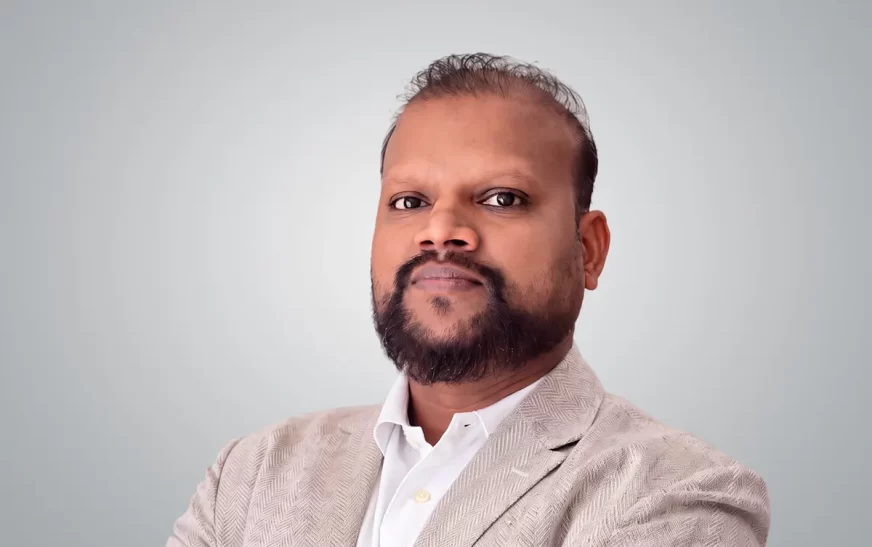
Josué Bracero-Visionary CEOs to Watch in 2026
Puerto Rico spends heavily to maintain what its own climate works relentlessly to undo. With humidity averaging 80% year-round, salt air moving through everything, and construction methods shaped by decades of tropical environmental exposure, the property maintenance market here has long operated on a single assumption: when a surface deteriorates, you demolish it and start over. For most property owners on the island, that assumption has never been seriously questioned, and it has cost them far more than it needed to.
Josué Bracero, a United States Marine Corps veteran and civil engineer, arrived with a different calculation entirely. Certified restoration technology capable of recovering tile, grout, and stone surfaces at a fraction of renovation costs had existed on the mainland for years. In Puerto Rico, virtually no companies were specialising in certified hard surface restoration technologies. Bracero founded Vanity Inceptions in Atlanta, Georgia, before making one of the most important strategic decisions of the company’s future: officially expanding operations into San Juan, Puerto Rico, in January 2024, introducing Color Seal Pro certification and same-day, dust-free restoration processes to a market that had been defaulting to demolition simply because no credible alternative had ever been presented to it.
In a recent conversation with TradeFlock, he laid out how he built the category, what the Corps taught him that business school never could, and how far he intends to take it.
You spotted this opportunity while visiting Puerto Rico. What did you actually see, and what made you confident it could scale?
Surfaces failing everywhere. Tile, grout, stone, all of it deteriorating with nowhere to go except a demolition quote. Puerto Rico’s humidity, salt air, and construction methods produce patterns of surface damage you simply do not encounter on the mainland. Property owners were being told their only option was to tear everything out and begin again. Nobody had introduced them to certified restoration technology. Color Seal Pro, epoxy grout systems, and advanced surface recovery — these solutions existed, worked reliably, and cost a fraction of full renovation. The market had no awareness of any of it.
Before making any move, I spent nearly three years at the largest hard surface restoration company in the United States, starting in 2022. Not as an observer but fully immersed, absorbing the operational side, the restoration chemistry, the supplier relationships, the customer psychology, and the business model behind certified restoration. I became certified across multiple areas during that period and taught myself how to build a company around professionalism and customer trust while still working inside someone else’s operation.
By the time I founded Vanity Inceptions in Atlanta, Georgia, the plan for Puerto Rico was already drawn. After approximately two years of preparation, I officially expanded into Puerto Rico with the Caribbean market as the larger horizon. What gave me confidence was a simple realisation. This was never about cleaning surfaces. It was about introducing a smarter alternative built around asset preservation, restoration technology, hygiene, and property value in a market where virtually no companies were specialising in certified hard surface restoration technologies at the time.
“Property owners had one real option: demolition. Nobody had told them restoration was possible, and nobody had shown them what that difference meant for their asset.”
As a CEO still working as a technician in the field, how do you hold operations, growth, and customer experience together daily?
By staying inside the work rather than floating above it. Scheduling, sales, logistics, customer communication, quality control, field restoration, marketing strategy, long-term planning, all of it remains hands-on right now, and deliberately so. Understanding every layer of the business from the inside produces better leadership and tighter systems. The plan is to transition fully into a strategic CEO role over the next year as the company scales, but that transition has to be built and earned, not declared.
The clearest lesson from the early years is that growth means nothing when customer experience erodes alongside it. Every project, every client interaction, every operational mistake became raw material for stronger systems. The mentality driving the work has not changed. We are not restoring surfaces. We are protecting assets, improving hygiene, and helping property owners hold the value of what they have built.
Technology sits at the centre of your service model. What has it actually changed about how the business operates?
Technology is not a single layer of the business at Vanity Inceptions — it runs through all of them. AI-assisted systems and automation handle scheduling, customer management, and internal communication, which frees the team to focus on delivery rather than administration. On the service side, the impact has been equally significant. Surfaces are restored considerably faster than traditional renovation methods allow, with none of the demolition, noise, dust, or extended downtime that construction typically brings to a property and the people using it.
What technology has also changed is the consistency of the client experience. From the first enquiry through to project completion, clients receive organised coordination, digital proposals, maintenance documentation, and communication that reflects the same standard every time. Digital marketing and social media have extended that professionalism outward, allowing the company to educate tens of thousands of property owners across Puerto Rico and the Caribbean about restoration as a serious, credible alternative to renovation, building both brand authority and market demand in the process.
If restoration becomes the default alternative to renovation across the Caribbean, what actually changes?
The reflex changes. The automatic response to a deteriorated surface right now is demolition. It feels decisive, looks like action, and most property owners reach for it before considering anything else. Shifting that reflex takes time, repetition, and a brand people have already decided to trust. Once a market accepts that a deteriorated surface is not a dead surface, the entire calculation around property maintenance shifts. Less waste, lower costs, better asset retention.
Personally, the goal has never been revenue alone. The goal is to build a respected brand that changes how people across this region think about restoration, customer experience, and what professional service actually looks like. Representing United States Marine Corps veteran entrepreneurship in that way, and showing that companies built in Puerto Rico can compete at the highest professional level, carries its own meaning. That is the legacy worth building toward.
You came from civil engineering, then the Marine Corps, then years of learning restoration from the inside. How did those experiences shape how you built this company?
Nothing about this path was accidental, even when it did not look strategic from the outside. Civil engineering with a minor in psychology and nearly fifteen years working alongside my father in construction gave me a technical foundation and a ground-level understanding of how structures age, fail, and wear. That background made restoration science accessible and gave me credibility in client conversations about what was actually happening beneath the surface of their properties.
The United States Marine Corps added something harder to name. Discipline is the word people reach for, but the more accurate word is structure. Marines are logistics thinkers. You learn to move resources, manage timelines, and execute under conditions that are never clean or convenient. Running field operations across Puerto Rico with unpredictable humidity, client sites at different stages of deterioration, and a market that needed educating before it needed selling demands exactly that kind of thinking. Motivation fluctuates. Systems hold.
Accountability came from the same formation. Small operational mistakes compound into larger failures downstream, and that understanding shaped how I manage projects, communication, and company standards today. I have never asked my team to hold a standard I would not keep myself. Programs like the Entrepreneurship Bootcamp for Veterans at Syracuse University and the Military Founders Lab Cohort sharpened what the Corps had already built, a commitment to professionalism and long-term operational credibility that runs through everything Vanity Inceptions does.
Bringing a new category into a market that does not know it needs one is a specific kind of challenge. How did you sell something people had never seen?
Education before sales, without exception. If a client cannot distinguish between surface cleaning, construction renovation, and certified restoration, the pricing conversation collapses and the value disappears entirely. We taught first. What the technology does, why preservation outperforms replacement across a property’s lifetime, and what certified restoration means for hygiene and asset value. Demand followed understanding, not the other way around.
Building the brand around transparency and consistency mattered just as much as the service itself. In a market where many property owners had experienced unreliable contractors and poor communication, credibility became the most valuable thing we could build. Better Business Bureau (BBB) accreditation was part of that, a public commitment to accountability that the market could verify independently.
“We did not invent the industry. We introduced it to a market that had never seen it, and then we made the argument every single day for why it mattered more than what they already knew.”
What has been the most critical decision you have made so far, and how did it change the company's direction?
Expanding Vanity Inceptions from Atlanta, Georgia into Puerto Rico was the decision that defined everything that followed. The island operates under completely different conditions from the mainland — the humidity, the construction methods, the environmental exposure, the customer behaviour, and even the government-related processes create a business landscape that required rebuilding assumptions from the ground up. At the same time, the near-total absence of any established market for certified hard surface restoration technologies meant that the risk and the opportunity were exactly the same size.
That decision changed the trajectory of the company entirely. It demanded stronger systems, deeper market understanding, and an operational capability to perform consistently under conditions most contractors would walk away from. It also gave Vanity Inceptions something that no amount of planning in Atlanta could have provided: a reason to exist that went beyond being another service provider in a crowded market.
Where do you see the biggest opportunities for expansion, and what challenges concern you most about getting there?
Hospitality, luxury residential, commercial properties, and federal contracting all represent genuine growth. Hotels, short-term rentals, and office buildings across the Caribbean are seeing demand for preservation-focused alternatives to renovation steadily build. The wider Caribbean market remains the larger ambition, and Puerto Rico is the foundation on which everything else will stand.
The challenge nobody discusses publicly is holding quality while scaling. Operational discipline at scale is unglamorous and invisible from the outside. Every system being built right now is designed for a company three times the current size, because growing faster than your own infrastructure is a far more expensive problem than building ahead of it.
All Magazines -
Success Insights
Ravindranath Garaga-Best CXOs in Asia 2026
Dr Tharindu Samarajeewa-Asia’s 40 Under 40 2026