
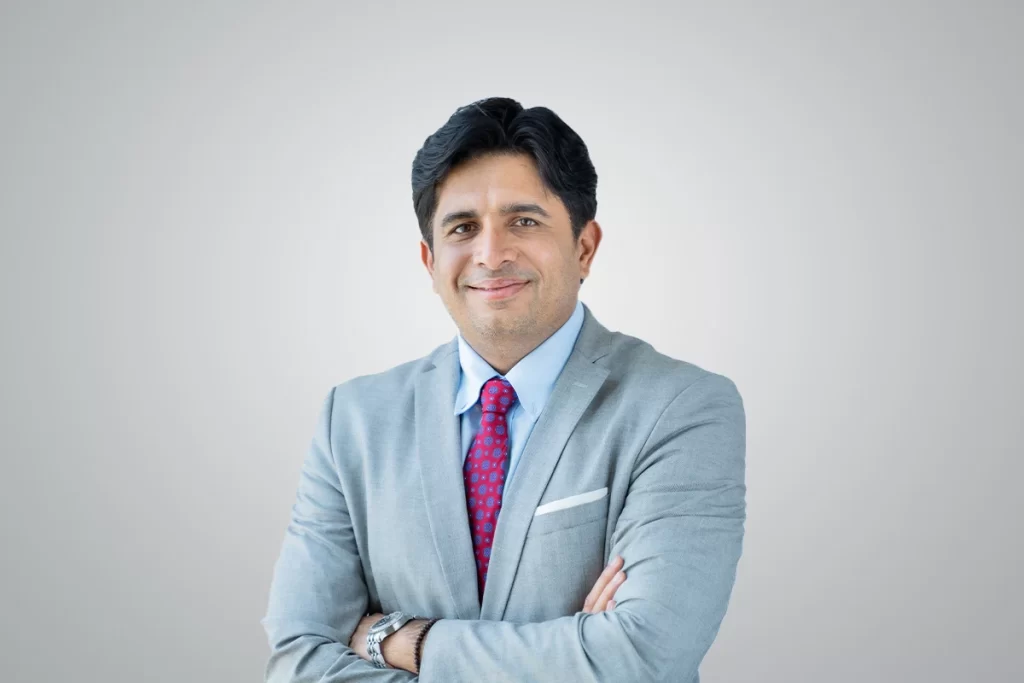
Turning Digital Transformation into Measurable Business Value
Vinod Kumar
Director IT & Digital
Turning Digital Transformation into Measurable Business Value
Vinod Kumar
Director IT & Digital
Vinod Kumar-10 Best Tech Leaders from Asia 2026
How is digital transformation reshaping the real estate lifecycle, and what can other industries learn?
Real estate development is rapidly evolving into a technology-driven, end-to-end built environment ecosystem covering design, construction, sales, and facility management. Markets like the UAE have accelerated this shift, with increased adoption of AI, IoT, and a strong focus on sustainability, further highlighted during COP28. Smart buildings and smart cities are no longer concepts but active priorities.
As leaders, we must focus on digital transformation, innovation, customer experience, and continuous upskilling. These are not optional but essential pillars for future growth. Other industries can learn the importance of integrating technology with business processes to build scalable, efficient, and future-ready operating models.
What strategies enable seamless tech integration and stronger customer support in asset-driven industries?
Real estate, as an industry anchored in physical assets and long development cycles, demands a careful and balanced approach to technology integration. Our strategy has focused on progressive modernisation without disrupting core operations or project timelines. Rather than pursuing large-scale, high-risk system overhauls, we adopted an integration-first model, layering digital capabilities over existing platforms such as SAP S/4HANA, Yardi, BIM models, and digital twin technologies. Through APIs and middleware, we ensured seamless data flow and business continuity. This phased rollout aligned with project milestones, allowing transformation to run parallel to ongoing developments. Embedding change management and cross-functional ownership further ensured strong adoption across teams.
On the customer front, technology is enabling a more seamless and proactive experience. AI-assisted lead management, personalised sales journeys, integrated CRM platforms, and AI-enabled tenant applications have unified customer interactions across the lifecycle. This has shifted support from reactive to predictive, delivering faster response times, greater transparency, and a consistent, high-quality experience that strengthens trust and long-term relationships.
What are the key digital transformation challenges in real estate, and how can they be overcome?
Real estate, by its very nature, operates with long asset lifecycles and complex stakeholder ecosystems, making digital transformation as much a cultural shift as a technological one. Based on my 18+ years in the industry, the most pressing challenges include deep-rooted resistance to change, extended development cycles, unclear ROI, inconsistent data governance, and the overwhelming influx of PropTech solutions. Legacy platforms continue to coexist with fragmented processes, limiting true data-driven decision-making and often stalling even well-funded initiatives.
To address this, I have focused on reframing transformation around measurable business outcomes rather than tools. Delivering quick wins helps build internal confidence, while integration-first strategies enable modernisation without disrupting existing operations. Change management must be treated as a strategic priority, aligning leadership vision with execution at the ground level. Equally important is establishing data as a governed enterprise asset.
Ultimately, success belongs to organisations that balance innovation with pragmatism and technology with human alignment, rather than those that simply digitise faster.
What principles should leaders follow to balance trust and innovation in real estate and IT infrastructure?
Real estate and digital infrastructure industries are evolving in parallel, where trust and innovation are not competing priorities but strategic allies. As forward-looking leaders, we must ensure that every digital transformation initiative reinforces stakeholder confidence rather than risks it. This requires a “trust by design” approach, embedding cybersecurity, strong data governance, and compliance into the foundation, supported by proactive architectures.
Adopting zero-trust environments, transparent data practices, and resilient systems is critical in an asset-heavy industry where disruption is costly. At the same time, innovation must be disciplined through phased adoption, measurable outcomes, and customer-centric ethics that balance privacy with experience.
As leaders, we must foster accountability, align partner ecosystems, and ensure transparency to build secure, scalable, and sustainable growth.
All Magazines -








Success Insights

Ravindranath Garaga-Best CXOs in Asia 2026

Dr Tharindu Samarajeewa-Asia’s 40 Under 40 2026