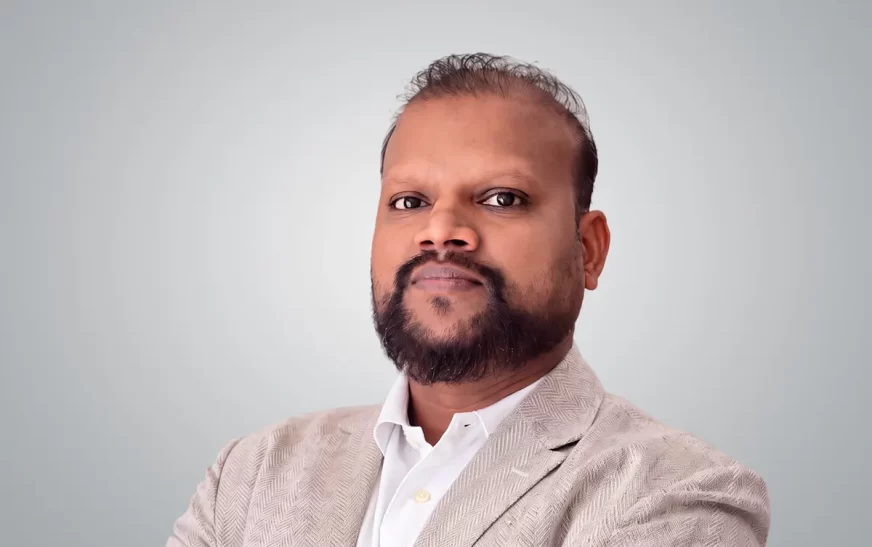
A People-focused Change Strategist ac
Teresa Beazley
Commercial & Training Manager
The Lighting Industry Association


A People-focused Change Strategist ac
Teresa Beazley
Commercial & Training Manager
The Lighting Industry Association
Teresa Beazley-Most Inspiring Global Business Icons 2026
As businesses evolve, so do their workforces, and increasingly, leadership itself. Rapid technological change, skills shortages, regulatory pressure, and shifting employee expectations have exposed a persistent gap between strategy and culture. Many organisations invest heavily in transformation, only to find that progress stalls when people, behaviours, and systems are not aligned to sustain it.
Strategically addressing this gap is Teresa Beazley, Commercial and Training Manager at The Lighting Industry Association. With a career spanning manufacturing, infrastructure, global services, and consultancy, Teresa has consistently focused on translating leadership intent into environments where people can perform, adapt, and stay. From shaping workforce capability at Network Rail and Rentokil Initial to driving people strategy and cultural renewal in complex operational settings, her work blends behavioural science with practical execution. Today, she is helping the UK lighting sector build agile, psychologically safe, and future-ready capability frameworks that endure beyond change cycles. During an exclusive conversation with TradeFlock, Teresa discusses this journey, the challenges organisations face, and what sustainable leadership requires next.
Why do organisational change initiatives fail, and how have you handled this personally?
Change is inevitable, but people and organisations are wired to seek stability, and that tension often creates a disconnect between leadership and the workforce. One group pushes through change quickly, focused on reaching the end point, while the other needs time to digest, absorb, and reflect on what that change truly means. When open communication is missing, that gap widens.
Most change initiatives don’t fail because people resist change; they fail because leaders design change for people, not with them. I’ve seen that sustainable change emerges when listening, curiosity, and communication work together, alongside a willingness to challenge what feels comfortable. When people feel unheard, they hesitate to engage again, but when their voices shape daily, continuous improvement, small steps accumulate into meaningful and lasting change.
Where do leaders struggle most with balancing flexibility and accountability?
The tension between flexibility and accountability remains one of the most misunderstood challenges in modern leadership. Conversations often become polarised, as if organisations must choose between trust and performance, autonomy and standards, when the real issue is clarity.
What I consistently see is that when expectations are vague, roles are ill-defined, or success is measured differently across teams, flexibility becomes inconsistent. The most effective leaders anchor flexibility in shared purpose and clear outcomes, shifting from managing presence to enabling performance. When people understand what’s expected, why it matters, and how their contribution connects to the wider business ecosystem, accountability feels fair rather than punitive.
What is your long-term vision for the organisation and the sector?
Working within a trade association gives me the privilege of contributing to the direction of an entire sector, an opportunity that encourages thinking far beyond individual organisations and toward sustainable talent pipelines at scale.
My long-term vision is for organisations to provide clear, transparent routes from access through to retirement, recognising prior learning, enabling mobility, and valuing behavioural capability as highly as technical expertise. When people feel safe to be their full, authentic selves at work, they are more willing to speak up, learn, and challenge the status quo. That is where innovation lives, and where sustainable business success takes shape.
When you evaluate high-potential talent, what signal do most leaders miss, but you consider critical?
I challenge the concept of “high-potential” altogether. In many organisations, potential continues to be assessed against a narrow leadership template shaped by historical norms rather than future demands.
What carries greater weight in my evaluation is distance travelled rather than surface polish. The trajectory of growth, the capacity to adapt under pressure, and the willingness to support others through change reveal far more about long-term leadership capability than confidence in a formal setting. Observable presence can be compelling, yet it often masks deeper indicators of resilience and learning agility.
Because talent is inherently contextual, behaviours are frequently misread. Quietness may reflect the depth of analysis. Measured responses may signal discernment rather than hesitation. When visibility or resemblance to current leadership becomes the benchmark, organisations unintentionally sideline individuals whose strengths fall outside traditional expectations. Expanding the definition of potential is therefore less about inclusion rhetoric and more about recognising the diverse capabilities required for tomorrow’s complexity.
What is the toughest piece of feedback you’ve ever received, and what concrete change did it force you to make in your leadership style?
One of the most difficult pieces of feedback I received was that I moved too quickly for the people around me. Pattern recognition and solution building come naturally to me, and what felt like clarity often felt overwhelming to others.
That observation forced me to reconsider what effective leadership actually requires. Arriving at an answer quickly is not the same as creating collective understanding. Impact is not defined by speed alone. I became more deliberate about pacing conversations, inviting challenge, and allowing others to shape the direction alongside me. The shift was less about slowing down and more about widening the space for contribution. Engagement deepened as a result, and ownership strengthened. It remains an ongoing discipline rather than a completed lesson.
With rapid technological shifts reshaping every function, what are the two capabilities you are consciously investing in right now to stay relevant?
The accelerating pace of technology has strengthened my commitment to followership. Leadership increasingly requires the humility to recognise when expertise resides elsewhere and the discipline to let it lead. Influence does not always sit at the centre; often it is exercised by enabling others.
Relational judgement is the second capability I am intentionally developing. Automation may transform systems, yet people still interpret change through trust, emotion, and context. Communicating decisions thoughtfully, holding space for uncertainty, and maintaining connection are becoming central to sustainable execution. Relevance, in my view, is less about mastering every technological advancement and more about strengthening the human infrastructure that allows innovation to embed and endure.
What geopolitical or economic risks concern you most today, and how are you mitigating them?
The organisations I work with are facing an unprecedented combination of pressures, including an ageing workforce, generational change, increasing regulation, digital acceleration, and economic uncertainty. Each factor is challenging on its own, but together they are sector-defining.
These pressures are magnified by the loss of tacit knowledge, global supply chain volatility, sustainability demands, and constant competition for specialist skills. While it would be easy to view these forces as threats, I see them as signals to redesign how capabilities are built. By focusing on clear career pathways, skills portability, and continuous learning, organisations can strengthen resilience and address risks that have long been on the periphery.
With AI and automation accelerating, where do leaders overlook the human dimension?
AI is everywhere. Across sectors and roles, people are already integrating it into their daily work, making this less about technological advancement and more about cultural change.
Many organisations are moving quickly to adopt AI systems while overlooking the human infrastructure required to use them responsibly. I’ve seen this with AI-based recruitment tools that quietly removed capable candidates because their careers were non-linear but progressive. There was no malicious intent, but the risk emerged when no one was accountable for questioning the output. Leaders don’t need to become data scientists, but they do need to become stronger ethical decision-makers. AI can remove waste and surface insights, but when judgment, empathy, or ethics are required, technology alone is not enough.
“Sustainable change doesn’t begin with speed or certainty, but when people feel safe enough to speak, contribute, and shape what comes next.”
What untapped opportunities do you see globally, and how can they be developed sustainably?
One of the biggest untapped global opportunities is not a new market, but a shift in how leadership is understood and practised. Organisations continue to invest heavily in technology, infrastructure, and efficiency, while far fewer invest in how leaders think and behave, and in creating environments where people can contribute at their best.
This creates a growing gap between what systems can do and what people feel supported to do. I see a strong opportunity to embed coaching and relationally intelligent leadership practices as an ongoing way of working, rather than one-off interventions. Organisations that develop human capability alongside technical advancement don’t just keep up with change; they build the conditions to lead it.
If you were building your team from zero today, what would be the three non-negotiable qualities you would hire for and why those specifically?
Building a team from the ground up requires clarity about qualities that endure beyond immediate business cycles. Intellectual curiosity sits at the foundation. People who ask “why” before accepting how we’ve always done it create environments where improvement becomes normal rather than reactive.
Equally essential is the combination of accountability and compassion. High-performance environments demand rigour, yet sustainable excellence depends on understanding context and human dynamics. Leaders who hold both dimensions simultaneously create trust without compromising standards.
Adaptive thinking forms the third pillar. Particularly within manufacturing and digitally enabled ecosystems, technical competencies evolve rapidly. The enduring advantage lies in the ability to learn, unlearn, and apply insight across shifting scenarios. Such cognitive flexibility ensures relevance even as tools and technologies continue to change.
Which three habits have most directly contributed to your growth, and how are you intentionally transferring those habits to the next generation of leaders?
A significant turning point in my own growth came when I stopped comparing my leadership to someone else’s template. Embracing my natural style allowed me to see difference not as deviation, but as a creative advantage. That mindset has shaped how I mentor others. Emerging leaders are encouraged to refine their strengths rather than replicate existing archetypes.
Reflection has also been foundational. I regularly step back to examine not only outcomes, but how those outcomes were experienced by others. In diverse, global settings, perception often carries equal weight to performance metrics. Deliberate curiosity about perspectives beyond my own has become equally important. Culture, background, and lived experience influence how change is received. Encouraging younger leaders to seek those viewpoints builds the capacity to handle complexity with nuance instead of assumptions.
All Magazines -

Success Insights
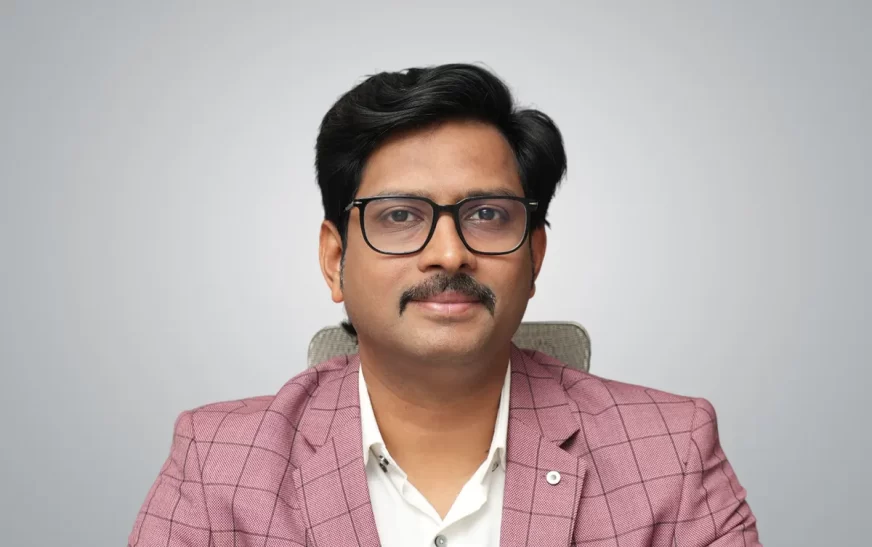
Ravindranath Garaga-Best CXOs in Asia 2026
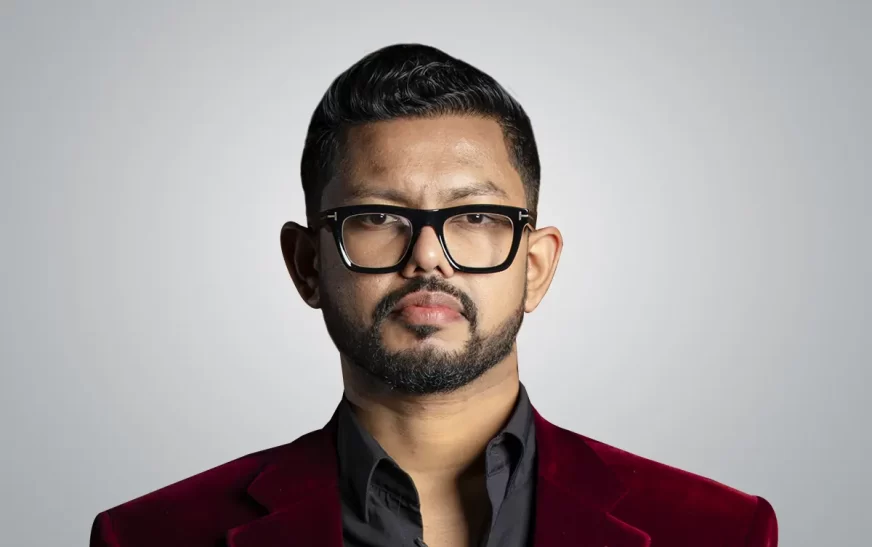
Dr Tharindu Samarajeewa-Asia’s 40 Under 40 2026