The Strategist Who Tests Bold Ideas
Ankit Sharma
Marketing Director, APAC


The Strategist Who Tests Bold Ideas
Ankit Sharma
Marketing Director, APAC
Ankit Sharma-Best Marketing Leader Asia 2025
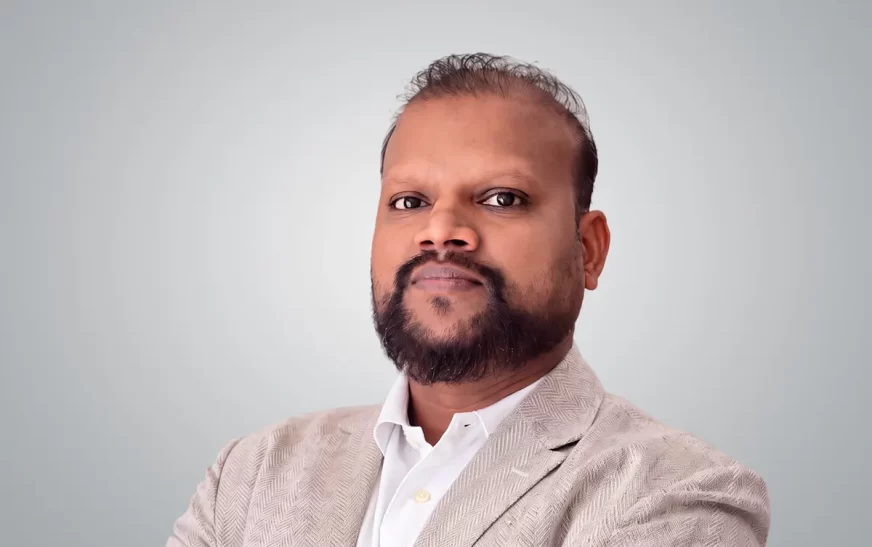
Ankit Sharma sees marketing as a dynamic arena, and he’s a strategist who fights with insight and precision. As APAC Marketing Director at LexisNexis® Risk Solutions, he turned pivotal career moments into masterclasses in growth. Early in his journey, a leap from corporate marketing to a regional role demanded full-funnel ownership, pushing him to fuse creativity with analytical rigour. This experience transformed his approach, shaping the belief that marketing is a continuous system of experiments, insights, and optimisations rather than isolated campaigns. The post-COVID digital pivot reinforced this philosophy, highlighting the power of durable ‘moats’—hyper-personalised, data-driven strategies paired with compelling storytelling. For Ankit, growth is deliberate and measurable: every idea undergoes testing, every insight informs the next step, and every initiative contributes to tangible business results. Bold, methodical, and strategic, he crafts marketing that drives sustained impact and strengthens the brand’s competitive edge across APAC. TradeFlock spoke with Ankit to know more about his journey, work and what makes him a unique marketing leader.
Which marketing obstacle in APAC was most difficult, and how did you address it?
The toughest challenge was APAC’s fragmentation—cultural nuances, language diversity, varying digital maturity, and different buying behaviours meant a single value proposition rarely resonated across markets. Every 100 kilometres brought a new canvas, with unique challenges and opportunities. The breakthrough came when we shifted from a global-first approach to a localwithin-a-framework model. We moved from a hub-and-spoke to in-market teams, developed modular messaging, marketspecific proof points, and regionally owned GTM motions, all aligned to global brand principles. Empowering local teams and investing in customer insights allowed us to scale campaigns with relevance, driving stronger engagement and a higher-quality pipeline across priority countries.
Describe a marketing initiative that faced challenges and how it influenced your leadership approach.
I view failure as one of the most powerful teachers in marketing. When examined thoughtfully, setbacks can condense years of learning into a single experience. Reluctance to experiment or embrace risk can limit growth, which is why fostering a “fail-forward” culture is essential. It creates psychological safety while fuelling innovation, bold thinking, and accountability across the team. Two experiences early in my career shaped the way I approach campaigns and manage risk. I was once tasked with leading one of the largest annual global conferences —a highstakes, high-visibility project with significant investment. While we focused heavily on external communications and meticulous planning, internal stakeholder engagement received less attention, slowing operational momentum. I learnt that segmented communication plans and orchestrating alignment across teams are critical. Assuming your priorities align with everyone else’s can hinder collaboration; building a global, crosscultural understanding early is essential to achieving cohesive execution. Another instance involved a cross-channel campaign promoting an advanced solution narrative. Despite strong creative execution, performance lagged. Post-analysis revealed that our audience segmentation was too broad— many were still in the awareness phase, making the messaging premature. This taught me that assumptions carry high costs, and data without interpretation is just noise. These experiences transformed my approach. Today, we run pre-validation cycles, incorporate qualitative testing, and maintain a ‘devil’s advocate’ mindset. Marketing success requires a village—proactive, two-way communication and collaborative messaging drive sustained impact, measurable results, and long-term growth.
What recent marketing initiative had the biggest measurable impact?
One of the initiatives I’m most proud of spans different phases of my career. Early on, I helped drive a global strategy pushing product licences in focus markets, leading to the innovative 1:1 expert-sell campaign with hyper-personalised messaging. This resulted in the highest number of CXO meetings through a single campaign, driving a 129% growth in marketing-influenced pipeline. In my regional role, being part of the founding team to develop APAC websites and establish local social media presence was deeply satisfying—today, these channels are major drivers of pipeline and brand visibility. Post-COVID, two initiatives stand out: launching our APAC podcast, which I host, and building an in-house, communitydriven events franchise. Both have become highly commercially impactful, strengthening engagement, amplifying brand equity, and creating measurable pipeline opportunities across the region.
How do you integrate compliance into marketing strategy?
Messaging and awareness aren’t siloed tactics— they’re the oxygen of the growth flywheel, embedded into every layer of our marketing strategy to drive accurate, compliant, and measurable outcomes. I dedicate time weekly to horizon-scanning the evolving regtech landscape and run joint planning sessions with cross-functional teams to validate messaging and frame the narrative. Engaging customers and partners ensures our hypotheses are tested in real-world scenarios, keeping campaigns both compliant and impactful.
What’s your advice to the modernday marketers?
Marketers navigate diverse priorities, and maintaining focus and well-being is essential. My advice to aspiring marketing leaders is two-fold: first, view constraints as catalysts for creativity—regulations and trends sharpen focus, inspire innovative storytelling, and enhance the customer experience. Second, embrace cross-disciplinary thinking; collaboration and communication across teams elevate ideation and narrative impact. Four guiding principles help leaders excel: understand regulations deeply to innovate confidently, co-create early on with stakeholders to turn ideas into solutions, anchor creativity in customer value, and leverage technology and data to unlock new opportunities. Commercial focus and proposition fluency are superpowers that amplify impact in modern marketing.
All Magazines -
Success Insights
Ravindranath Garaga-Best CXOs in Asia 2026

Dr Tharindu Samarajeewa-Asia’s 40 Under 40 2026