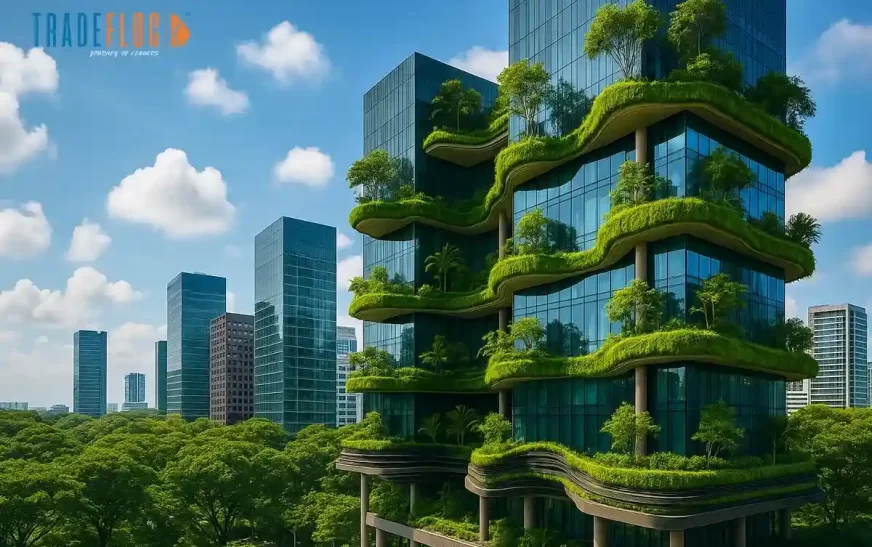
Have you ever heard the term Green Building? The phrase sounds generic at best, but in reality, the concept is much more practical than that. Something that gets talked about often is that people still pause when asked a simple question: “What is green building?”
Green Building is neither a technology nor a kind of architecture. It’s actually an approach to designing, constructing, and operating buildings in a way that reduces environmental impact while creating healthier spaces for people.
Evolution of Green Building
To understand what is green building, we need to keep in mind that the green building concept did not emerge overnight. It took several years to be formally established and implemented. Started with the ecological architecture in the 1960s for environmentally friendly construction. But the energy crisis of the 1970s further accelerated the need for renewable energy resources and more energy-efficient buildings. This shift has begun to emphasise the importance of an energy-saving building system, which was the focus of sustainable development in 1980.
Many nations began to implement this, and finally, in 1990, the United Kingdom introduced the first-ever green building standard. Further followed by the formation of the US Green Building Council in 1993, which established the Leadership in Energy and Environmental Design (LEED). LEED has been established to help create a legal framework for codifying and verifying the implementation of green building concept practices. After its global recognition, many countries have adopted their own green building programs and standards. Green building architecture has evolved into a necessary foundation in the construction sector to address global energy challenges, making it important to understand what is Green Building.
Why Does Green Building Matter More Than Ever?
According to the US Department of Energy, the building sector plays a major role in the country’s economic and energy sector growth. Buildings consume almost 75% of the electricity and 40% of the total energy used in the United States. However, countries can mitigate the risk by changing the way buildings function. Additionally, using the approaches that can reduce the pressure on countries’ energy resources and the environment.
The Green Building concept is a seamless blend of various approaches, such as technologies, materials, and practices. The building sector accounts for over one-third of global energy-related greenhouse gas emissions. However, the percentage could grow over the years. Subsequently, after learning what is green building, it is necessary to understand why they matter more than ever. The current scenario fuels the need for this concept to optimally reduce the construction impact on the environment. Sustainable construction helps in improving the high-quality performance in the building sector with respect to the environmental, economic, and societal impacts of the concerned buildings.
Benefits of the Green Building Concept
The concept offers numerous benefits, improving the environment and quality of life. Here they are:
- These structures require less power for heating, cooling, and lighting, which reduces electrical usage through natural lighting, improved insulation & renewable energy sources.
- A big part of Green building architecture is recycling construction waste, using sustainable materials, and reducing carbon emissions in the process, protecting natural resources.
- It creates a healthier environment for people by improving air quality and promoting the use of eco-friendly materials, making homes and workplaces more comfortable.
- Although green building structures require high investment, they often lead to long-term savings, reducing electricity bills, lowering water consumption, and requiring minimal maintenance.
- One of the best benefits for areas facing water scarcity is water conservation. It promotes rainwater harvesting, low-flow fixtures, and water efficiency.
Key Challenges
Let’s understand the challenges faced by Green building architecture.
- They require large initial construction costs, such as sustainable materials, energy-efficient systems, and custom design techniques.
- In many rural areas, there is still a lack of knowledge and awareness, which ultimately slows the adoption of the green building concept.
- It requires thorough planning and integrated design strategies, which makes projects more complex than the traditional approach.
The Future of Green Building Architecture
Now that you know what is green building, let’s discuss where its future lies. The green building future is remarkable and resilient, making a wave towards sustainable growth and development. Let’s discuss this.
1. Smart Technologies
Its future involves smart and energy-efficient technologies that monitor and optimise energy use, such as automated lighting and smart thermostats.
2. Integration of Renewable Energy
Green building’s new developments are aiming to establish net-zero buildings that produce as much energy as they consume.
3. Sustainable Urban Development
The government is increasingly adopting green building standards and regulations, which will make the eco-friendly structure more common in the future.
4. Lifestyle luxury
Many homeowners started to look at green energy as a better lifestyle choice rather than an upgraded construction option, redefining luxury as sustainable health-based living.
Better Climate & Enhanced Living, The Next Milestone of the Human Race
Green building concepts represent a drastic shift in the construction industry and in individuals’ practices. Traditional construction focuses on speed and cost, regardless of how much it harms the environment and adversely affects the quality of life.
The new concept encourages builders and designers to prioritise long-term environmental and human impacts. However, the concepts still face various challenges, but the benefits they offer far outweigh the limitations and challenges they pose.
In the future, green building architecture is more likely to become the standard in construction rather than a trend.