Redefining Operations Through People, Culture, and Execution
Jerry Bonifacio
COO
PM Consulting
Redefining Operations Through People, Culture, and Execution
Jerry Bonifacio
COO
PM Consulting
Jerry Bonifacio - Asia’s 40 Under 2025
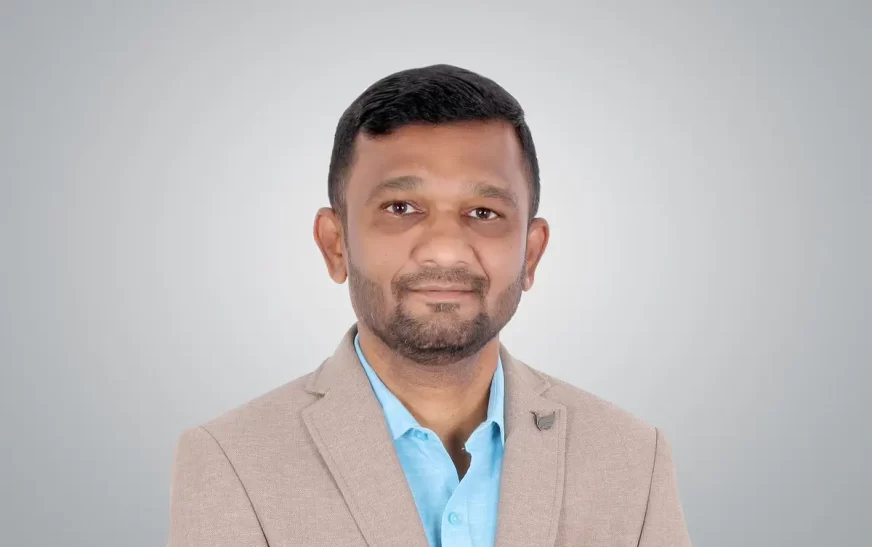
From the service delivery line to the COO role, Jerry Bonifacio embodies a contrarian leadership path. Unlike many leaders who step into operations through strategy decks and KPIs, he earned his perspective on the floor where delivery meets accountability. This experience reshaped his worldview: processes rarely fail first, people do, when clarity and trust are missing. This insight makes his operational approach both practical and quietly transformative.
As Chief Operating Officer at Prime Consulting, Jerry brings this grounded philosophy to organisational execution. With a foundation in HR and consulting from SGV & Co./EY Philippines, he blends structured Big Four rigour with deep sensitivity to context, culture, and human behaviour. For him, operations is more than just control; it is about enablement: translating strategy into daily habits, fostering clarity and accountability, and designing systems that scale sustainably around how people work.Speaking with TradeFlock, Jerry shares the principles and philosophy that guide his leadership and operational decisions.
Which consulting mindset helped you most as a COO, and which one did you have to unlearn?
The consulting mindset that helped me most as a COO is being solutions-driven. I was trained to believe that no problem is a dead end. There is always a path forward with the right mix of critical thinking, creativity, and a growth mindset. At its best, consulting helps organisations see possibilities where they initially see constraints.A lesson that stayed with me came from a mentor who described clients as “exclamation mark customers”, convinced they already know what they want. Our role was to turn them into “question mark customers”, encouraging reflection and uncovering deeper, more impactful needs. That reframing skill has been invaluable in operations.What I had to unlearn was over-analysis. Excessive reliance on frameworks can slow decisions. As a COO, I shifted toward action. Execution and momentum matter. Data guides decisions, but leadership requires the courage to move, something affirmed by my CliftonStrengths result as an Activator. I am naturally inclined to move ideas into action, often with a simple mindset: Let’s go.
As companies scale in Asia, where do efficiency models fail, and how can they improve?
Efficiency breakdowns in scaling Asian companies are rarely about technology. They arise when leadership maturity doesn’t match growth. What works for 50 people fails at 300 if decision rights, accountability, and feedback loops aren’t redefined. Sustainable efficiency comes from clear ownership, streamlined processes, and leaders who influence rather than command, proving leadership, not technology, drives performance.
If rebuilding an organisation today, what would you design differently?
If I were rebuilding an organisation today, I would anchor everything in VMV—Vision, Mission, and Values. These define why the organisation exists, where it is going, and how it operates, yet they are often unclear in fast-growing companies. Alignment must start with leadership and cascade into everyday decisions and behaviours. From that foundation, I would design clarity before scale—fewer layers, clear decision rights, and accountability built around outcomes. Scale should amplify clarity, not expose its absence.
Which parts of the Philippine business environment are most underestimated, and how do you approach them?
The most valuable thing I have learnt about creating meaningful engagement at scale without sacrificing accuracy is that relevance must be engineered, not guessed. Generic campaigns fail, but insights, both qualitative and quantitative, create real connection.I combine sales conversations, customer feedback, and product usage with data such as intent signals and funnel behaviour to understand where buyers are in their journey and what matters most at that moment.AI workflows translate these signals into action, enabling dynamic personalisation, intelligent account prioritisation, and consistent messaging at scale, while keeping humans in control.Continuous validation completes the loop. Feedback from marketing, sales, and customer success ensures interactions evolve with real-world responses. By combining data, AI, and human insight, engagement can scale in a way that is meaningful, precise, and trusted.
How do you determine if a process should be automated, redesigned, or removed?
I start by asking whether a process creates value or merely comfort. If it reduces manual effort and errors, automation makes sense. If it causes friction or confusion, it needs redesign. If it serves no clear purpose, it should be removed. Simplicity is a powerful competitive advantage.
How do you view current geopolitical tensions, and how are you preparing for their impact on operations?
Despite global geopolitical tensions, the Philippines remains economically resilient. Anchored by its BPO and outsourcing sectors and supported by OFWs, manufacturing, and real estate, the country continues to attract investment. Filipino talent, especially in customer service, is highly sought after. While we stay alert to global shifts, I am confident in the Philippines’ strength, adaptability, and enduring appeal as a business destination.
POWER PROFILE CARD
Age: 33
Country: Philippines
Industry/Sector: Human Resources, Consulting, Recruitment
Awards & Recognition: Top 100 Filipinos on LinkedIn (2025);
2024-2026: Board of Trustees for PMAP (People Management Association of the Philippines)
Inspiration / Motivation: Create a better world with Filipino talent.
Define yourself in 5 words: Progressive, innovative, decisive, relentless, passionate