Pollution, deforestation, and excessive use of water and electricity are not the only causes of environmental harm. Non-biodegradable material is another. It stays in the environment longer and harms it.
But how does non-biodegradable material actually cause environmental harm? If you want to know the story behind this, understanding the process of biodegradable and non-biodegradable materials deeply can help you.
Let’s further discuss both biodegradable and non-biodegradable materials so you can take a step towards a clean and safe environment.
What are Biodegradable and Non-Biodegradable?
Simply, biodegradable and non-biodegradable describe what happens to a material after it is dumped.
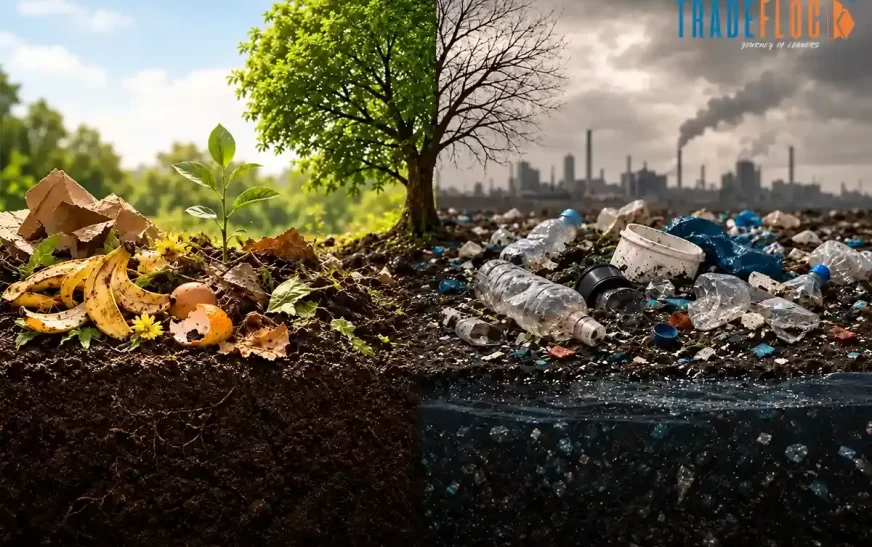
Bacteria and fungi are what actually break biodegradable material down, given the right conditions. Food waste, paper, natural fibres, wood, and cardboard are the usual suspects. Speed depends on a lot, though. What the material is, what’s around it, how warm it is, how much moisture and oxygen it’s getting. Eventually, it all turns into simpler things, i.e., water, carbon dioxide, and organic matter.
Non-biodegradable material doesn’t break down the same way biodegradable does. Bacteria and fungi try, but they can’t touch the synthetic bonds in things like polypropylene, polyethene, PET, glass, or metal. So it sits there. For years. Sometimes centuries. Sun and weather will chip away at it eventually, breaking it into smaller and smaller bits. But smaller isn’t the same as gone. Those bits are microplastics now, and once they’re in the soil or the ocean, they’re pretty much staying put.
Difference Between Biodegradable and Non-Biodegradable
The difference between biodegradable and non-biodegradable varies on several factors. Let’s look at the table below to understand what they are and how they differ from each other.
| Based on | Biodegradable | Non Biodegradable |
| How they break down | Natural breakdown by microorganisms like bacteria and fungi does the work, given the right conditions. | Barely break down biologically. Instead, UV light, heat, and physical wear slowly break them down. |
| Time taken | Weeks to months, though some (like PLA) need specific conditions, such as temps above 50°C | Hundreds to thousands of years, or you can say pretty much permanent |
| What’s left behind | Harmless natural byproducts such as water, CO2, methane, organic matter | Microplastics and synthetic residues that stick around for a very long time period |
| Where they come from | Renewable, bio-based sources like plant fibres, cellulose, and starch | Non-renewable petrochemicals such as crude oil, natural gas, and synthetic resins |
| How they discarded | Composting, recycling, or standard disposal, depending on the material and local facilities | Usually recycled, incinerated, or dumped in landfills. |
Problems Caused by Biodegradable and Non-Biodegradable Materials
There are a few negative impacts that biodegradable and non-biodegradable materials have on the environment and humans. Here they are
1. Air Emission
When waste is burned openly without proper management, it doesn’t just disappear. It stays present in the air, polluting the environment and the fresh air we breathe.
2. Health Impact
Biodegradable and Non-Biodegradable waste release toxic components when they break down. Small animals that feed on Contaminated waste absorb these toxins. They can then reach people through skin contact, food, and airborne particles, which can significantly affect their health and overall well-being.
3. Pollute Soil and Groundwater
Hazardous substances from waste pollute soil and groundwater as they may enter the soil and water. They pass through contaminated sites, leaching hazardous compounds, fertilisers in agricultural fields, pesticides, etc. These contaminants also seep into and are carried into surface and groundwater.
4. Marine Pollution
Marine pollution comes from depositing major waste from land-based sources such as persistent organic pollutants, heavy metals from mining, radioactive elements in e-waste, industrial discharge, etc., which has put marine ecosystems in danger.
You May Also Like: Social Development: Meaning, Importance, & Challenges
Small Choices, Long Lasting Consequences!
If you ever wondered where the giant amounts of waste we dispose of go? You must know that not all waste material reacts the same way once it leaves your bin. Some of it quietly stays in nature, adversely affecting it.
The difference between what stays and what naturally dissolves strongly influences how we protect ecosystems and manage pollution. Biodegradable and non-biodegradable materials both affect our environment and human lives. Understanding them can help you avoid mistakes that could prevent the biggest catastrophe.