Leading Beyond the Change Management Playbook
Ângela Silva
HR Director - Latin America
WIKA Group

Leading Beyond the Change Management Playbook
Ângela Silva
HR Director - Latin America
WIKA Group
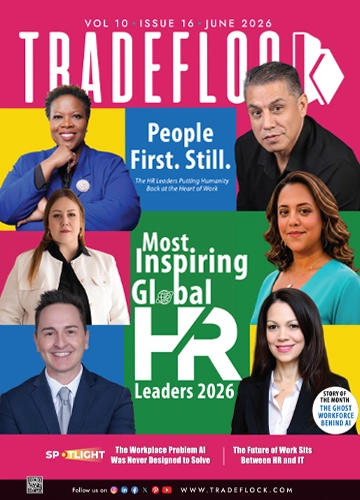
Ângela Silva-Most Inspiring Global HR Leaders 2026
Organisations rarely struggle to design the future. Strategic plans get written, transformation roadmaps get approved, and new operating models eventually find their way into PowerPoint presentations. The harder challenge is persuading people to let go of a version of the business that once worked perfectly well.
Few professionals have spent as much of their career navigating that moment as Ângela Silva, HR Director for Latin America at WIKA Group . Across mergers and acquisitions, organisational transformations, leadership transitions, and cultural change initiatives, she has worked at the intersection of business ambition and human behaviour. While companies often describe transformation in terms of systems, structures, and metrics, Silva’s experience has shown that progress depends on something less measurable. People need to believe they have a place in the future being created before they are willing to help build it.
In this conversation with TradeFlock, she shares the lessons learned from leading change across some of the most complex and diverse business environments in Latin America.
How have workplaces evolved, and what defines a great place to work today?
When I started my career, work was often associated with stability. Today, employees are looking for something deeper. They want to understand how their work contributes to a larger purpose and how that purpose connects with their own aspirations.
One of the biggest shifts has been the coexistence of multiple generations in the same workplace. Different generations bring different expectations, communication styles, and motivations. Organisations that can harness those differences create stronger collaboration and innovation.
A great workplace is one where people feel respected, trusted, and connected to meaningful work. Leaders listen, employees feel safe sharing ideas, and diverse perspectives are valued. Compensation remains important, but it is no longer the primary differentiator. People stay where they can grow, contribute, and feel a genuine sense of belonging while creating value for both themselves and the business.
How are AI and HR technology making a practical difference in your organisation?
Technology has become an important enabler of modern HR, but I believe its greatest value comes from supporting human decision-making rather than replacing it. Data provides insight, while judgment provides context.
Tools such as Copilot and other AI-enabled platforms help automate repetitive activities, improve communication, and generate workforce insights that would otherwise require significant manual effort. Routine administrative work can now be completed faster and with greater accuracy.
What matters most is what that efficiency creates. HR professionals gain more time to support leaders, engage employees, and focus on strategic priorities that directly influence culture and business performance. Technology should strengthen human capability rather than reduce it. The ultimate goal is not automation for its own sake. It is creating more capacity for meaningful conversations, stronger relationships, and better organisational decisions.
What will define strong HR leadership in the years ahead?
Artificial intelligence, automation, and digital transformation will continue reshaping the workplace, but technology alone will not define successful HR leadership. The distinguishing factor will be the ability to balance innovation with humanity. Future HR leaders will need digital fluency, business understanding, and the ability to navigate constant change. At the same time, qualities such as empathy, curiosity, adaptability, and critical thinking will become even more valuable because they help people manage uncertainty and remain engaged.
Preparing for that future requires continuous learning. I spend time exploring new technologies and understanding how they can create value, while also investing in reflection and personal development. Leadership begins with self-awareness. No matter how advanced technology becomes, people will continue looking for trust, direction, and purpose. Helping individuals and organisations thrive together will remain the core responsibility of HR leadership.
“People rarely resist change itself. They resist uncertainty. Trust, clarity, and empathy remain the foundations of sustainable transformation.”
What has been the most significant transformation you have led, and what made change difficult?
A defining chapter of my career began in 2020, when I joined WIKA Group’s transformation journey across Latin America. The initiative involved modernizing HR processes, strengthening leadership development, improving succession planning, and preparing the workforce for future business needs. The challenge was never the technology or the processes. Change creates uncertainty, and uncertainty often creates resistance. Employees naturally question how the transformation will affect their roles, teams, and future opportunities.
Progress accelerated when communication became more transparent, and leaders actively connected people to the broader vision. Employees needed to understand not only what was changing but why it mattered. Watching leaders embrace new mindsets and teams adapt with confidence reinforced an important lesson. People rarely resist change itself. They resist uncertainty. Trust, clarity, and empathy remain the foundations of sustainable transformation.
What has genuinely worked in retaining and engaging talent?
People rarely stay because of compensation alone. They stay because they trust their leaders, feel valued, and believe their work has meaning. Over the years, the strongest engagement results I have seen came from cultures built on listening, transparency, collaboration, and respect. Employees want to know their voices matter. They want opportunities to learn, contribute, and grow. They also want leaders who communicate honestly and create an environment where people feel supported rather than controlled.
Purpose has become increasingly important. Employees are making conscious decisions about where they invest their time and energy. When personal values align with organisational values, engagement becomes far more sustainable. Retention is rarely the outcome of a specific program. It is usually the result of a healthy culture where people feel connected to the mission, supported by leadership, and confident about their future.
All Magazines -

Success Insights
Ande Aditya-Best CXOs in Asia 2026