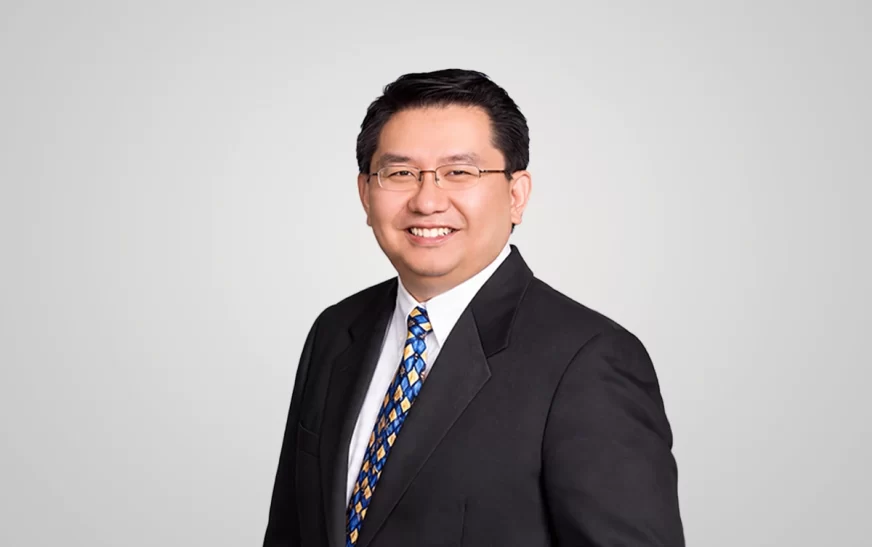
The purpose, for Roisin Wadding, is where everything starts. It gives an organisation direction, gives people context for their work and makes it easier to decide what needs to happen next. For Roisin, understanding that connection is fundamental to building a people strategy that genuinely serves the business. Her own career has been shaped by that search for meaning and impact. Roisin began in nursing, moved into learning and development in aviation and later retrained in HR, eventually building experience across financial services, aviation, major international events and construction. The variety of those environments has given her a perspective on people management that is grounded in business realities and organisational change.
Today, as Director – People & Purpose at KPS, Roisin works at the intersection of people, purpose and business strategy. She believes HR has to understand where the organisation wants to go before deciding what its people need to get there. Roisin has also distilled her experience into her book, Turbulence to Triumph: A practical framework for HR leaders navigating startup, scale-up and transformation. It offers practical guidance for navigating people challenges through every stage.
Speaking with TradeFlock, Roisin reflects on her experiences and the principles that continue to guide her approach to people and leadership.
How do you adapt your leadership approach across organisations and cultures?
Every organisation has its own purpose, and that has to shape how you lead. You first need to understand why the business exists, what it wants to achieve and what makes its industry different. In aviation, for instance, the focus on service, customer experience and innovation meant HR had to create policies and practices that supported those ambitions.
The same principle applies to diverse workforces. I have worked with people from more than 200 nationalities in the aviation sector and more than 22 in my current organisation. People have different expectations around hierarchy, communication and management, but you cannot lead through stereotypes.
For me, the balance is between consistency and understanding. Organisations need clear standards so that expectations and fairness remain consistent, while leaders must recognise cultural and individual differences. You cannot impose your own values on everyone. The job is to understand different perspectives and bring people together around a shared purpose.
How do you create an equitable employee experience across office and site teams?
We see them as one workforce with different requirements. Everyone has access to a common platform for essential services such as leave, personal information, documents and learning. Beyond that, technology is tailored to each function, from AI and specialist software for designers to planning and operational tools for site teams. Language also matters, so training is delivered in languages employees understand. The aim is a level playing field, with the right tools and support for different needs.
How should organisations rethink employee rewards and benefits?
I would frame this as reward and recognition rather than simply benefits. Salaries and allowances such as housing, transport and travel will remain important, but organisations should take a broader view of how they reward people. Fairness should underpin the approach, with clear grading structures, accurate job titles and consistent compensation frameworks that improve transparency and reduce arbitrary differences.
Recognition also does not always have to be financial. Managers can acknowledge good work through simple programmes and meaningful appreciation. Most importantly, organisations should not copy competitors. Reward strategies should reflect the organisation’s purpose, business model and workforce.
Which HR initiatives have delivered the greatest impact?
I would point to three: standardisation, performance management, and learning and growth. Standardising policies and processes creates consistency across locations while still allowing for legitimate local differences. Performance management should go beyond annual appraisals. It should connect organisational purpose and priorities to departments and individuals, so people understand the value of their contribution.
Learning must build the capabilities organisations need today while preparing for tomorrow. Developing people internally can also strengthen retention and reduce the cost of constant external hiring. That is why I see HR as a strategic function, with administration as only one part of its responsibility.
How is technology, particularly AI, changing your day-to-day HR operations?
Technology should remove friction from the employee journey. We use it to simplify recruitment and onboarding, from applications and document uploads to offers and induction. AI is adding another layer of efficiency. We have developed an AI agent that answers employees’ HR questions 24/7, allowing HR teams to focus on matters requiring human judgement.
AI is also being applied across recruitment, learning and performance management. For HR leaders, the bigger question is how technology will reshape work itself. The skills organisations need today may look very different in two or five years, so HR must anticipate those changes.
What skills will HR leaders need over the next five years?
HR leaders need to become more strategic and commercially aware. They must understand their industry, how the business makes money and the financial language of the organisation. That is what gives HR credibility at the leadership table. AI is equally important. Leaders need to understand how these technologies can improve efficiency and change the way work is done.
Above all, strategic thinking will matter. HR must connect business, finance, technology and people if it wants to become a genuine driver of organisational performance.