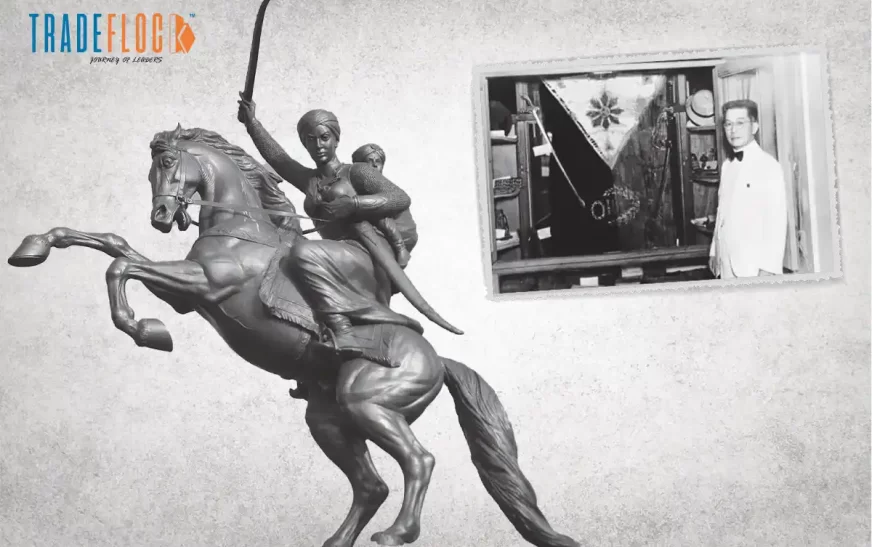
Rani Lakshmibai of Jhansi was killed fighting the British during the Indian Rebellion of 1857 on June 18, 1858 near Kotah-ki-Serai outside Gwalior. She was still young, in her twenties. There are conflicting accounts of what happened to her in her final moments; most people claim that she fought on horseback, dressed for battle, and fought to the end. One of the most recognisable leaders of the rebellion was gone by the time the British captured Gwalior.
Her death at the time seemed to mark the end of yet another uprising against the East India Company. The uprising would be quelled within months. It was seen as a return of imperial rule by British authorities. No one would have guessed that the woman who fell that day in June would live to see the end of the empire she fought against.
History often celebrates Lakshmibai with the aspect of courage. It’s a familiar scene: a queen on a horse, with a sword in her hand, not giving up, but fighting instead. The image is powerful and has been retained. But it also covers a greater narrative.
The Story of the 1857 Rebellion
The 1857 revolution was not a coherent independence campaign in the contemporary sense. It combined soldiers, local rulers, peasants and regional interests, all with their own motivations. The conflict between the British and Lakshmibai started after the annexation of Jhansi by Lord Dalhousie’s Doctrine of Lapse. After the death of her husband Raja Gangadhar Rao, the British did not accept her adopted son as the king and wished to merge the kingdom into the company’s land.
The issue was a technical one for British administrators. It meant much more for Lakshmibai and many Indian rulers: a gradual loss of political independence. In 1858, she was missing more than just the military importance of her resistance. They didn’t capture the emotional and symbolic weight it brought.
Empires measure events in terms of short-term results. Victories are won by armies they have defeated, by territories they have captured and by order they have restored. Societies remember other things: stories, personalities, moments that represent ideas that are bigger than the event itself. Lakshmibai was one such time.
Nationalist Re-Imagining of Lakshmibai
Her story was revived in the late 19th and early 20th centuries as the struggle for freedom gained momentum in India. Nationalist writers, poets and political leaders created a national icon from her, a regional ruler. The most popular version of this was through the evergreen verses of poet Subhadra Kumari Chauhan: “Khoob ladi mardani, woh toh Jhansi wali Rani thi” (Like a man she fought; she was the Queen of Jhansi), which took the story of Rani Laxmi to the audience long before they saw it in their history textbooks.
Her contributions went beyond anti-colonial politics. Lakshmibai changed the perception of leadership. The overall context of 19th-century India was extremely patriarchal. Leadership, politics and war were unmistakably a man’s world. The way she did it upset the idea of what she was doing. She proved that capability, conviction and courage—not gender led to legitimacy in times of crisis.
Hence, her influence could be felt throughout the various stages of the freedom movement in India. Her name was invoked by the revolutionaries, praised by the reformers and became a symbol of political participation and public leadership for women’s organisations. Her narrative spread beyond political divisions because it encompassed issues beyond the scope of a single uprising.
The Enduring Lesson of 1858
It’s a legacy that is especially poignant in 2026. The discourse of representation and leadership is not yet complete and remains ongoing, both inside and outside government, at the corporate level, in research institutes, and in public life. Change is measurable but there are ongoing discussions about who has opportunities, whose authority is acknowledged, and who is listened to at decision-making points.
Lakshmibai’s life is a salutary lesson. A leader’s potential can be in place long before institutions identify it. Often, recognition follows resistance. A shortage of competent personnel is not usually the problem. In general, societies fail to increase their definition of ‘capable’.
You Might Also Like: The Final Chapter of one of the Darkest Chapters in History
The British marked the death of a rebel queen on June 18, 1858. What was recorded was not what it had been. It documented the rise of a figure who transcended military defeat, political collapse and generations. Over 160 years later, the debate on power, representation and leadership is not abated. They are repeated every generation. Her story lives on because it still has an answer to offer.