
Building Growth on Financial Discipline
Victoria Tzareva
CFO

Building Growth on Financial Discipline
Victoria Tzareva
CFO
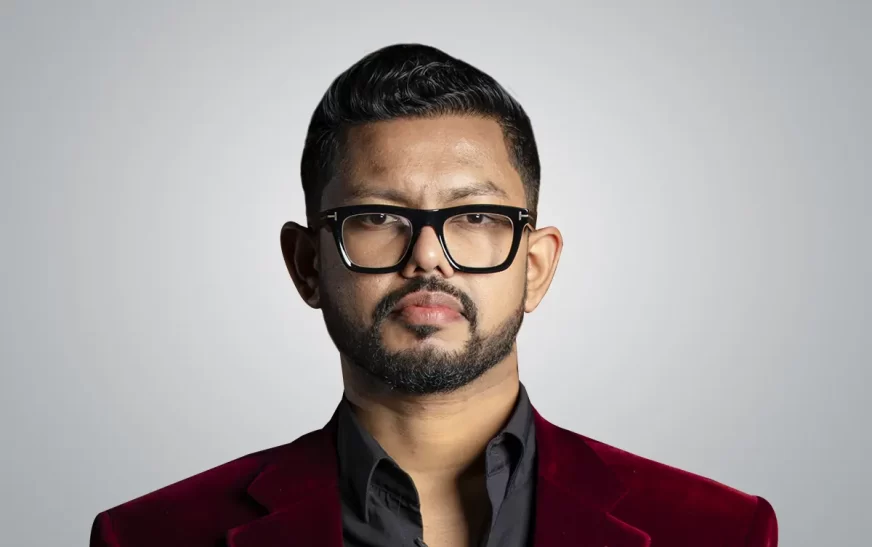
Victoria Tzareva-Most Influential Leaders to Watch in 2026
Global businesses are entering an era where growth is measured as much by financial resilience as by market expansion. Cross-border regulations continue to evolve, capital has become increasingly selective, and investors expect finance leaders to combine strategic vision with disciplined execution. According to Deloitte’s 2025 Global CFO Signals report, finance leaders are placing greater emphasis on risk management, operational agility and technology-enabled decision-making as organisations expand across increasingly complex international markets. Few executives understand the balancing act better than Victoria Tsareva. Over the past fifteen years, she has built and transformed financial operations across international IT, fintech and maritime businesses, raising more than $60 million in financing while leading complex restructurings, multi-jurisdictional operations and scalable financial transformation. Her leadership reflects a belief that sustainable growth is built on strong governance, financial clarity and decisions that create long-term value.
In this conversation with TradeFlock Magazine, Victoria shares the principles that continue to shape her approach to finance and leadership.
How has the role of today's CFO evolved, and how has that transformation shaped your own leadership?
The CFO role has evolved from managing finance to helping shape business strategy. Today, finance leaders are expected to understand technology, operations, scalability, compliance and long-term value creation alongside financial performance. Finance has become part of every strategic decision rather than a function that reports on outcomes after they happen.
My own journey has reflected that evolution. I gradually moved beyond a numbers-driven approach by developing a deeper understanding of business models, automation, analytics and cross-functional collaboration. Working closely with product, operations and commercial teams has strengthened my ability to connect financial strategy with business growth. One lesson has stayed with me throughout that journey: people remember how leaders respond during uncertainty. Strong leadership is reflected through clarity, composure and thoughtful decision-making when circumstances become challenging.
"Sustainable growth is built through discipline, trust and decisions that create long-term value."
Global markets rarely stand still. What has leading through constant change taught you?
The past decade has demonstrated how rapidly external events can reshape business. Geopolitical developments, banking restrictions, currency volatility and shifting investment climates have required organisations to adapt continuously while maintaining strategic direction.
Those experiences strengthened my belief that resilience always creates greater long-term value than reacting to short-term uncertainty. Maintaining composure allows leaders to make thoughtful decisions even when information is incomplete and circumstances continue evolving.
The same philosophy shapes my relationships with investors and boards. Trust grows through transparency, consistency and realistic communication rather than perfect results. As responsibilities become broader, conversations naturally move beyond financial reporting towards strategy, risk and long-term direction. Credibility develops through openness, particularly when discussing challenges, because confidence is built long before difficult decisions have to be made.
What principles continue to guide both your leadership and your life?
Integrity remains the foundation of every decision I make. Finance depends on trust, and credibility grows through accountability, transparency and consistency. Sustainable growth
has always been more valuable to me than pursuing rapid results without strong operational foundations.
Outside work, maintaining perspective is equally important. Fast-moving technology businesses create constant demands, so I focus on separating urgency from importance and approaching challenges with structure rather than emotion. Time with family, travelling, reading and occasionally disconnecting from the constant flow of information help create clarity.
Experience has also changed my relationship with pressure. Earlier in my career, I believed every problem required an immediate solution. Today, I recognise that thoughtful decisions, emotional stability and steady leadership create stronger outcomes for teams, businesses and investors alike.
"People remember the clarity and confidence a leader brings, especially when circumstances are uncertain."
What have operating across multiple jurisdictions and raising international capital taught you about building resilient businesses?
Managing finance across international structures has reinforced how quickly complexity can grow. Regulations, tax frameworks, compliance requirements and banking systems vary significantly across jurisdictions, requiring finance leaders to think well beyond reporting and budgeting. Sustainable growth depends on building strong financial foundations before rapid expansion begins.
Fundraising has strengthened that perspective even further. Raising more than $60 million taught me that capital represents much more than financing. Every investment is built on alignment, preparation and trust. One of the most valuable lessons has been recognising that not every source of capital supports long-term success. Investors quickly recognise leadership teams that understand their business, communicate transparently and prepare thoroughly for every conversation.
Over time, I have also learned that discipline consistently outperforms speed. Well-designed financial processes, strong governance and local expertise create resilience that allows businesses to grow confidently across international markets.
Which developments in technology and finance excite you most, and how do you stay ahead of them?
Artificial intelligence, automation and predictive analytics are transforming modern finance. Organisations now have the opportunity to move beyond historical reporting towards real-time intelligence that supports faster and better-informed decisions. Intelligent automation and embedded finance will continue creating new possibilities for global businesses.
Keeping pace with those developments requires continuous learning and close engagement with both technology and business operations. I spend time understanding emerging tools, market behaviour and evolving customer expectations, while staying connected to execution. Innovation creates value when it solves genuine business challenges rather than simply following trends.
Curiosity has become one of the most valuable leadership qualities. Every technological advancement presents an opportunity to learn, adapt and discover better ways of creating value for organisations.
All Magazines -


Success Insights

Ravindranath Garaga-Best CXOs in Asia 2026
Dr Tharindu Samarajeewa-Asia’s 40 Under 40 2026