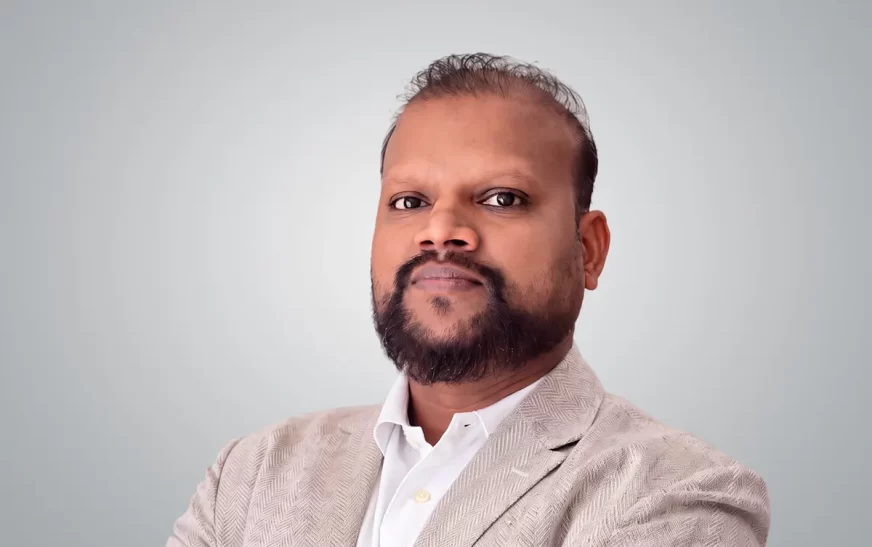
Tapping Into Curiosity Behind Every Customer Journey
Ken Peterson
President, CX
QuestionPro

Tapping Into Curiosity Behind Every Customer Journey
Ken Peterson
President, CX
QuestionPro
Ken Peterson-Most Influential Leaders to Watch in 2026
Customer experience has never really been about surveys, dashboards or technology. At its core, it has always been about understanding people. The tools have changed dramatically over the last two decades, moving from comment cards and satisfaction scores to AI-powered insights and predictive analytics, but the real challenge has remained remarkably consistent: listening well enough to know what people need and responding before they have to ask. Ken Peterson, President, CX at QuestionPro, has spent more than 25 years navigating that evolution. Along the way, he has helped shape the customer experience into a strategic growth function, guided global teams through evolving technologies, and championed a philosophy in which curiosity, adaptability, and action matter more than simply collecting data. Every milestone in his career reflects a belief that technology should strengthen human judgment, not replace it. In this conversation with TradeFlock, Ken shares the experiences that shaped his leadership and the principles that continue to define customer experience in an AI-driven world.
What shifts have influenced your leadership the most, and what did they teach you?
I’ve been in this space long enough to experience the digital shift that took us from measuring customer satisfaction to creating real-time insights tools, LLM-based text analysis and now AI-driven research. Every one of those transitions changed the technology we relied on, but they also changed the way leaders had to think.
Probably the most important leadership lesson I’ve learned through all these digital shifts is recognising the varied speed at which both individuals and companies adjust to change. Not everyone moves at the same pace, and good leadership means creating an environment where people can grow with the change rather than feel left behind. Embrace change and always train your team to the best of their abilities. I always wanted a team that is more talented than me because I can lift them up just like they make me better.
AI is redefining customer experience. What mistakes are companies still making?
Perhaps they are moving too fast.
That may seem like an unusual answer coming from someone at a technology company, but we’re already seeing the consequences. Many organisations believed AI could immediately reduce costs by replacing people, so they rushed into large-scale implementations before fully understanding what they were giving up.
Some of those same companies are now trying to hire teams back after replacing them with AI agents, but they’ve already lost years of hands-on experience that simply can’t be replaced. AI is incredibly powerful, but experience, judgment and human understanding still matter, especially in customer experience.
Which experience shaped your leadership the most, and what accomplishment means the most to you today?
About five years into my career, I encountered a difficult and demanding client. Everything from last-minute requests and late-night calls to verbal lashings directed at both me and my team. Eventually, I reached a point where I felt I needed to defend them.
One day, preparing for yet another confrontation, I documented every grievance the client had raised and pointed out that, in each case, we had actually done everything correctly. To say that didn’t go over very well would be an understatement. The client complained to everyone in the organisation, all the way up to the CEO. I was removed from the largest account in my portfolio and eventually reassigned to a business unit that was struggling badly.
Fortunately, I was successful in turning that business unit around, but the real value came from the lesson I carried forward. Right or wrong doesn’t matter in situations like that. Customer perceptions matter. Looking back, I should have focused on solving the client’s immediate problem instead of defending my team and adding to an already emotional situation. Client relationships succeed when you remember that your customers also have people they answer to, and escalating a situation rarely supports them.
Looking back on more than 25 years in customer experience, the achievement I’m most proud of isn’t revenue or business growth. It’s the relationships I’ve built. One of the best moments of my career came when a former employee asked if I would consider taking a leadership role in his new organisation so I could be his boss again. I’ve also had employees follow me to other organisations multiple times. For me, having people choose to work with you again is one of the greatest compliments a leader can receive because it reflects something far more meaningful than business success alone.
You helped make CX a major growth driver at QuestionPro. What strategy made the biggest difference?
I personally feel it was establishing a philosophy for our Customer Experience product. Early in my career, I had the opportunity to work with many of the companies that I now call competitors, and watching both their successes and failures shaped my own thinking.
Some of QuestionPro’s competitors experienced tremendous growth but also high customer turnover. The organisations that consistently succeeded had a clear point of view on what worked and why it worked. That observation led me to adopt a product philosophy centred on Understanding Journeys & Taking Actions. It guides our product, how we sell, how we service our customers and even how we work with each other. Having everyone aligned around the same philosophy puts the entire organisation in a position to drive toward the same goal.
"I always wanted a team that is more talented than me because I can lift them up just like they make me better."
What advice do you give young professionals entering customer experience?
I’m not sure if this is a skill, but my advice is simple: always be curious. “That’s the way we’ve always done it” can be the most dangerous words in any organisation, whether you’re a CX provider or a brand working to improve customer experiences.
Earlier I spoke about the digital shift, and I remember the desire of one company owner to continue relying on phone calls and mail-in comment cards in every customer experience program. Today that sounds foolish and antiquated, but at the time every pricing model was built around markups against fieldwork. Technology changed, customer expectations changed and the industry changed because people were willing to question what had always been accepted.
If you hear about something that could lower prices for clients, don’t see it as a threat. Figure out how to make it work to your advantage. It may hurt short-term revenue and cost more to implement, further denting profits, but long-term, that curiosity will bring tremendous benefits to both yourself and your organisation.
All Magazines -







Success Insights

Ravindranath Garaga-Best CXOs in Asia 2026

Dr Tharindu Samarajeewa-Asia’s 40 Under 40 2026