
Rewriting the Playbook for Leadership in Education
Jane Rustial Tiongco-Aguirre
Country Head
Scholastic Philippines Inc.


Rewriting the Playbook for Leadership in Education
Jane Rustial Tiongco-Aguirre
Country Head
Scholastic Philippines Inc.
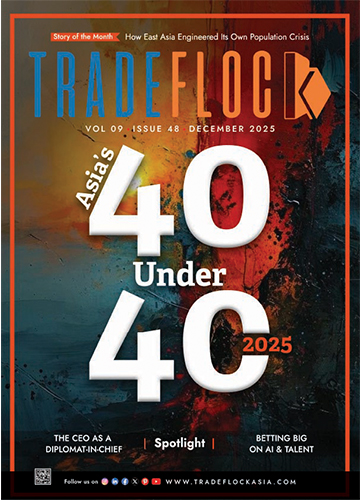
Jane Rustial Tiongco-Aguirre - Asia's 40 Under 40 2025
Jane Rustial Tiongco-Aguirre’s leadership worldview is shaped less by theory and more by lived experience. Growing up in Philippine public schools, she saw early how uneven access to learning resources could quietly determine outcomes. Talent and curiosity were abundant, but opportunity was not. That gap became a defining insight, shaping her understanding of education as a matter of equity, not privilege.
At home, this perspective was reinforced by a mother who viewed education not merely as a path to success but as a lifelong asset that builds resilience, independence, and personal agency. It anchored Jane’s ambition and instilled a commitment to continuous learning, later inspiring her to pursue an MBA and, most recently, a Doctorate in Business Administration driven by a desire to deepen leadership judgement, strategic thinking, and real-world impact rather than titles.
Today, as Country Head of Scholastic Philippines Inc., Jane leads with clarity and purpose. She treats education as a responsibility to be stewarded with advancing access, relevance, and long-term impact, while mentoring and engaging the next generation of learners and leaders. Talking with TradeFlock, she revisits this journey and shares her plans.
What surprised you most about moving into a country leadership role at a young age?
Stepping into a country leadership role at a relatively young age, the most challenging part was not the responsibility itself, but learning to lead people across different generations, personalities, and ways of thinking. Early on, I realised that technical competence and a clear vision were only part of the equation. The more nuanced work was understanding people, how they communicate, what motivates them, and how they respond to change.
While I have my own values and leadership style, the experience reinforced that effective leadership requires flexibility. People move at different speeds and need to be engaged differently. Adapting my approach without compromising core principles became a key learning. Leading teams across Southeast Asia and India had already highlighted the importance of cultural sensitivity, which became even more vital in a country role.
Being the eldest in my family shaped this skill early, teaching responsibility, patience, and listening. Guided by mentors, I learnt leadership is less about authority and more about creating conditions for people to succeed, together.
How has your view of a great workplace evolved over your career?
Early in my career, a “great place to work” meant opportunity, learning, and stability. I was drawn to organisations that offered mentorship, room to grow, and leaders I could learn from. At that stage, the focus was largely personal on building skills, gaining confidence, and proving capability in a supportive environment.
As I moved into leadership and began managing larger teams, that definition evolved. Today, a great place to work is defined less by policies or benefits and more by culture. It’s about whether people feel safe to speak up, trusted to do meaningful work, and supported as individuals. This perspective was reinforced when our organisation was recognised as a Best Place to Work, not for a single initiative, but for consistent leadership, clear communication, empathy, and alignment of values.
Now, a great workplace is one where people understand the “why” behind their work, feel connected to a shared mission, and are empowered to grow—professionally and personally.
What has been the hardest part of keeping teams motivated through change across FMCG, education, and publishing?
Across FMCG, education, and publishing, I’ve learnt that the hardest part of keeping teams motivated through change is not resistance, but lack of clarity. People are generally open to change when they understand why it’s happening and how it connects to a larger purpose. Uncertainty, more than change itself, is what erodes motivation.
I place strong emphasis on clarity of direction—where we are going, why, and what success looks like for both the organisation and individuals. When change is intentional rather than reactive, teams engage more effectively. As a leader, it is my responsibility to communicate this narrative consistently, especially during transitions.
My approach is rooted in transformational leadership, aligning people around shared goals and fostering ownership. Motivation is sustained when individuals feel heard, trusted, and included. Balancing structure with empathy like listening, addressing concerns, and supporting teams through uncertainty, builds resilience, trust, and a collective commitment that enables teams to navigate change successfully.
What impact do you aim to create as a leader over the next five years?
In the next phase of my leadership journey, I aim to create intentional, long-term impact. I want the people I lead to grow professionally and personally, building the confidence to take on greater responsibility. Growth may come through promotions or role transitions, but it should always stretch and develop them.
I believe leadership succeeds when teams surpass their leaders, creating a strong culture that encourages curiosity and learning. Over the next five years, my focus is on building sustainable organisations, strong succession pipelines, and resilient, purpose-driven teams capable of delivering lasting impact.
POWER PROFILE CARD
Age: 38
Country: Philippines
Industry/sector: Publishing, Education, FMCG, Pharma-consumer, Business
Awards & recognition: Best Place to Work Recognition – Scholastic Philippines; Best Comprehensive Paper Award – MBA, Miriam College
Inspiration/Motivation: No amount of obstruction can bring down a person with solid determination.
Define yourself in 5 words: Purpose-driven, resilient, empathetic, strategic, and ever-learning.
All Magazines -




Success Insights

Kurniawan Eka – Asia’s 40 Under 40 2025

Prajyoth Krishna Mirajkar – Asia’s 40 Under 40 2025