

The Calm in the Cockpit
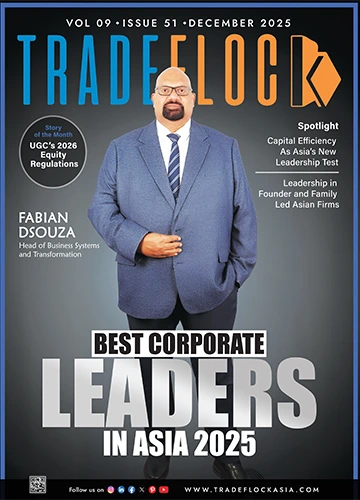
Fabian Dsouza
Head of Business Systems and Transformation
.

The Calm in the Cockpit
Fabian Dsouza
Head of Business Systems and Transformation
.
Fabian Dsouza - Best Corporate Leaders in Asia 2025
When aviation projects collide with complexity, Fabian Dsouza is the calm at the centre. As Head of Business Systems and Projects at a leading global airline, he balances structure and agility, ensuring even the most intricate initiatives stay on track. Fabian defines governance “guardrails” with precision, using artefacts, RACI and DACI frameworks, success metrics, and SLAs/OLAs, while keeping processes lightweight, iterative, and purposeful. Weekly ORB and steering syncs, along with monthly reviews, ensure timely decisions without bureaucracy.
Resilience is embedded in every plan. Through RIC registers, contingency strategies, and decision triggers, he safeguards compliance, safety, and operational continuity, non-negotiables in high-stakes aviation. Agile delivery practices, including short sprints, continuous integration, staged rollouts, and feature flags, enable rapid innovation without compromising quality.
Fabian’s leadership extends beyond frameworks. Transparent communication, clear escalation paths, and regular stakeholder cadence drive alignment and informed decisions. With over 25 years bridging business strategy and technology, he transforms complexity into clarity and ambitious programs into measurable, high-impact outcomes.
He speaks more about his work in this exclusive interview with TradeFlock.
What steps ensure business systems support strategy, and how do you enable them to evolve?
To ensure business systems genuinely support strategic goals, it is essential to connect strategy, operations, and technology in a secure, compliant way. The first step is articulating strategic intent before implementing technology. Systems must be fit for purpose and act as a single source of truth (SSOT), aligned with priorities like cost leadership, reliability, scalability, and customer experience.
Next, strategy is translated into business capabilities, focusing on what the organisation must execute effectively. This improves productivity and turnaround times, with success measured through tangible metrics.
Aligning the operating model follows defining centralised versus decentralised structures, standardised versus flexible processes, and single versus multi-site operations, supported by clear roles, governance, and processes.
Finally, information and data are treated as strategic assets, with critical domains, ownership, quality standards, and analytics defined to enable insight-driven decisions. By embedding flexibility and iterative improvement, systems evolve to support sustained strategic growth rather than remaining static.
How have your views on risk, resilience, and ambition evolved, and how do you sustain clarity?
Early in my career, I treated risk, resilience, and ambition as separate levers—risk to be avoided, resilience to be summoned when things went wrong, and ambition as a personal driver. Leading large-scale digital and operational change reshaped that perspective completely.
Today, I see risk as something to be designed for, not dodged. In complex, regulated environments like aviation and MROs, the real danger is building systems that cannot absorb shocks. My focus has shifted from protecting plans to protecting outcomes, i.e, making governance, technology, and people resilient without losing trust or control.
Resilience has also evolved. It is structural and behavioural: creating redundancy in decisions, clarity in ownership, and transparency in data, while staying calm, slowing the organisation when necessary, and surfacing risks before they escalate.
To maintain clarity under pressure, I separate urgency from importance, anchor decisions in first principles, create deliberate thinking space, invest in trusted relationships, and ask, ‘What must not break?’ Leadership today is measured by organisational resilience, not personal stamina.
How has your account-management approach evolved to build trust and ensure continuity during digital transformation?
My approach has evolved from traditional “service ownership” to outcome stewardship. Early account management focused on contracts, SLAs, and issue resolution. Today, I focus on business outcomes—translating digital programs into measurable operational impact, including dispatch reliability, turnaround time, compliance, and cost efficiency. Success is measured in business terms, not system milestones.
I protect continuity during transformation, building trust by being accountable for outcomes rather than explanations. This requires shifting from a single-stakeholder focus to ecosystem alignment, engaging the C-suite on risk and regulatory posture, operations and engineering on usability and reliability, and compliance teams on auditability and traceability.
My role has also shifted from reactive problem-solving to predictive risk partnership, anticipating where change may fracture trust, surfacing risks early, and ensuring stability during go-lives and audits. Finally, I focus on leading adoption, earning buy-in and demonstrating operational value, making account management about trust, continuity, and outcomes, enabling digital transformation without compromising confidence.
What skills and leadership mindsets will enable professionals to lead interconnected, data-driven digital ecosystems?
The next decade will favour leaders who navigate complex, interconnected digital ecosystems with clarity and foresight. In aviation and MROs, where “data is the new oil”, abundance brings both opportunity and risk. Leaders must exercise data judgement, combining AI-driven insights with operational and human context to make principled decisions. AI amplifies the need to view platforms, partners, regulators, and customers as a single ecosystem, anticipating second- and third-order effects of every decision.
Thriving leaders focus on systemic outcomes, not isolated efficiencies, balancing local optimisation with global resilience. Platform literacy is essential—understanding modular architectures, interoperability, data ownership, and latency trade-offs allows them to guide teams without coding. Governance must enable speed, sustainability, and risk management through clear decision rights, escalation paths, and guardrails.
Ultimately, success depends on trust and behavioural alignment. Technology rarely fails—people do. Leaders who translate digital change into operational relevance, align stakeholders, and sustain momentum through disruption will define the future of digital ecosystems.
All Magazines -






Success Insights

Arie Zorin-Most Inspiring Global Finance Leaders 2025

Hemant Nandanpawar-Most Inspiring Global Finance Leaders 2025

