Redefining Operations with Strategy, Technology, and People
Erkan Yilmaz
COO
FundingPips
Redefining Operations with Strategy, Technology, and People
Erkan Yilmaz
COO
FundingPips
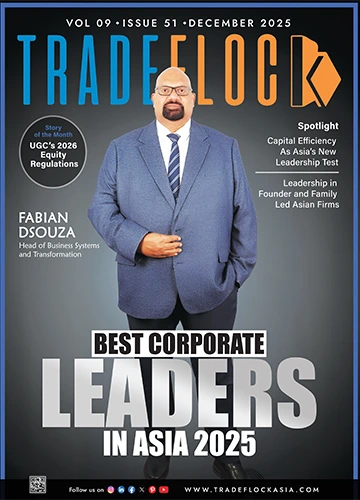
Erkan Yilmaz - Best Corporate Leaders in Asia 2025
Erkan Yilmaz COO of FundingPips, approaches operations as a seamless system that combines strategy, technology, and human insight. He transforms complex processes into efficient, scalable frameworks, empowering teams to innovate, take ownership, and deliver consistent, high-quality results. By leveraging data, automation, and forward-thinking practices while keeping human judgement central, Erkan ensures operations remain agile, resilient, and aligned with business goals.
His leadership turns operational functions into a strategic engine, enabling FundingPips to adapt quickly, scale efficiently, and provide exceptional experiences to clients in a fast-paced, ever-evolving market. How? He discussed with TradeFlock in this exclusive interview.
How has your view of good operations evolved, and what does it mean today?
Over the years, my understanding of good operations has become simpler and deeper. Early on, it was about systems, processes, and checklists. Today, good operations are almost invisible; customers never feel the complexity behind the scenes. Issues are anticipated, responses are timely, and quality remains consistent even as the business moves quickly.
As businesses scale and expectations rise, operations must be flexible and able to scale up or down without compromising quality. What has changed most for me is the emphasis on people and communication. Strong operations rely on clear ownership, calm decision-making, and teams that understand not just what they’re doing, but why. Tools matter, but alignment and accountability matter more. Good operations today are quiet, resilient, and adaptable, supporting growth while keeping the customer experience seamless.
How are technology, data, and automation shaping your operations, and where does human decision-making remain key?
We operate in a hybrid environment, where technology, data, and automation play a crucial role in keeping operations efficient. Repetitive tasks, large volumes of work, and data processing can be handled automatically, allowing a small, highly skilled team to manage what would otherwise require a much larger workforce. This not only improves speed and accuracy but also allows the business to adapt quickly, which is essential for staying competitive and responsive in a fast-changing market.
At the same time, human judgement remains indispensable for decisions that require nuance, creativity, and strategic thinking. While automation can process numbers or flag anomalies, it cannot replace the intuition, empathy, and experience that guide important business choices, stakeholder relationships, or complex problem-solving.
Smaller teams powered by the right technology can move faster, experiment, and respond in real time, whereas larger teams often face slower adaptation. By combining automation for scale with human insight for critical decisions, we ensure the business runs smoothly, stays agile, and delivers value without compromising quality or responsiveness.
How has your account-management approach evolved to build trust and ensure continuity during digital transformation?
The most critical parts of the COO role revolve around understanding the ripple effect of every decision. In larger organisations, even small adjustments can significantly impact teams, processes, and overall business outcomes. What might have been a minor tweak in a smaller team can become a major lever when scaled across hundreds or thousands of people.
Communication is equally vital. With larger teams, clarity, frequency, and transparency ensure everyone understands the goals, the rationale behind decisions, and their role in achieving them, keeping operations aligned and efficient.
My earlier experiences in smaller, hands-on teams gave me a deep understanding of execution and process details. That foundation, combined with structured communication and alignment, allows me to manage larger teams effectively while keeping operations resilient, responsive, and high-performing.
What will be the biggest operational challenge for leaders in the coming years?
One of the biggest operational challenges will be ensuring teams fully leverage the latest technology, especially AI, to boost efficiency and quality. As tools grow more powerful, teams must focus on creative problem-solving and process improvement rather than just execution. Leadership needs to emphasise training, guidance, and a culture where technology amplifies human potential.
By automating repetitive tasks, teams can prioritise strategic thinking, innovation, and impactful decision-making. Balancing technology with human insight will be key to keeping operations agile, effective, and future-ready.