Building Technology That Helps Before It Scales
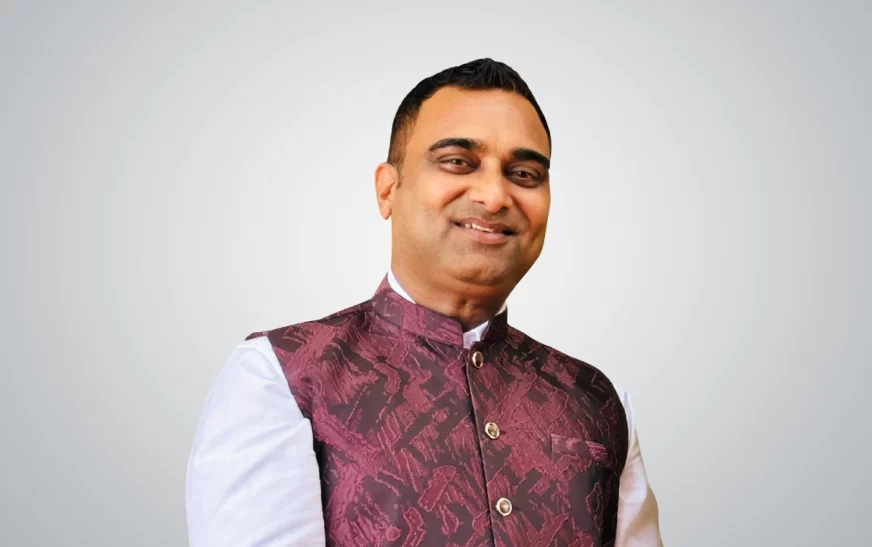
Dipak Patel
CEO and Founder
Newmerictech
Building Technology That Helps Before It Scales
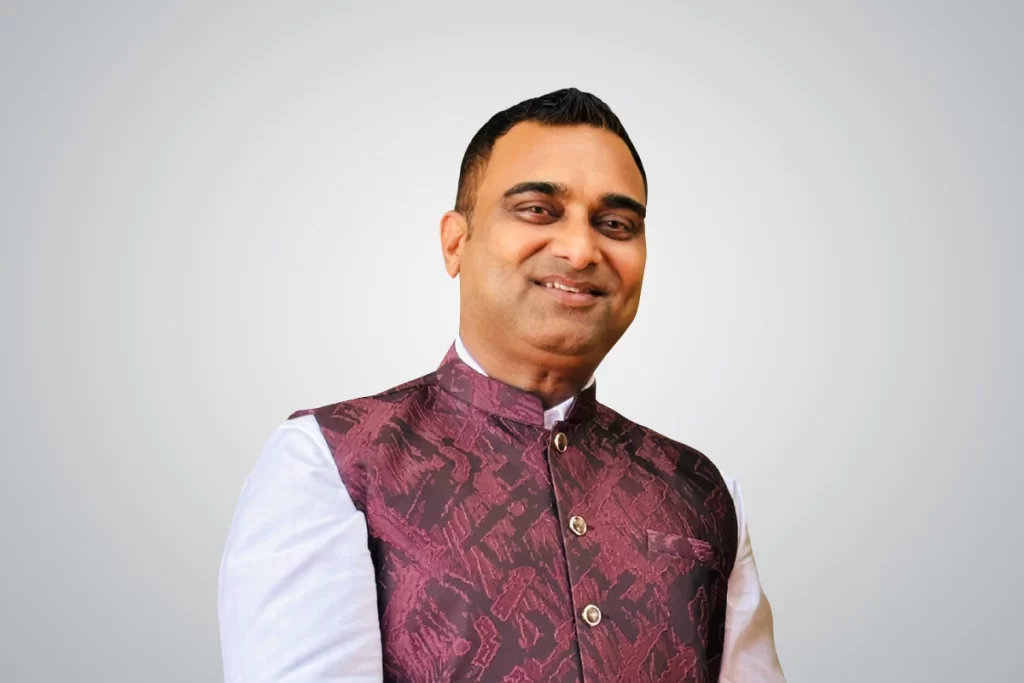
Dipak Patel
CEO and Founder
Newmerictech
Dipak Patel: Building Technology That Helps Before It Scales
Long before AI became a boardroom buzzword, Dipak Patel was asking a more fundamental question: does this actually help someone? With over 25 years of experience across technology leadership and entrepreneurship, the CEO and founder of Newmerictech has built his career on the belief that innovation without empathy is destined to fail.
Early on, Dipak worked closely with organisations across industries and geographies, gaining firsthand insight into how technology often falters in real business environments. Companies were rarely limited by a lack of tools; instead, they struggled with poorly aligned systems that created complexity rather than clarity. Technically impressive solutions frequently collapsed under operational pressure when they ignored human workflows, cost structures, scalability needs, and trust gaps. In a recent TradeFlock interview, Dipak described this misalignment as “complexity in disguise”.
These lessons shaped a philosophy that defines both his leadership and Newmerictech’s approach: innovation must begin with purpose. Rather than chasing trends, Dipak leverages automation, AI, and managed IT services to simplify operations, strengthen security, and build resilience.
Over the years, he has helped SMEs across the USA, UAE, and India—from market research firms to healthcare providers—build secure, scalable IT foundations. His conviction remains clear: technology should never be a cost centre; it should be a growth engine.
Here are excerpts from the interview.
Can you share your journey and the experiences that shaped your entrepreneurial vision?
I come from a farming family in a remote village in Vadodara, Gujarat. After losing my father at the age of four, my mother carried the responsibility of raising us, and I supported her by working in the fields alongside my studies. That phase built resilience, discipline, and a deep respect for hard work.
Early in my career, I set a clear goal—to leave my job by 40 and build something of my own. At 30, I began creating a secondary income by developing a mango orchard on our village land, combining business foresight with my passion for nature. In 2021, I fully transitioned into entrepreneurship, launching my IT venture internationally.
My journey is rooted in one principle: help others, stay grateful, keep learning daily and success will follow.
What hard-earned lesson shapes how you responsibly adopt AI, cloud, and data analytics?
The skill I learnt the hard way was saying no – both to ideas and to speed. Early on, I believed more features, faster delivery, and broader scope meant progress. Experience taught me that focus is the real multiplier.
This learning deeply influences how we adopt technologies today. Whether it’s AI, cloud, or data analytics, we prioritise responsibility over excitement. We assess impact, scalability, security, and ethical use before implementation. As a leader, this also means protecting teams from burnout and ensuring technology empowers employees instead of overwhelming them. Responsible innovation is not slower – it’s smarter.
Which mindset will matter most for future tech entrepreneurs seeking to balance innovation with organisational resilience?
The most essential mindset will be adaptive empathy – the ability to continuously learn while genuinely understanding people. Technology will keep evolving, but trust, ethics, and human impact will define lasting success.
Future entrepreneurs must be comfortable with uncertainty, committed to lifelong learning, and grounded in purpose. Organisations that survive and thrive will be those where innovation is not just a function but a culture – one where helping customers, employees, and communities is embedded in every decision. When help becomes the code of honour, resilience follows naturally.
Entrepreneur’s Toolkit
·Essential Tools and Resources – Spirituality, selfless help, gratitude, the right mindset and the right attitude.
·Book Recommendations – Think and Grow Rich by Napoleon Hill, Attitude is Everything by Jeff Keller, Atomic Habits by James Clear, Physiology or Money, and Tools of Titans.
The Entrepreneur’s Playlist
·Music for Inspiration – A.R. Rahman’s 90s music and Mozart; trained in Hindustani vocals, play harmonium and guitar, now learning the flute.
·Podcast/Movie Recommendations – Pursuit of Happyness, Lagaan, 3 Idiots
What is the biggest misconception about innovation in the AI era, and how do you turn it into success?
The biggest misconception today is that adopting AI automatically makes an organisation innovative. Many leaders treat AI as a shortcut rather than a tool. Innovation doesn’t come from adding AI – it comes from clarity of purpose, clean data, thoughtful design, and disciplined execution.
We turn this misconception into success by repositioning AI as an enabler, not the solution itself. Strategy defines why we are using AI, design defines how humans will interact with it, and execution ensures it delivers measurable outcomes. When AI is aligned with real workflows and real people, it creates sustainable value rather than short-term hype.
How do you balance speed and iteration with quality and long-term vision in today’s fast-moving tech landscape?
I follow a principle I often share with my teams: “Move fast, but don’t move blindly.” Speed is essential, but direction matters more. We iterate quickly on execution, not on vision. The long-term goal remains stable, while the path evolves through feedback and learning.
Quality is preserved by strong foundations – clear architecture, defined standards, and accountability. Rapid iteration without discipline leads to technical debt; disciplined iteration leads to momentum. This balance allows us to grow sustainably while remaining agile in a changing market.